


Samsung’s newest promo for the Galaxy S26 touts a leap in low-light video, but the footage itself is drawing more attention than the claim. Viewers quickly spotted telltale AI artifacts, and Samsung’s own fine print concedes the clip was made with the assistance of AI tools. For a teaser meant to showcase real-world camera gains, it’s an odd and avoidable misstep.
A Night Shot That Looks Uncannily Synthetic
The short video shows two skateboarders cruising a dimly lit street to illustrate “Nightography” upgrades with #GalaxyAI. Look closer, though, and the scene gives the game away: textures on buildings smear rather than resolve, shoes and boards lack fine detail, shopping bags morph oddly, and shadows seem to shift against inconsistent light sources. It reads like a generative composite, not a handheld capture from a flagship phone.
Samsung does disclose the use of AI tools in the fine print, which is the right move from a compliance standpoint. But disclosure doesn’t fix the core problem: if you want people to trust your new low-light pipeline, nothing beats a real comparison shot on the actual device. This is the kind of sequence a film crew could have shot in an evening—no diffusion models required.
When AI Hype Undercuts Camera Credibility
Smartphone makers now market cameras as much as phones. Computational photography—multi-frame stacking, larger sensors, wider apertures, and advanced NR—has made night shooting viable since the first wave of Night Mode debuted years ago. That’s precisely why an AI-fabricated demo sets off alarm bells: it blurs the line between genuine capture and creative rendition at a time when consumers want authenticity.
Regulators and watchdogs have already flagged this tension. The US Federal Trade Commission has warned marketers against overpromising AI capabilities and using misleading synthetic media in advertising. The UK Advertising Standards Authority has repeatedly scrutinized camera ads that imply capabilities not delivered in ordinary use. And the industry has a memory: Huawei drew backlash for DSLR stand-ins in phone camera promos in past campaigns, while Samsung itself faced questions about AI moon shots with “Space Zoom.” The takeaway is simple—camera claims demand real footage.
Consumer research backs that expectation. Counterpoint Research has consistently ranked camera performance among the top purchase drivers in premium smartphones, alongside battery life and chipset speed. When buyers care this much about imaging, authenticity in marketing isn’t a nice-to-have; it’s table stakes.
Missed Opportunity To Show Real Night Gains
Samsung has rolled out multiple S26 teasers recently, and more than one carries an AI disclaimer. For playful concepts or animated zoom metaphors, that’s understandable. But choosing AI to “prove” low-light prowess feels tone-deaf. Even a simple A/B split—last-gen device versus S26, identical exposure and framing—would have told a cleaner story and invited less skepticism.
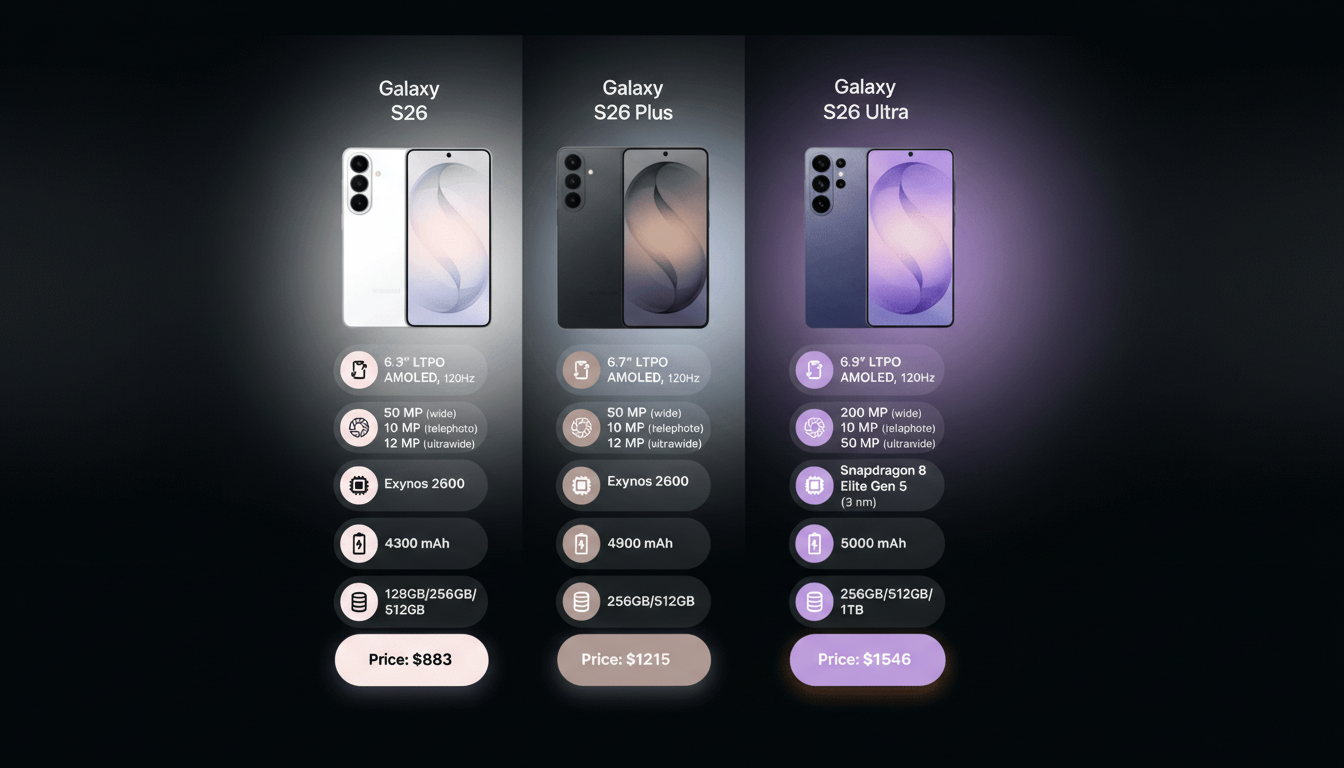
To be clear, there’s good reason to expect legitimate imaging improvements. The S26 series is widely rumored to lean heavily on on-device AI for denoising, motion deblur, and HDR fusion, layered atop a next-gen flagship platform. The Ultra model is expected to headline with a cutting-edge Snapdragon 8 Elite Gen 5, while regional variants may pair Snapdragon or Exynos chips with upgraded NPUs. Those ingredients can materially improve night video without any help from generative post-production.
AI Features Need Proof, Not Prompts, To Earn Trust
There’s a broader brand lesson here. AI can be part of how a camera works—think semantic segmentation, tone mapping, and multi-frame fusion—or part of how a promo is made. The former builds trust when the results are verifiable; the latter risks eroding it when the demo looks fabricated. If the S26’s Nightography really is “next level,” Samsung should let the pixels speak for themselves.
For shoppers, the practical advice is to look for third-party samples and standardized tests once units are in reviewers’ hands. Independent labs and seasoned creators will stress-test stabilization, noise handling, color consistency, and low-light autofocus—areas where AI-enabled pipelines can shine, and where overproduced teasers often gloss over the rough edges.
The irony is that this controversy was avoidable. A single well-shot night sequence from an S26 prototype would have generated excitement without caveats. Instead, the AI gloss has shifted the conversation away from the tech and toward the trust. That’s a tough trade for any flagship launch, especially in a cycle where camera credibility may be the deciding feature.
