


Samsung is finally aligning its US smartphones with the rest of the world on multi-line flexibility. With the upcoming One UI 8.5 release, Galaxy owners in the United States will gain full control over which SIM handles calls, texts, and cellular data—a set of options long available on international models and frequently requested by power users and travelers.
What’s New in One UI 8.5 for Dual-SIM and eSIM Controls
The software adds clear, per-function preferences: users can designate a default SIM for voice calls, a separate one for SMS/MMS, and choose which line provides mobile data. Crucially, these controls work with both physical SIMs and eSIM profiles, reflecting how many US users now mix a carrier line with an MVNO or use two eSIM profiles to juggle work and personal numbers.
Early beta testers in the US have shown the updated SIM manager screens, including confirmation prompts when switching data lines and an at-a-glance indicator of the current data SIM in the status bar. It’s a small change that eliminates years of friction for users who were forced to re-provision or rely on clunky workarounds to move data between lines.
Why It Matters for US Smartphone Owners and Travelers
Dual-SIM usage is standard in many regions—especially across Asia, Africa, and parts of Europe—where consumers routinely optimize coverage and cost by pairing two lines. In the US, the hardware has often supported dual standby, but carrier policies and limited software toggles kept the experience inconsistent on major-branded devices.
That gap has become harder to justify. Apple’s shift to eSIM-only on recent iPhones normalized multi-line behavior for mainstream users, while Pixels and several Android flagships popularized quick switching for international travel. According to Counterpoint Research, eSIM-capable smartphones are on track to dominate shipments later this decade, reflecting a broader shift to software-driven connectivity. GSMA Intelligence also tracks hundreds of operators globally offering eSIM for smartphones, widening the ecosystem for multi-line setups.
For US users, the benefits are immediate: keep a primary postpaid line for voice quality and emergency services, run a secondary MVNO line for cheaper data, or maintain a domestic line alongside an international eSIM when traveling. For small-business owners, it’s a clean way to separate work and personal communications without carrying a second phone.
Carrier and Device Caveats for Dual-SIM and eSIM Use
As always, the experience will depend on carrier certification and device capabilities. Most modern Galaxy phones support Dual SIM Dual Standby (DSDS), which allows two lines to be active for calls and texts with one line providing mobile data at a time. 5G availability on the secondary line can vary by carrier and band support; VoLTE on both lines is typically required for reliable dual-line calling.
Unlocked devices usually see these options first and with fewer restrictions. Carrier-locked models may require network-side enablement, and some advanced behaviors—like call forwarding that makes both lines ring simultaneously—can depend on carrier features. Users on MVNOs should confirm that their provider supports eSIM activation and dual-line usage on Samsung devices.
Rollout Expectations for One UI 8.5 on Galaxy Devices
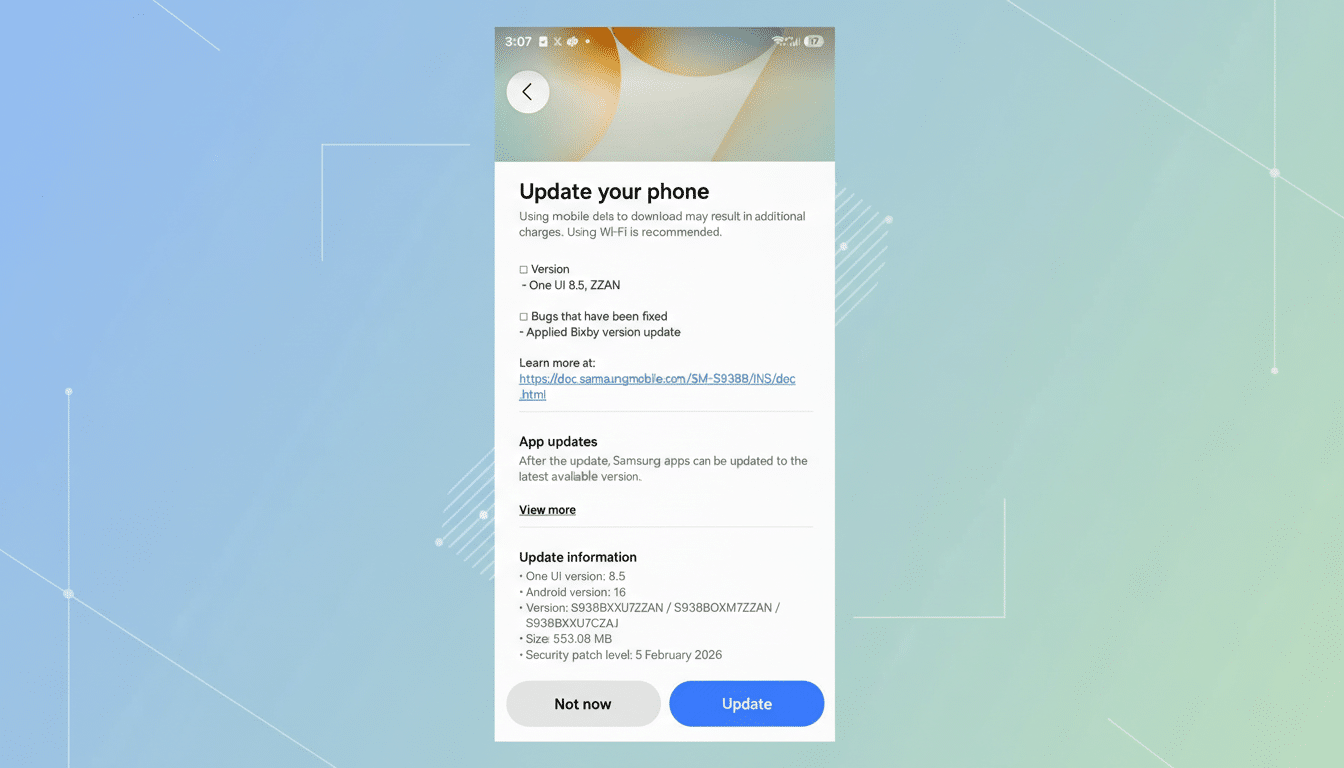
The multi-SIM data controls are surfacing in US beta builds of One UI 8.5 on recent Galaxy flagships, with screenshots from community testers showing the updated menus in action. Broader availability is expected with Samsung’s next wave of software updates across current and recent Galaxy models, subject to regional and carrier approval.
Historically, Samsung staggers One UI rollouts by device family and market. Expect newer premium models to receive the feature first, followed by foldables and select midrange phones. Users on beta builds should already see the new SIM preference page under Settings > Connections > SIM manager.
How to Make the Most of Dual-SIM Options on Galaxy
Set your high-speed data SIM to the plan with the best allotment, then route calls and messages to the number people know. Travelers can keep a home line active for authentication codes while assigning data to a local eSIM—ideal for navigation and streaming without roaming fees. If reception is spotty, carry a secondary line from a different network to hedge coverage; switching the data SIM now takes seconds instead of a device reboot or reactivation.
Before switching, verify that both lines are provisioned for VoLTE and 5G where available, and review your plan details to avoid surprise charges. It’s also wise to label each SIM clearly in settings—work, travel, data—to prevent accidental usage on the wrong line.
Samsung’s move brings US Galaxy phones in line with global best practices and puts more control back in users’ hands. For a country steadily embracing eSIM, MVNOs, and flexible connectivity, these are the right switches at the right time.
