


XREAL and Asus Republic of Gamers are joining forces on the ROG XREAL R1, a pair of AR glasses that basically attach a 240Hz gaming monitor to your head. The headset matches micro-OLED panels at 1080p per eye with a claimed 3ms latency, aimed directly at competitive players who want desktop-grade responsiveness in a wearable form. A broader 57-degree field of view, electrochromic lens tinting and plug-and-play support for the ROG Ally dock itself round out a feature list aimed at traveling from sofa to scrim with abandon.
Gamers Get a Wearable 240Hz Monitor Experience
Refresh rate makes a difference in fast-paced games as it decreases perceived blur and reduces the time between you making an input and seeing it happen on screen. GPU vendors have demonstrated that higher refresh displays can reduce click-to-pixel latency by double-digit percentages versus 60Hz panels, and professional esports players have normed on 240Hz and up as a result. The inclusion of 240Hz on an AR device is itself noteworthy, as most head-worn displays tap out around 90–120Hz. At 240Hz and with a 3ms-latency claim, the ROG XREAL R1 aims at delivering that same level of responsiveness as the best esports monitors do on stages everywhere — only on a personal, private see-through display.
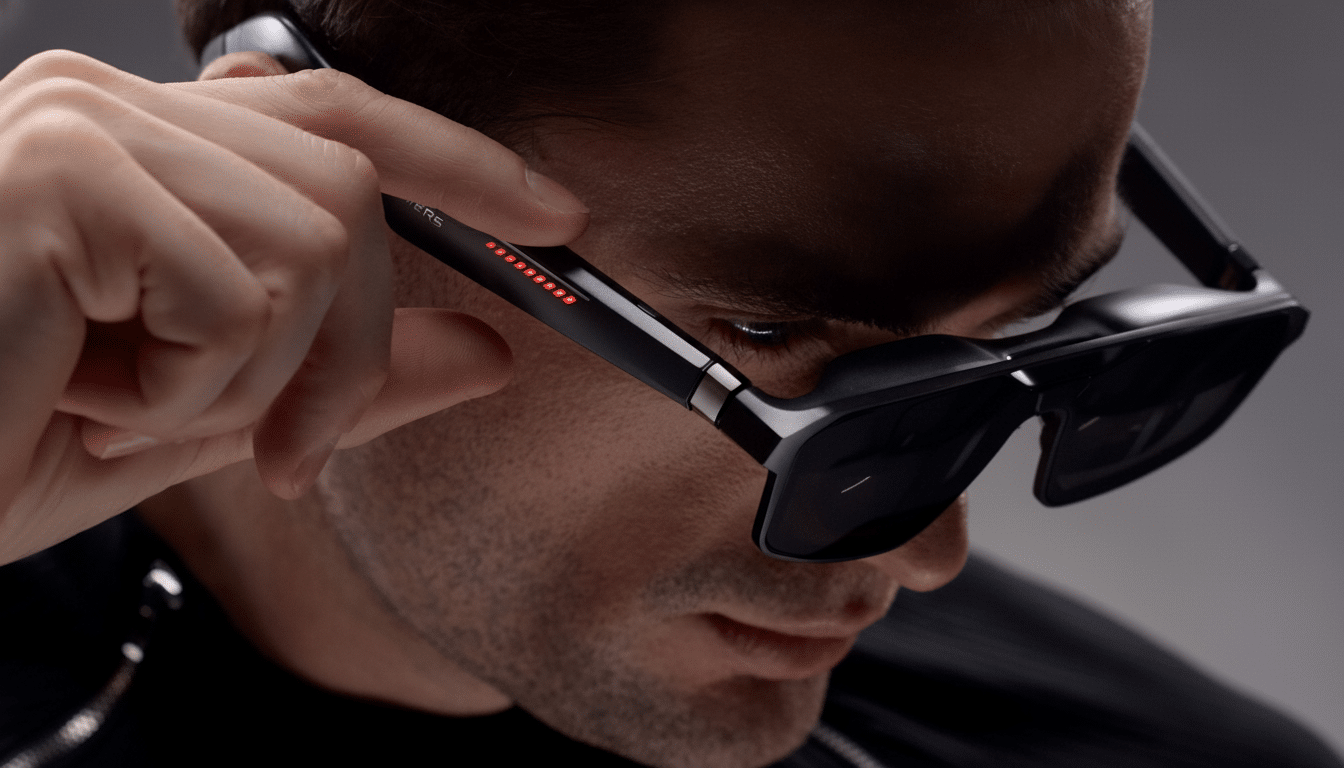
The integration of micro-OLED is intended to facilitate contrast and pixel response. While standard LCD pixels are sluggish to switch and slow pixel response can contribute to smear in high-contrast HUDs, micro-OLED pixels have a quick switching time that enables the displays to deliver deep blacks, improving text legibility. Trade-offs to keep an eye out for are brightness and thermal management, perennial microdisplay headwear challenges in a high-tech sheath.
Hardware Specifications And What’s Different
Both eyes get a 1920×1080 frame, resulting in an effective binocular canvas that should be comfortable for gamers who play at 1080p on their desktops. That decision is pragmatic: Valve’s Steam Hardware Survey still has 1080p listed as its most popular primary gaming resolution, so the vast majority of PCs and handhelds will be able to push high frame rates at this pixel count.
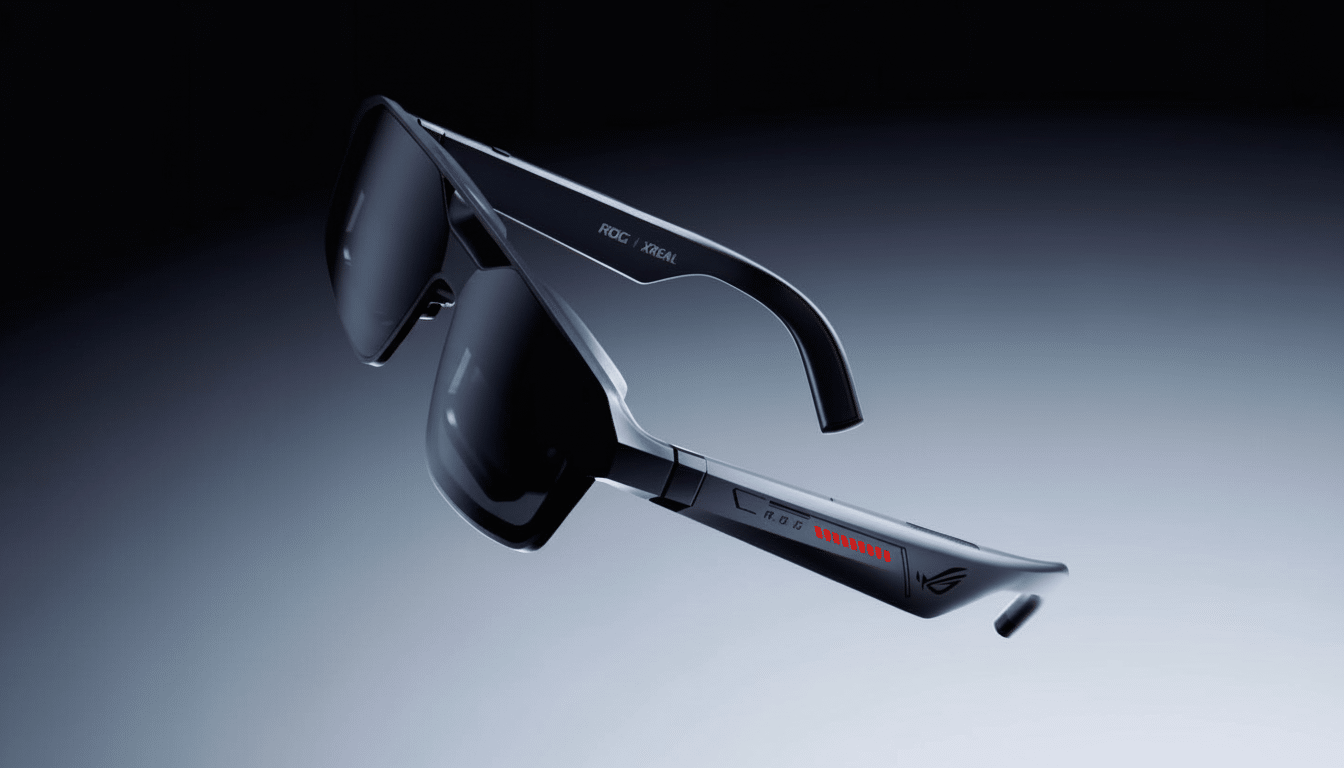
The 57-degree field of view is a bump-up from XREAL’s most recent 1S model, which stands at 52 degrees — that means the R1 has a slightly larger virtual screen but doesn’t eclipse your peripheral vision completely. The automatic electrochromic tinting adjusts the lenses according to ambient light and gaze, allowing the image to be visible in bright rooms yet remain see-through aware when you want it. Bose-branded speakers built into the arms direct sound at you and are non-isolating so that you can stay connected to your surroundings.
XREAL’s X1 processor is responsible for head tracking, which allows you to “pin” a virtual window in space, even while moving — so the screen stays fixed in place.
That’s helpful for throwing your full desktop down onto a table or locking, say, a mini-map to your standard view. A ROG-branded dock with three inputs that you can easily switch between is included, and to further streamline your on-the-go setup, the glasses also have a USB-C connector for directly connecting to the Asus ROG Ally without any fuss.
Compatibility and Use Cases for ROG XREAL R1
The pitch here is simple: the R1 is a private, high-refresh “monitor” that you can use with a handheld, laptop or desktop without dragging along a display. Commuters can rank grind while they’re on the train without having to broadcast their screen; LAN attendees who travel light can still get a snappy view of critical stats; streamers are able to anchor chat or dashboards as floating overlays while maintaining placement for the main feed. With multi-input switching on the dock, it’s a simple matter to bounce between a PC and another source without having to remove the glasses.
Feeding 240 frames a second to each eye, of course, is no minor chore. A lot of players will not run at 240 FPS depending on the game and hardware. Even then, however, a 240Hz pipeline can help keep frame delivery and latency lower versus more mainstream displays in titles with variable performance. Anticipate multiple refresh modes to accommodate content and power budgets.
Pricing Timeline and Market Context for ROG XREAL R1
ROG XREAL R1 is expected to be available in the first half of 2026, according to XREAL, which will announce pricing. For reference, the company’s brand-new 1S glasses cost $449 and ROG branding paired with 240Hz micro-OLEDs imply a premium. In the larger market, mainstay headsets such as Meta Quest 3 peak at 120Hz while most VR-focused mixed reality devices shoot for 90Hz, further emphasizing how ambitious (and vigorous) the R1’s spec is relative to motion clarity.
IDC analysts anticipate that shipments of AR and VR hardware will rise as more practical, price-accessible devices hit the market — with gaming continuing to be one of the most obvious near-term use cases. Should it want to balance weight, thermal comfort, brightness and battery demands while maintaining low latency, the R1 might carve out a niche that perhaps doesn’t even exist yet as the first bona fide portable alternative to a 240Hz desktop display.
What We’re Watching Next on ROG XREAL R1
They’re all open questions: final weight and comfort for multi-hour sessions, peak brightness and color accuracy of the micro-OLEDs, supported refresh modes in excess of 240Hz, how the electrochromic tint behaves outside and lastly the all-in cost of the glasses plus dock. If those things fall into place here, the ROG XREAL R1 could be the hot go-to for competitive types who demand a top-notch high-refresh setup but need it to slide into a backpack.
