


Roblox’s second annual 2025 Replay offers a solid snapshot of where Gen Z is spending its digital time: inside Roblox’s vast universe. The company’s annual recap showcases huge daily engagement and culture-shaping trends that propel the platform beyond “game” terrain into everyday social infrastructure for young people.
Gen Z’s Daily Hangout, At Unmatched Scale
Roblox says 151 million people log in each day, with average time spent around 2.8 hours a day. For a platform that has long maintained that nearly half of the U.S. under-16 population has used it, that intensity says something about why Roblox serves as both social venue, content hub and creative playground at once now.
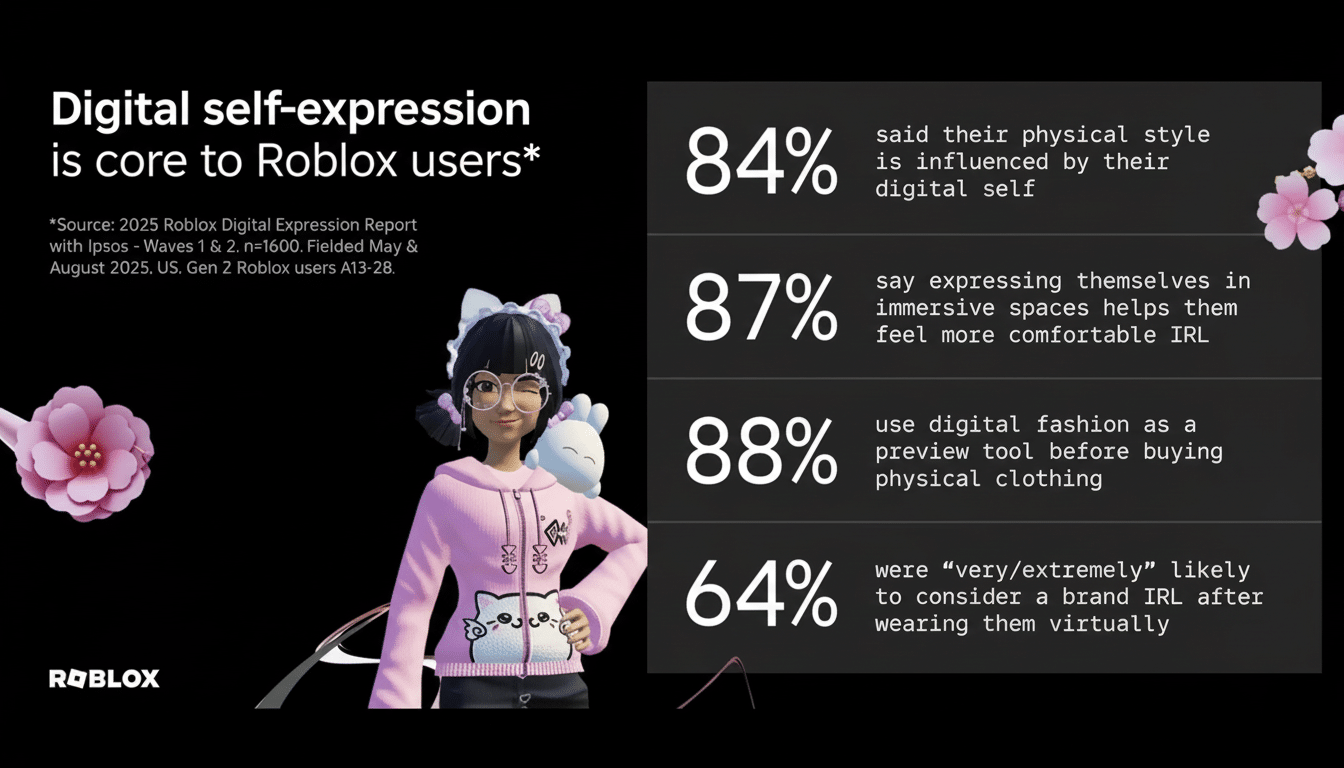
The surface-level activity is mind-boggling: Users refresh their avatars around 274 million times a day, transforming self-expression into a never-ending loop of micro-updates. At its maximum Roblox counted 45 million concurrent players, a number that would turn most live-service launches crimson.
Independent research helps to explain the gravitational attractor. The Pew Research Center has repeatedly reported that playing games is near universal for American teens, and Deloitte’s Digital Media Trends survey finds that Gen Z mixes playing, watching and socializing from screens with easy abandon. Roblox’s Replay demonstrates that convergence is taking place in one location.
What They Played on Roblox in 2025 Replay Highlights
The year’s momentum was defined by two breakthroughs. “Grow a Garden” held the record for concurrent players of 21.6 million users, until it was surpassed by “Steal a Brainrot,” which drew more than 25 million people all at once. Both titles went from zero to peak recently, a telling reminder of how fast young-person-driven discovery can elevate new ideas to platform-defining scale.
Search behavior still pays homage to comfort classics. Like last year, “Brookhaven,” a role-play mainstay from 2020, takes the top spot as proof that sandbox social worlds continue to define its daily gameplay. On average, users try 21 different games or experiences a month — bouncing between cozy role-play, flashy new trends and session-friendly action.
Replay data also translates genre tastes into screens. On phones, games of horror and escape tend to dominate the quick-hit session. Tablet-goers trend toward creativity with many build and design games, such as “Build a Plane.” Console play skews toward licensed action and sports titles, while PC gamers seek out richer, RPG-like experiences. VR owners are asking for VR-scale worlds, designed around headsets. In other words, device choice isn’t only a matter of convenience, but an indicator of the flavor of play.
Trends That Spill Over Into The Real World
Roblox trends reflect, and often set, youth culture. Replay flags the “67” trend and the ascendance of K-pop–inspired “Demon Hunters,” both moments that illustrate how memes, music fandoms, and creator-led formats can morph into full-blown platformwide phenomena. As Roblox is both a consumption layer and a creation tool, these waves happen faster than traditional media cycles — and often feed back into TikTok, YouTube and schoolyard conversations.
This feed-the-loop is driven by a creator economy that encompasses everything from solo scripters to tiny studios. Roblox counts hundreds of thousands of active creators and an expanding roster of developers making money off virtual items and experiences. For Gen Z, “playing” more and more means building, selling, collaborating — skills that are closer to entrepreneurship than slumping kid entertainment.
Safety Pressures and Brand Opportunities on Roblox
The same gravity that draws in Gen Z also leaves it open to scrutiny. News articles covering moderation, age verification and child safety continue to plague the platform; Replay’s numbers show why Roblox is putting so much money into trust and safety. When hundreds of millions are participating daily, consistent guards aren’t policy, they’re table stakes for growth.
For brands and media companies, Replay is something of a playbook. Youth attention is shattered everywhere but on a couple of living platforms where they collect to play, chat and post identity. Because of where Roblox’s audience sits in the genre-device elasticity map, interactive campaigns, virtual merchandise and co-created experiences can go a long way without feeling like traditional advertising — as long as they adhere to community norms and safety.
Bottom Line: Why Roblox Still Dominates Gen Z Attention
Roblox’s 2025 Replay is not only a celebration of big numbers; it’s a reminder that, for Gen Z, Roblox serves as a primary social scene, an open-source creative studio and even something like cultural central processing. The platform’s potent cocktail of scale, stickiness and speed at which trends proliferate helps explain why it continues to win the Gen Z attention war — and why everyone else is playing catch-up.
