


Ring is also introducing an AI-powered update that takes its doorbells and security cameras beyond the motion alerts. The company’s newest features can identify familiar faces at your door and mobilize neighborhood assistance for lost pets, while new 2K and 4K models promise clearer video courtesy of an imaging system called Retinal Vision.
The change is part of a broader trend in consumer security, shifting from off-device pre-made algorithms and generic alerts to on-device smarts that can react to each person’s unique situation — offering more useful signals while attenuating noise.

How Ring’s Familiar Faces Face Recognition Works
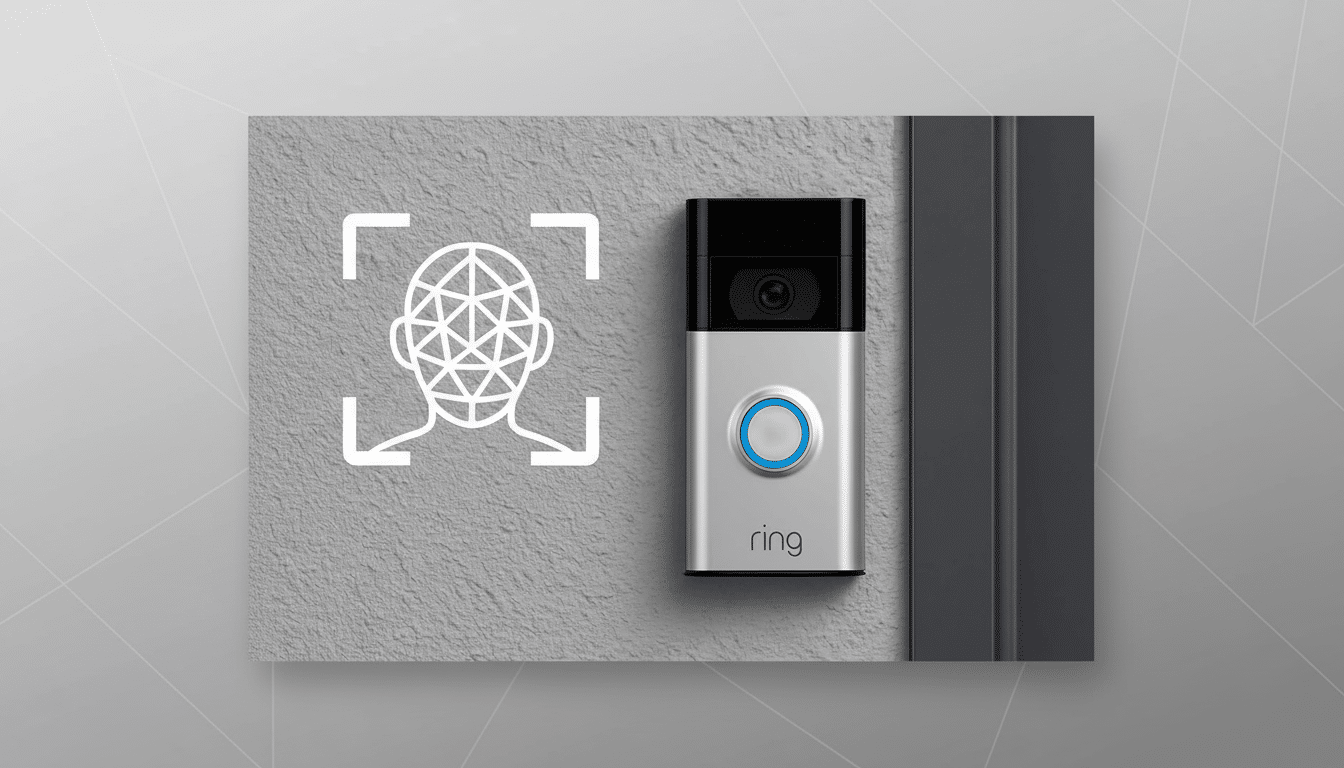
Users can enroll the faces of trusted people — family members, roommates or regular caregivers, for example — in a feature in the Ring app titled Familiar Faces. If it recognizes someone, the camera can alert you by name; if it sees a stranger, then unfamiliar faces pop out so that even when scanning quickly you’re able to get an idea of urgency.
The system is opt-in and account controlled. Face entries can be added or deleted and labels can be renamed at any time. What’s notable here is Alexa Greetings: if a recognized face appears, the assistant can craft responses — accepting a delivery order, providing an address for a dog walker to retrieve a leash, informing a frequent visitor that you’ll be with them in just a moment. It’s a little march toward a smarter vestibule that screens ordinary encounters without you reaching for your phone.
Face recognition in home devices isn’t a new concept — Google’s Nest cameras have offered the capability for years — but bringing it to Ring’s large installed base could make it commonplace among millions of homes.
How Ring uses AI to crowdsource searches for lost pets
Search Party is for the moment when your dog wriggles out of a collar or a cat finds an open gate. Owners can register a lost pet in the app, post a description and photos of it, and ask nearby Ring users to be on the lookout. The system employs AI to surface potential matches according to coat patterns, size and color in neighbors’ camera clips, and human volunteers can opt in to report sightings.
A networked search like that could work in tandem with traditional methods, including microchipping. Research cited by veterinary groups indicates that microchipped pets have much higher return-to-owner rates, though cats in particular are still under-reunited. Doorbell video and community alerts could help close that gap, adding surveillance, particularly for pets that are nocturnal or tend to zip behind homes.
Importantly, participation is voluntary. Neighbors have the ability to opt out of alerts, mute pet notifications or selectively share information. For concerned owners, a high-confidence AI match and a neighbor’s message could shave hours from the search.
Sharper video and fresh hardware with Retinal Vision
Accompanying the software, Ring announced a 2K and 4K line that’s built around Retinal Vision, an imaging technology featuring constant tuning of exposure, white balance, and sharpening for preserving fine detail such as faces and license plates. A Retinal Tuning process, the company says, detects scene conditions and adjusts on the fly, which could assist in difficult situations — backlit porches or headlights after dark.
The 2K tier can be found in small indoor cams and wired doorbells while the more expensive 4K tier is used in high-end doorbells, outdoor cams, spotlights and floodlights. The objective is plain and simple: bigger with smarter processing so that the AI has less mess around the frames to analyze, and people get less blur when it counts.
Privacy, accuracy, and control considerations for Ring
Face recognition raises familiar questions. Civil liberties activists, including the Electronic Frontier Foundation, have long cautioned against extending cameras into public-facing territory. Regulatory scrutiny has grown: In a recent enforcement action, the Federal Trade Commission said it had compelled stronger privacy and security protections for Ring and required new limits on internal access to customer videos as well as additional deletion procedures.
Ring says face recognition is opt-in and user controlled. Nonetheless, buyers should weigh where processing occurs (on-device versus cloud), who can access labeled faces and how long data is kept. Some states, like Illinois, have biometric privacy laws that place requirements for consent and retention on businesses, and compliance often hinges on how features are configured.
Accuracy will depend on lighting, angle, masks — and glasses. Nor does top-tier accuracy translate to performance when the algorithms are used on different demographics and lower-fidelity images, as independent testing by the National Institute of Standards and Technology has demonstrated. Users would do well to regard alerts as cues — not the final word — and to check before leaping.
What these updates could mean for home security systems
The pitch is convenience: fewer annoying notifications, more specific context and clearer outcomes when something does go wrong — say a lost pet.
For families that have a doorbell video system to greet package deliveries and visitors, Familiar Faces and Search Party could make the device less of a motion sensor at the door and more like having a 24-hour concierge.
The trade-offs are equally clear. But note that recognition will bump up the sensitivity of information recorded by your doorcam. Best practice is to audit your settings at intervals, clean out face entries that you no longer need, set retention limits and disable features you’re not using. If you live in a multi-unit building or a densely populated neighborhood, talk to your neighbors about pet alerts and notifications to avoid alert fatigue.
From cameras that are sharper and cheaper, to security systems made smarter with artificial intelligence, the front door is going high tech.
Whether it actually will be safer will depend on how rigorously households set up these tools — and, frankly, how well companies manage the data that powers them.
