


An ultra-budget, Game Boy-style handheld is getting a timely refresh. The R36 Max 2 has been teased with a larger 4.5-inch screen, a new control layout, and the same entry-level silicon that powered last year’s breakout bargain. Early images and hands-on notes from retro handheld enthusiasts point to a device that stays cheap but smarter about how classic games actually look and feel.
What’s New in the R36 Max 2 budget handheld refresh
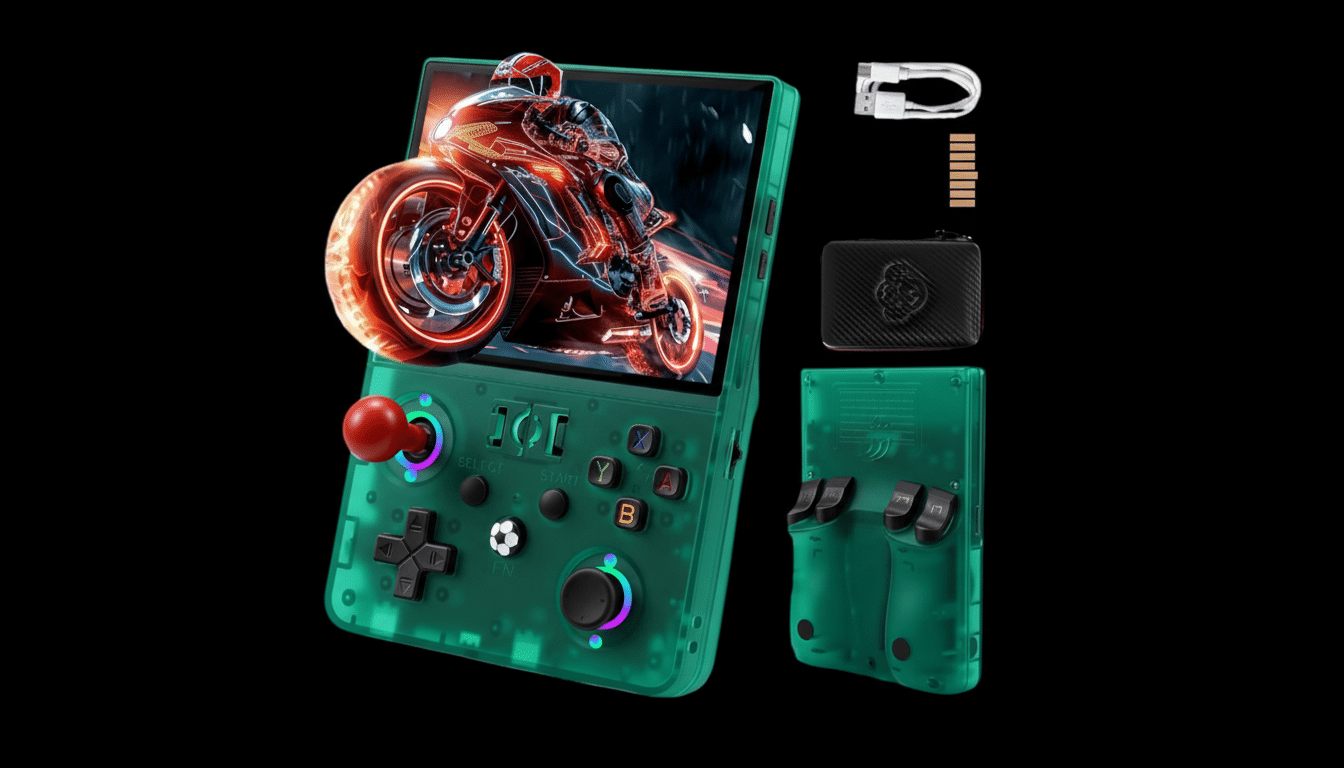
The headline upgrade is the display: a 4.5-inch panel with a 4:3 aspect ratio at 1,024 x 768. That’s a notable shift from the original R36 Max’s 4-inch, 720 x 720 square screen. For retro libraries built around 4:3 output, this change should reduce awkward scaling and wasted screen space. Teaser images also show a shuffled control layout, with the D-pad and left analog position swapped and a more arcade-style stick head replacing the prior low-profile nub.
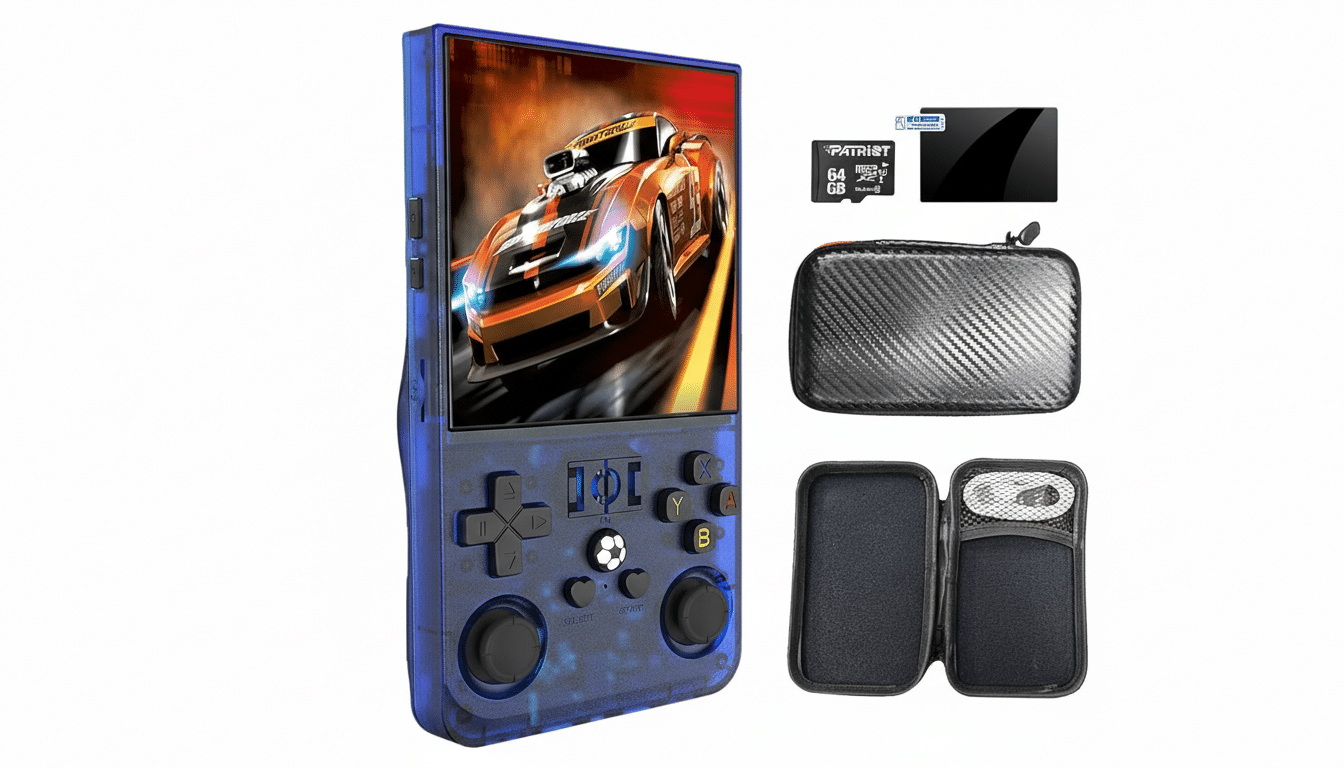
The rest appears evolutionary. According to posts on X by Retro Gaming With Deadfred, the R36 Max 2 keeps the same Rockchip RK3326 processor seen in numerous entry-tier handhelds. That continuity suggests similar power, thermals, and community firmware support—key ingredients in why the original model found an audience at impulse-buy prices.
Same chip, different experience on the R36 Max 2
On paper, the RK3326—four ARM Cortex-A35 cores with a Mali-G31 GPU—won’t turn heads in 2026. But it’s familiar, frugal, and well-understood by developers who build Linux-based front ends and emulation stacks. The chip powered classics like the Odroid Go Advance and Anbernic’s RG351 series, where it delivered consistent performance for 8-bit and 16-bit consoles, PlayStation 1, and selective wins in lighter N64 and PSP titles.
In other words, the R36 Max 2 isn’t aiming higher on emulation tiers—it’s aiming smarter. Keeping the RK3326 likely means comparable battery life and heat to the first R36 Max, and a plug-and-play experience without the tuning headaches that sometimes accompany newer, unproven chips.
Why a 4:3 display aspect ratio matters for retro play
Most consoles from the NES through the PlayStation generation were designed around 4:3 displays. A square 1:1 screen, while quirky and pocketable, forces uneven scaling or big borders for those systems. Moving to 1,024 x 768 4:3 gives developers and tinkerers cleaner integer or near-integer scaling options, crisper sprites, and less visual compromise. PlayStation 1, SNES, and Genesis libraries in particular should benefit. Handheld systems like the Game Boy Advance (3:2) will still show mild letterboxing, but the overall experience for 4:3-era content improves notably.
Price and release outlook for the refreshed R36 Max 2
Official pricing and availability haven’t been announced. The original R36 Max surfaced last year for under $40 on major marketplaces, an aggressive tag that helped it go viral among newcomers to retro handhelds. With the same processor and a modest hardware refresh, expectations are that the sequel will remain firmly in the low-cost camp rather than chasing midrange contenders.
Retail-style images are already circulating, a sign that listings could appear soon. If history is any guide, expect multiple sellers, bundled microSD configurations, and community-made firmware images to follow shortly after launch.
Where it fits in a crowded market of retro handhelds
Vertical handhelds are having a resurgence. Premium models like the AYANEO Pocket VERT deliver far higher performance and Android features, often cresting $200. Meanwhile, the entry tier thrives on affordability, open-source firmware, and day-one accessibility. The R36 Max 2 leans squarely into that latter formula: familiar chip, refined ergonomics, and a screen choice that better honors the era it’s meant to emulate.
Enthusiast outlets such as Notebookcheck have tracked the steady cadence of RK3326-based devices, and the pattern is clear: success comes from getting the basics right. If the R36 Max 2 combines its smarter display with competent controls and the same pick-up-and-play ease that made its predecessor popular, it could be one of this year’s easiest recommendations for nostalgic players on strict budgets.
For anyone who missed the first wave, this looks like a thoughtful second pass. It won’t change what the RK3326 can emulate, but it may change how good those classics look and feel on a device that still costs less than a new AAA game.
