


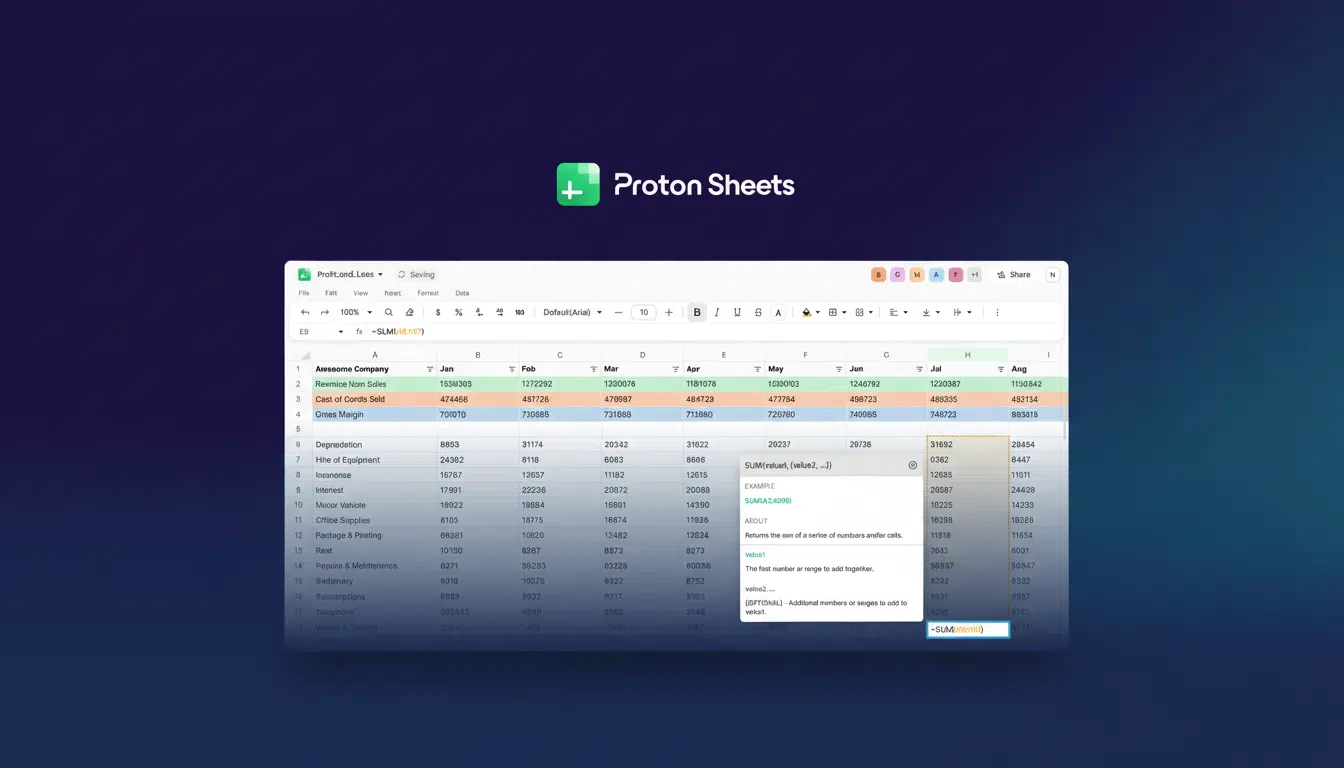
Proton has unveiled Proton Sheets, a privacy-focused spreadsheet app designed as an alternative to Google Sheets and Microsoft Excel. The launch broadens the Swiss company’s encrypted workspace aspirations and addresses teams that seek contemporary collaboration without giving up confidentiality.
Proton Sheets is end-to-end encrypted by default—unlike most mainstream small-business office tools on the market today, which are not end-to-end encrypted—the company said. We can’t read your content, formulas, or even your metadata. The app is bundled with Proton Drive: free accounts have 5GB of storage for their files and data, while paid plans range up to 3TB if you’re placing heavy demands on it.
What Proton Sheets Brings at Launch and Key Features
At launch, Sheets provides the basics: basic formulas, quick charting and graphing, and compatibility with popular formats such as CSV and XLS for importing and exporting. Users can also share files with other Proton accounts and control who has access by adding or deleting collaborators as projects change.
The app resides within Proton Drive, which maintains files encrypted at rest and in transit over the same infrastructure that runs the company’s cloud storage. For a small team—doing budgeting, forecasting, or managing a list of contacts from the general public but looking to take your work off spreadsheets without turning it over to a vendor’s server—the value is clear.
Privacy as Product Strategy and Encryption Approach
End-to-end encryption (E2EE) is the main thing. With E2EE, encryption keys belong to users, not the providers. That’s different from the typical server-side encryption, where a service provider can technically access the plaintext or key materials to operate nifty features. Proton says this distinction is important as AI gets more deeply embedded in office platforms.
Company officials have cast Sheets as a reaction to worries that activity in mainstream productivity suites can contribute to mass data pipelines.
Their sentiment is emblematic of a general evolution in the calculus of risk: IBM Security’s 2024 Cost of a Data Breach report captured a worldwide breach cost that rose to $4.88 million on average, with security and data minimization efforts continuing to be top-of-mind for CIOs.
And although Google Workspace provides options to enable client-side encryption for Docs, Sheets, and Slides, they’re turned off by default and some collaborative or AI-driven capabilities are disabled. Microsoft also offers robust governance and encryption controls in its enterprise plans. Proton is betting that an appeal to privacy-first organizations—where making E2EE the standard and collaboration around it—will stick.
How It Stacks Up With Google and Microsoft Excel
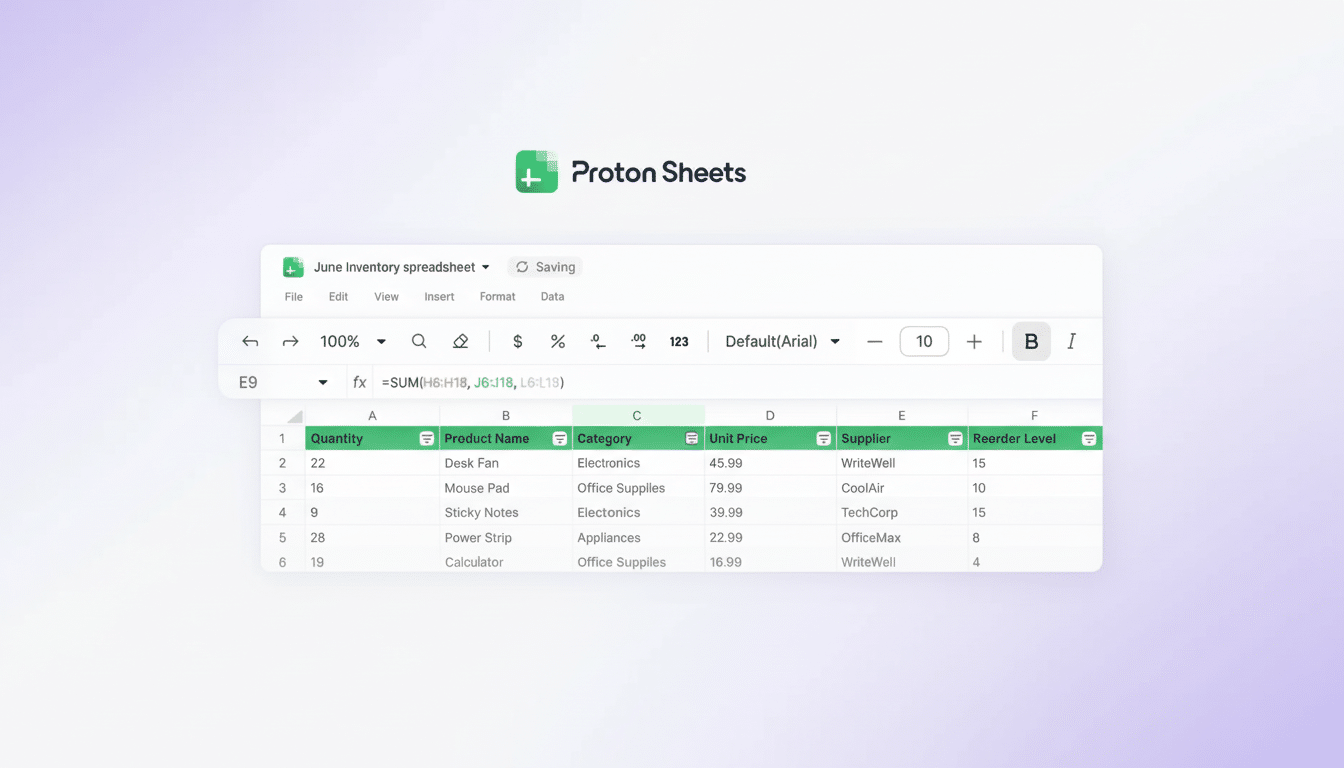
That makes feature-for-feature parity with the incumbents a high hurdle. Google Sheets wins on close integration with Workspace services and AI-powered analysis; Excel has the edge for advanced situations involving macros, Power Query, and a rich add-in ecosystem. Proton has described the basic functionality we need for everyday tasks, but has not addressed how it will support heavyweight enterprise features like macros, pivot-table power user scenarios, and extensibility frameworks.
And compatibility will be a real-life test. CSV and XLS capability means migrating should be straightforward, but users of heavy-duty Excel workbooks, custom functions, and linked datasets will need to test fidelity before making any change. On the other hand, privacy needs in regulated industries may outweigh such convenience, and Proton’s jurisdictional home base of Switzerland and history of open-sourcing its client apps could appeal to auditors and compliance teams.
Pricing and Availability for Proton Sheets and Drive
Proton Sheets is now available for Proton Drive users. The free tier is 5GB for individuals starting out; paid personal and business plans provide 3TB of storage and allow team management. As part of that migration, you can move existing CSV or XLS files into Drive and open them in Sheets to share with teammates.
For security-aware startups, NGOs, and legal/healthcare teams juggling collaboration with confidentiality:
The value proposition here is that we can store spreadsheet data encrypted by default without rethinking basic workflows.
What to Watch Next for Proton Sheets and Its Roadmap
The roadmap will matter. Prospects will seek offline mode, external sharing outside of Proton accounts, APIs for integration, and assurances around performance at scale. If Proton is able to keep E2EE with little feature gap between it and the more common work analysis needs, it would be a nudge toward stronger privacy defaults in the marketplace—and may give companies a credible option away from the Big Tech office duopoly.
