


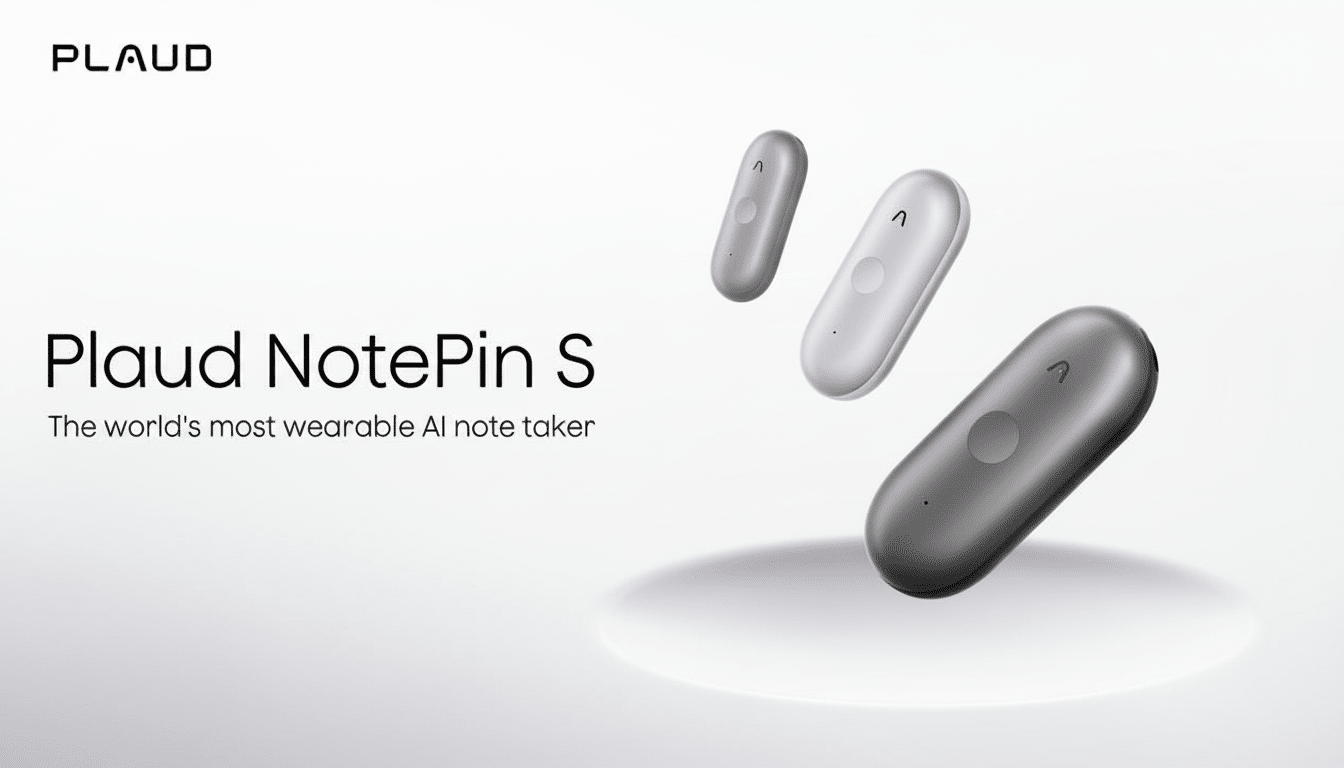
Plaud AI’s teeny recorder is growing up. The new NotePin S is a souped-up version of the company’s entry-level wearable, one with its own dedicated recording button, and it debuted alongside a companion desktop app that records online meeting audio in addition to source material for paper-free notes — all without adding another bot to your calls. The NotePin S is priced at $179 and looks like it has sold out of its first batch; Plaud has put an end to production of this first version.
A palpable upgrade for real-world, day-to-day use
The NotePin S takes a page out of the brand’s higher-end recorder by featuring a physical button. Long press to start or stop recording; a short tap drops a highlight marker you can return to later. That small difference is big — hitting it to activate a mic (as on the earlier NotePin) can easily be flubbed under pressure, and highlights, obviously, are gold if you’re a busy team with decisions, deadlines or quotes to punch out in seconds.
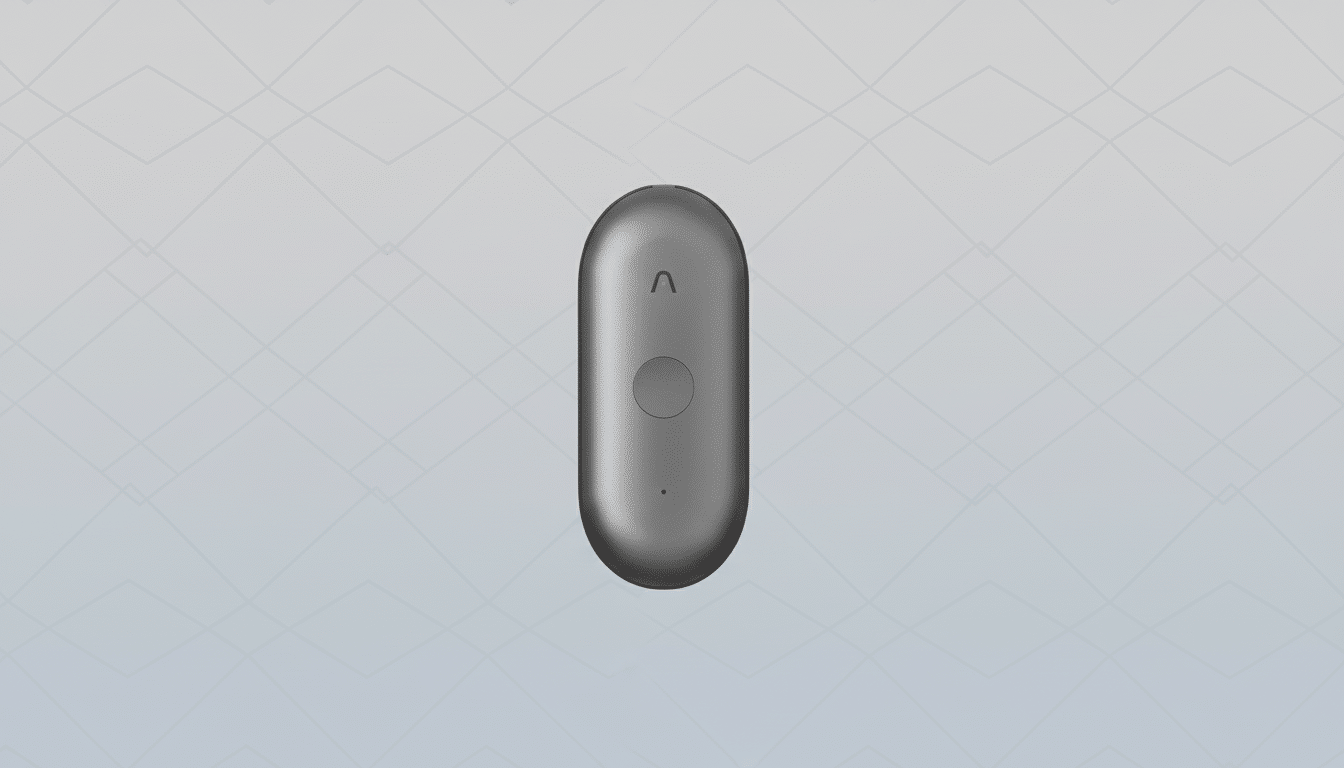
The hardware maintains a muted aesthetic with black, purple or silver finishes, and it’s made to be carried how you like: clipped on clothing using the magnetic fastener, around your neck via the included lanyard or through a wristband that comes in the box.
The kit-like approach diminishes the barrier to using the recorder as a tool that accompanies you continuously rather than being relegated to a desk gadget that occasionally doesn’t make it into your meeting bag.
Most notably, the NotePin S is Plaud’s first entry-level Pin to receive a dedicated button – previously it was present only on the Note Pro. By standardizing on a tactile trigger, Plaud is paving the way for people who record ambient conversations — and formal meetings — all day long.
Desktop app captures calls with no meeting bot
Accompanying the hardware, Plaud is launching a Mac-and-Windows app that can detect when you’ve switched into meeting software (Google Meet, Microsoft Teams, Zoom and so on) and starts recording audio and note-taking locally. Instead of coming in as a guest participant (the way many tools, like Otter and Fireflies, do), Plaud taps into your computer’s recording pipeline and — when available — the microphone at the end of the pin to record your conversation and subsequently create notes and summaries.
This design of “no bot” has a couple of benefits. It’s platform-agnostic, which is a boon in companies that use multiple conferencing tools. It also eliminates the awkwardness of a transcription bot dialing in and freaking out clients. And by blending system audio with a wearable mic’s close-mic’d signal, Plaud can potentially minimize crosstalk and increase speaker separation — two of the pain points that typically lead to auto-generated action items and follow-ups being worse for wear.
There are trade-offs to consider. Local capture may not prompt on-screen recording banners in meeting apps. Users still must comply with consent rules and internal policies. Groups like the International Association of Privacy Professionals recommend knocking before recording, and both Google’s and Microsoft’s documentation state that parties should adhere to local one-party or two-party consent laws. In regulated industries, IT departments will also seek clarity on how audio gets stored and handled.
Price bump signals a shift to full stack
The NotePin S, starting at $179, is pricier than the $159 original model, and that’s partly because it expands beyond a simple recorder to become a hardware-plus-software platform aimed at everyday work. The company says the S will take over for the first-gen NotePin and even that accessory is out of stock at its US storefront as well. Early sellouts point to pent-up demand for frictionless capture — especially among roles where missed context is costly, from sales and customer success to journalism and research.
Here’s the pitch: mark what matters in real time with the press of a button, and then have an AI compile a polished timeline complete with highlights, decisions and actions. In reality, this is likely to be beneficial as highlight markers would serve as anchors that enhance summary quality by allowing the model to prefer those segments when extracting key points.
Where it fits in the AI notes race today
The NotePin S and desktop app arrive in a crowded field, however. It’s now common for conferencing software like Zoom, Google and Microsoft to include native AI summaries with their products, while third-party providers such as Otter, Fireflies, Fathom (still under wraps), Notta and Grain are busy competing on transcription accuracy, diarization and CRM handoffs. The difference, according to Plaud: a hardware-first workflow — always-on capture via a wearable device — with a software implementation that prevents bots from participating in calls.
That won’t be for everyone. Businesses that require deep integrations, governance and administrative controls might opt for suites built into the collaboration platforms they use. But for folks and small teams who care primarily about speed of capture and clean notes across any meeting tool, a physical button plus magic invisible desktop recording may be the right simplicity vs. coverage trade-off.
Bottom line: how NotePin S could impact AI meeting notes
With the recording button and a listener desktop application that works across platforms locally, the NotePin S pushes Plaud from novelty gadget into utility workflow play. If the company can deliver reliable transcription and appropriate privacy defaults while keeping the hardware from being too in-your-face, this “press to remember” model has a shot of stealing some space alongside the incumbents in AI meeting notes.
