


Smartphone upgrades have become a tougher sell, and the latest midrange matchup underscores why. The Pixel 10a arrives with a familiar $499 sticker and a spec sheet that mostly mirrors last year’s formula. If you’re still carrying a Pixel 7a, the practical gains exist, but they’re not the kind that demand an immediate swap.
What Actually Changes From Pixel 7a To Pixel 10a
On paper, the Pixel 10a is the more modern package: a 6.3-inch 120Hz 1080p display in a lighter chassis, a newer Tensor G4 chipset with 8GB RAM and 128GB storage at entry, a 48MP main camera paired with a 13MP ultrawide, and a bigger 5,100mAh battery. You also get 30W wired charging (with Google’s 45W brick) and 10W wireless charging, plus Android 16 out of the box and a seven-year support promise that stretches updates well into the next decade.
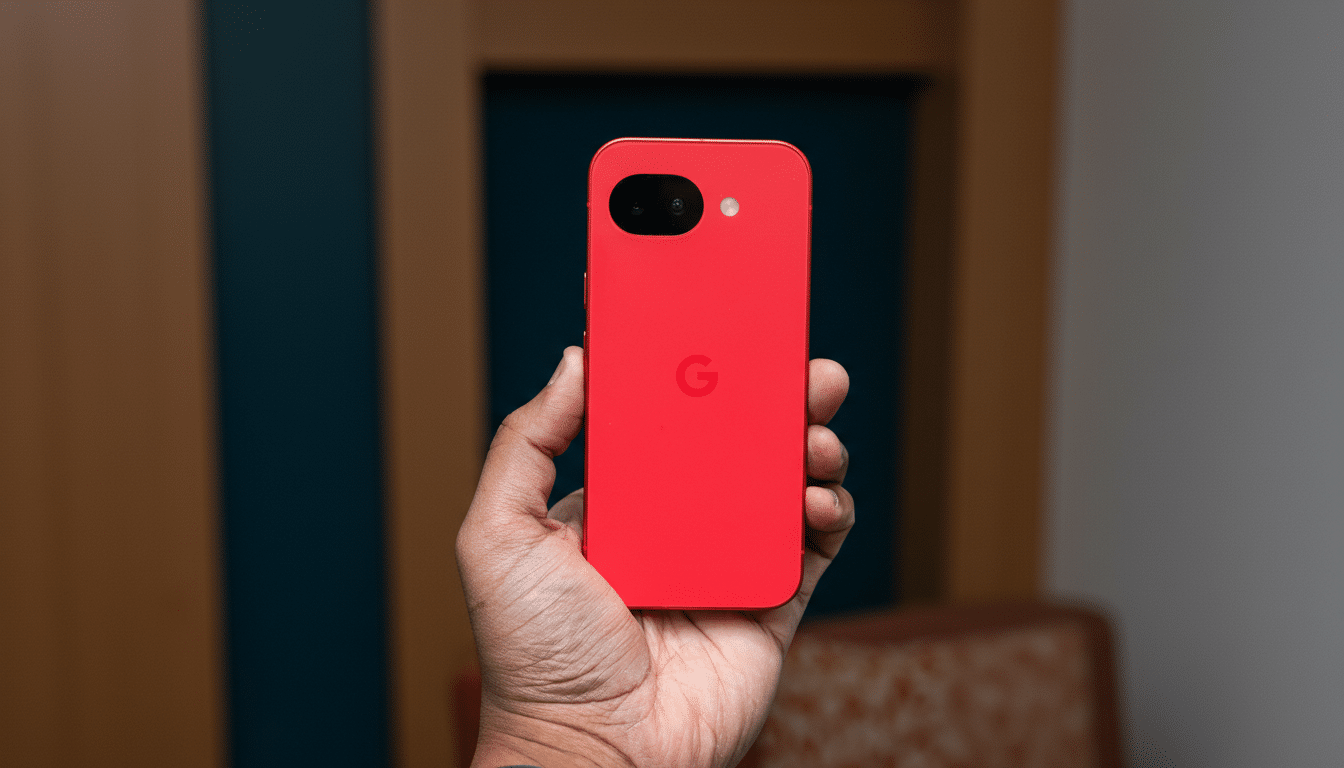
Against that, the Pixel 7a looks dated: the Tensor G2 runs hotter and drains faster, the 6.1-inch screen is capped at slower refresh rates, and its support horizon is shorter—three OS versions and five years of updates. Yet the 7a still nails the fundamentals, and much of the 10a’s feature set closely tracks last year’s model in the lineup, narrowing the real-world gap for owners of the 7a.
Everyday Gains Feel Smaller Than The Spec Sheet Suggests
The 120Hz display on the 10a is immediately smoother, especially when scrolling through social feeds or the app drawer. But for many day-to-day tasks—messaging, maps, rideshare, banking—the 7a still feels competent. The Tensor G4’s efficiency should curb heat and throttling during navigation or video capture, areas where the 7a could run warm, yet the step-up is evolutionary rather than transformational.
Battery life is where the 10a makes the most convincing case. A larger cell plus a newer chip typically nets more consistent endurance and less mid-afternoon anxiety, and the 30W top-up helps in a pinch. That said, users who charge nightly may not feel a sea change. If your 7a’s battery health is still solid and your workload is moderate, improvements here are nice-to-have, not must-have.
Cameras Remain Excellent With Subtle Differences
Google’s computational photography keeps both phones competitive. The 10a’s 48MP main sensor and updated processing can yield steadier low-light shots, cleaner detail in tricky HDR scenes, and snappier shutter response. But the 7a already delivers strong results with familiar tools like Night Sight, Real Tone, and Magic Eraser. Unless you shoot a lot in dim bars or fast-moving scenes, the gap is more about refinement than reinvention.
The Value Question And The Shadow Of Pixel 9a
Pricing pressure matters. Industry analysts at TrendForce have flagged double-digit percentage increases in memory component costs over recent quarters, a squeeze that often trickles down to midrange devices. In that context, a static $499 price tag is welcome—but it also means Google reserved only modest room for meaningful hardware leaps this cycle.
Complicating the decision is the Pixel 9a. It mirrors most of the 10a’s proposition yet often dips to around $399 at retail—roughly 20% off the common $499 midrange price point. If you need a phone today, the 9a’s discount-driven value is hard to ignore. The 10a’s tangible additions are faster wired charging and an extra year of software support due to its later launch, both nice perks but not game-changers for many 7a owners.
Who Should Upgrade From A Pixel 7a, And Why
Consider the 10a if your 7a’s battery is deteriorating, you frequently encounter heat or throttling during navigation, gaming, or 4K recording, or you specifically want a larger 6.3-inch 120Hz display. The extended seven-year support window is also compelling if you prefer to keep a phone for the long haul or plan to pass it down later.
Everyone else can wait. The 7a will keep receiving updates for years, and its camera and core performance remain reliable. If you’re itching for something newer, watch for seasonal deals: Google’s midrange phones historically see aggressive promotions, and the 10a is likely to follow suit.
Bottom Line: Pixel 10a Is Solid, But Many Can Wait
The Pixel 10a is a solid midrange phone, but it doesn’t invalidate the Pixel 7a. For most people, the jump delivers polish, not a paradigm shift. If your 7a still runs well, hold onto it—or, if you must buy now, consider the 9a’s frequent discounts. Waiting a bit could net you the 10a at a better price, making the upgrade math finally add up.
