


A palm-size color E Ink photo frame intended for magnets and metal doors is quietly coming for your kitchen. Named PicPak, the fridge-friendly display is launching on Kickstarter for around $49 and offering ultra-low maintenance alongside space for 500+ images and a headline-stealing claim of up to 400 days on standby with just one charge.
A Magnet-Ready Frame Designed Specifically for Your Kitchen
PicPak is more like a keepsake than a tablet, with dimensions of approximately 3.9 × 3.6 × 0.24 inches and a design reminiscent of the kind of Polaroid print you’re able to stick on your fridge.
- A Magnet-Ready Frame Designed Specifically for Your Kitchen
- Color E Ink Strengths and Limits for Everyday Use
- Impressive Battery Life Claims Backed by E Ink Tech
- Price and Campaign Momentum as Early Backers Pledge
- Crowdfunding Reality Check on Promises and Timelines
- Where This Fits at Home and Why It Makes Sense
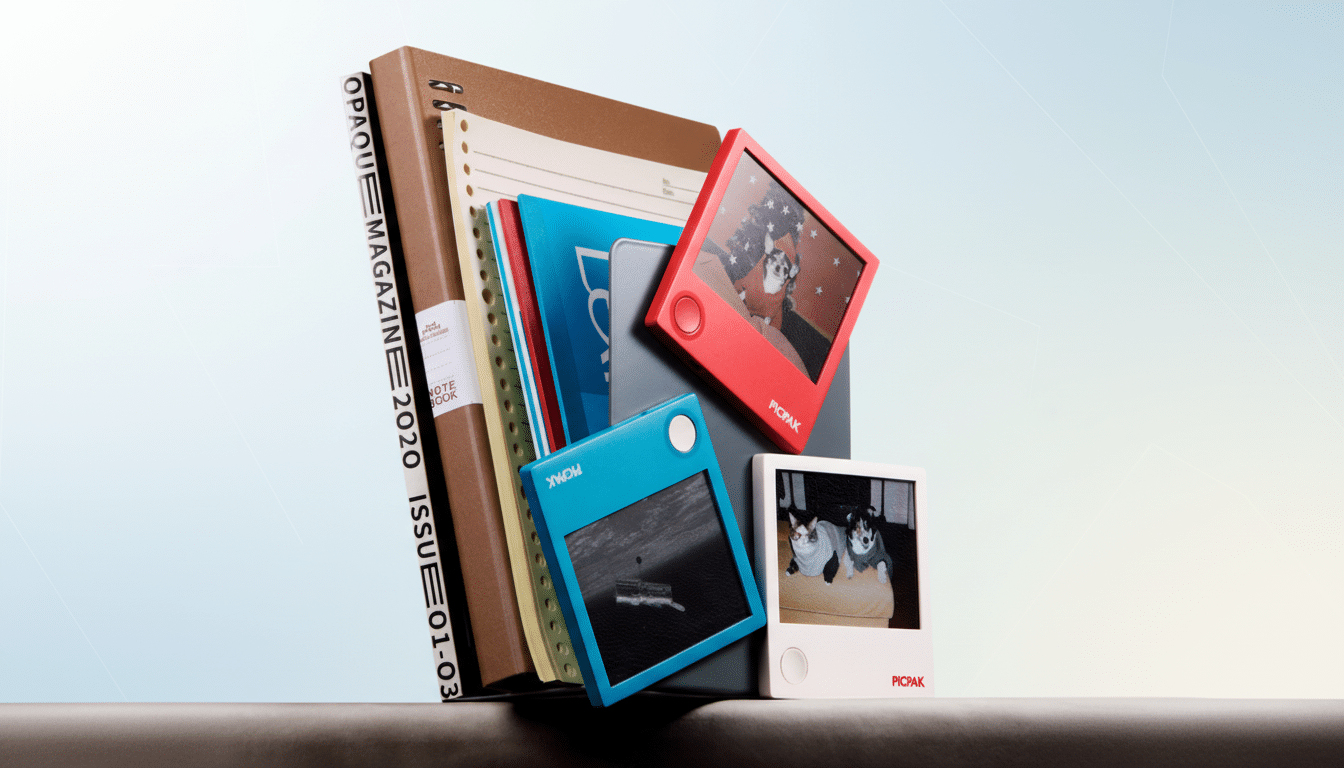
It comes with both magnetic strips for mounting and a built-in stand to prop it on shelves, so it travels just as well from the icebox to a desk without extras.
It’s intentionally simple. The color E Ink panel displays still photos only—no video, no animations—and there’s no always-on backlight. A shake does basic input, and onboard Wi‑Fi pulls in new pictures while the company says it will later add glanceable things like weather or quotes via software updates. The pitch is “set it and forget it,” not another screen fighting for attention.
Color E Ink Strengths and Limits for Everyday Use
Unlike an LCD screen, E Ink is reflective, so it looks its best under ambient light—direct sunlight during the day; kitchen lighting or an IKEA lamp at night—with no glare or flicker. That makes it perfect for high-traffic areas like a fridge door where plugged-in displays simply won’t work. E Ink Corporation announced marginal gains on its latest color modules, claiming up to 30% greater color saturation over previous generations, which help add punch without taking away from readability.
There are trade-offs. Color E Ink is still not as bright as LCD or OLED and it refreshes more slowly, which is why PicPak steers clear of video. No backlight means power draw is minimal but visibility depends on your room’s lighting—fantastic for a bright kitchen, less so for a dim hallway. If you’re hoping for a sparkly slideshow in the middle of the night, this is not it; if your preference runs to paper-like images that merge with their surroundings, it’s right in the sweet spot.
Impressive Battery Life Claims Backed by E Ink Tech
The headline spec—up to 400 days of standby time—is down to E Ink’s bi-stable nature, meaning it requires no power to maintain an image. Power is only used while refreshing, so the real-world number will depend on how often you update it. Change the photo weekly and the claim seems credible; change it a few times a day and that number will fall. For reference, mainstream e-readers equipped only with monochrome E Ink screens tend to promote weeks on a single charge, and color panels are more power-hungry, so PicPak’s estimate is impressive even if you take it with a grain of salt.

Price and Campaign Momentum as Early Backers Pledge
Early backers can preorder a unit for roughly $49, bulk discounts available for multi-packs. The campaign has blown past its initial funding goal and drawn the backing of thousands of supporters — a signal that the concept of an ambient photo frame is one that strikes home with households already weary from another device they need to keep charged.
Crowdfunding Reality Check on Promises and Timelines
As with all crowdfunded hardware, the devil will be in the details. Battery targets, feature roadmaps and ship dates are promises — not proof. A University of Pennsylvania study about what happens after crowdfunding success found that almost 9% of successful projects failed to deliver rewards, and the timelines are commonly off even for those that did. PicPak’s most interesting capabilities — like automatic headline or weather updates — will depend as much on app stability and long-term cloud support as the device.
Privacy is another consideration. Some path — phone app or cloud — is required for images to make their way to a Wi‑Fi photo frame. Buyers should ensure there are clear policies on the handling of images and default to local storage, and the ability to disable any cloud services (as desired).
Where This Fits at Home and Why It Makes Sense
And finally, in a world of bright, booming screens, PicPak is meant to be the opposite: a quiet, battery‑sipping snapshot that lives where we all actually look every day.
It’s a fraction of the energy consumption of a smart display, flicking through pictures in an old-school slideshow style and never demanding its own wall socket by the fridge. It trades motion and a backlight from the traditional digital photo frame for a paper‑like look that feels more like decor than gadget.
If the company can deliver on endurance and software polish, this could easily be one of the most practical applications for color E Ink in your home — an ambient frame that at last makes your photo roll a part of your daily space, rather than just something buried in your phone.
