


At CES, the most captivating wearable on the show floor wasn’t a fitness tracker or even a sleep ring. It was a purpose-built perimenopause tracker that puts data behind a life stage too often dismissed as “just something to endure,” she said. Watching it in action had an oddly uplifting effect, making me uncharacteristically hopeful about the direction that women’s health tech is finally heading (and not just because of its electric motors).
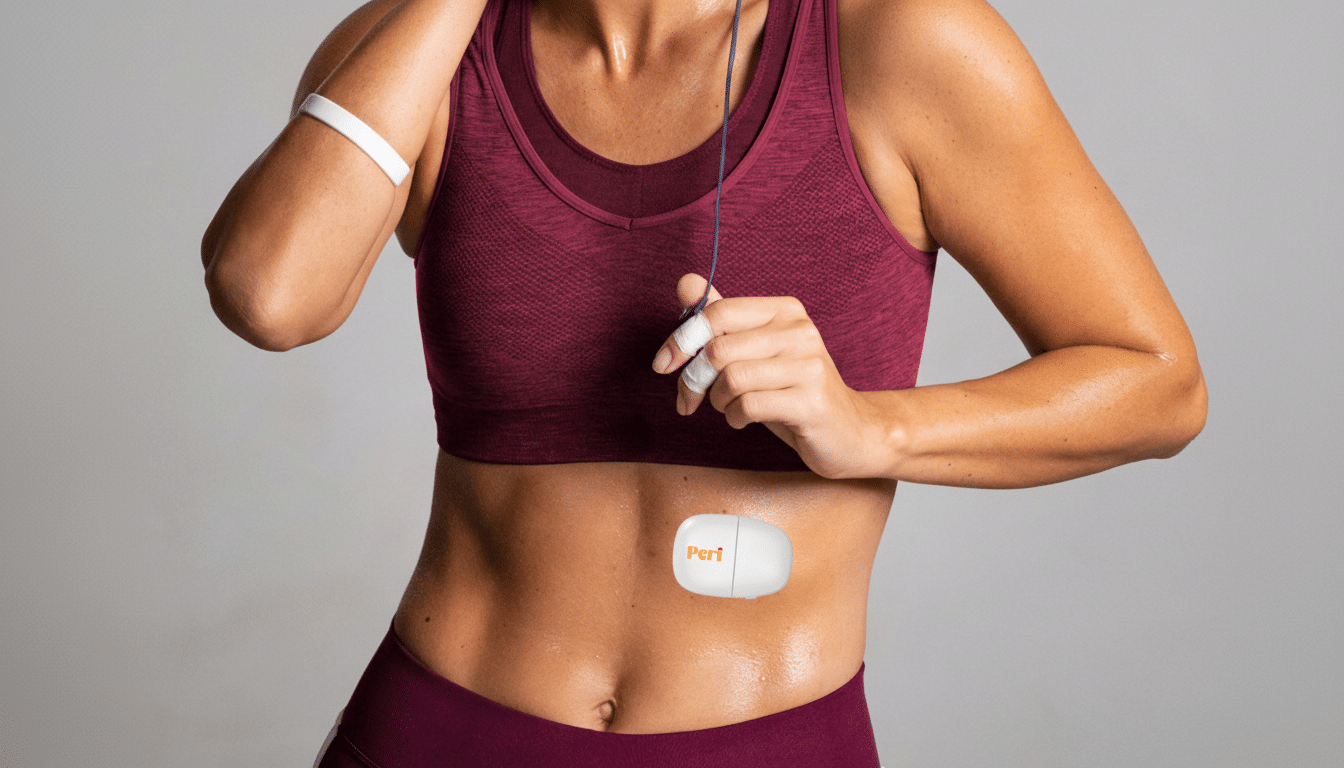
Called Peri, the device was created by IdentifyHer and is for the roller-coaster years leading up to menopause. Costing $449, it is meant to quantify patterns of hot flashes, night sweats, anxiety, and sleep disruptions — symptoms that can disrupt a woman’s daily life but often get less formal tracking than self-reported notes jotted in an evening journal.
What This Wearable Measures to Track Perimenopause Symptoms
Peri looks like a small, discreet patch of adhesive — imagine the form factor of a CGM but with no needles. It is placed at the base of the chest or upper abdomen and has four onboard sensors:
- Photoplethysmography (blood flow)
- Accelerometer (movement)
- Electrodermal activity (EDA, skin conductance)
- Temperature
The company’s algorithm combines these streams to identify and characterize vasomotor episodes, rather than relying on just temperature spikes that can be noisy or delayed.
Battery life tends to be approximately a week, possibly closer to 10 days, and the app will present you with sleep timing, an anxiety score, activity levels, and contextual information about your cycle. With it, users can record moods and chart how interventions like hormone therapy, SSRI/SNRI medications, CBT for insomnia, or lifestyle changes affect the intensity and frequency of symptoms over time. It is not a diagnostic instrument, but it’s designed to establish an objective baseline and historical trends.
Why We Need Better Data on Perimenopause
Numbers vary, but the North American Menopause Society estimates 75% of women get some vasomotor symptoms, and many find them moderate to severe.
The stages of perimenopause straddle years, and its symptoms can occur at different times with varying magnitudes; this is not conducive to pattern recognition without continuous observation. There is also survey evidence that formal education in menopause care in OB-GYN residency programs can be lacking, exacerbating the problem of providing a timely, personalized intervention.
The stakes aren’t just personal. Unrelieved or undertreated menopausal symptoms may be costing the U.S. billions of dollars a year in workplace productivity losses, according to an analysis from Mayo Clinic Proceedings. Meanwhile, the International Menopause Society has estimated that over 1 billion women worldwide will be postmenopausal during this decade. Against that backdrop, tools that measure symptoms and affirm the patient’s experience aren’t a nice-to-have—they’re fundamental to better care.
There is also good science behind the sensor choices. Studies published in Menopause and Sleep, for example, show that EDA peaks are associated with objective hot flashes measured using data loggers, and that heart rate variability shifts and skin temperature changes can follow autonomic changes accompanying vasomotor events. By incorporating these signals in the context of movement and sleep stages, it is more likely that true episodes will be detected and false events will be filtered out.

From Self-Report To Signal-Derived Insights
Up until now, most perimenopause tracking has lived in journals and symptom diaries. Useful, indeed — but subjective and difficult to compare between weeks or providers. The onus is reversed by a continuous sensor: it records events passively, timestamps them, and relates them to sleep quality, cycle phase, and daily activity. That gives clinicians something to analyze beyond memory and provides users with concrete feedback on what’s working.
Think about hot flashes that ricochet in the early hours. With objective data, a clinician could tweak the timing of hormone use or consider nonhormonal options, including combined pharmacologic treatment with sleep-focused CBT. Similarly, if anxiety scores and EDA trends spike with the ingestion of caffeine or high-intensity evening workouts, there’s an obvious behavioral lever to pull.
What It Means for Women’s Health and Digital Care
Specialized trackers signal a pivot in consumer health tech — from counting steps to addressing conditions that have historically gone under-researched. The version of the device I saw was an honoree in this year’s digital health category for a CES Innovation Award, an indication that industry is starting to reward companies working on neglected needs rather than those chasing the next general metric.
If products like this can communicate standardized, privacy-respecting summaries with clinicians, they might streamline EBT and narrow persistent gaps in care.
They could also facilitate workplace adjustments by recording patterns of symptoms that are impinging on performance — an area in which organizations such as the Fawcett Society have already demanded more concerted support.
Caveats and the Way Forward for This Emerging Tracker
Promising as the approach is, big questions remain. Algorithms must be peer-reviewed across diverse ages, skin tones, and body types. For days of long wear, adhesive comfort counts. Battery life and recharging cadence have to be tailored for actual routines. And at $449, cost may be prohibitive unless there are employer programs or eligible reimbursement.
Data governance is paramount. High-stakes biometric and reproductive data must also be protected with strong security, clear consent processes, and transparent data rights. The finest women’s health tools will mesh with clinical guidelines from organizations like NAMS and ACOG, avoid overreach, and smartly integrate into care rather than try to supplant it.
But a perimenopause-focused tracker at CES felt like an overdue course correction. It translates a lived experience into measurable signals, it gives users a language and evidence in defense of themselves, and it nudges the market toward a better direction. If this is the direction of consumer health, at least the future of women’s health seems to have an interesting light — and a massive amount of data — at its end.
