


One of the most disruptive life stages for women, perimenopause is still surprisingly misunderstood by both patients and doctors alike.
(Related: The 4 Worst Things to Say During Menstruation)
- What the Peri Wearable Tracks and How It Works
- Why We Need Better Data for Perimenopause
- Inside the Hot Flash Signal and What It Reveals
- How It Compares With Other Options on the Market
- Price, Availability, and Important Caveats to Know
- Who the Peri Wearable Is For and Who Might Skip It
- Bottom Line: Where Peri Fits in Menopause Care Today
Cumbersome periods aren’t just inconvenient: They’re a sign that something isn’t quite right with your body.
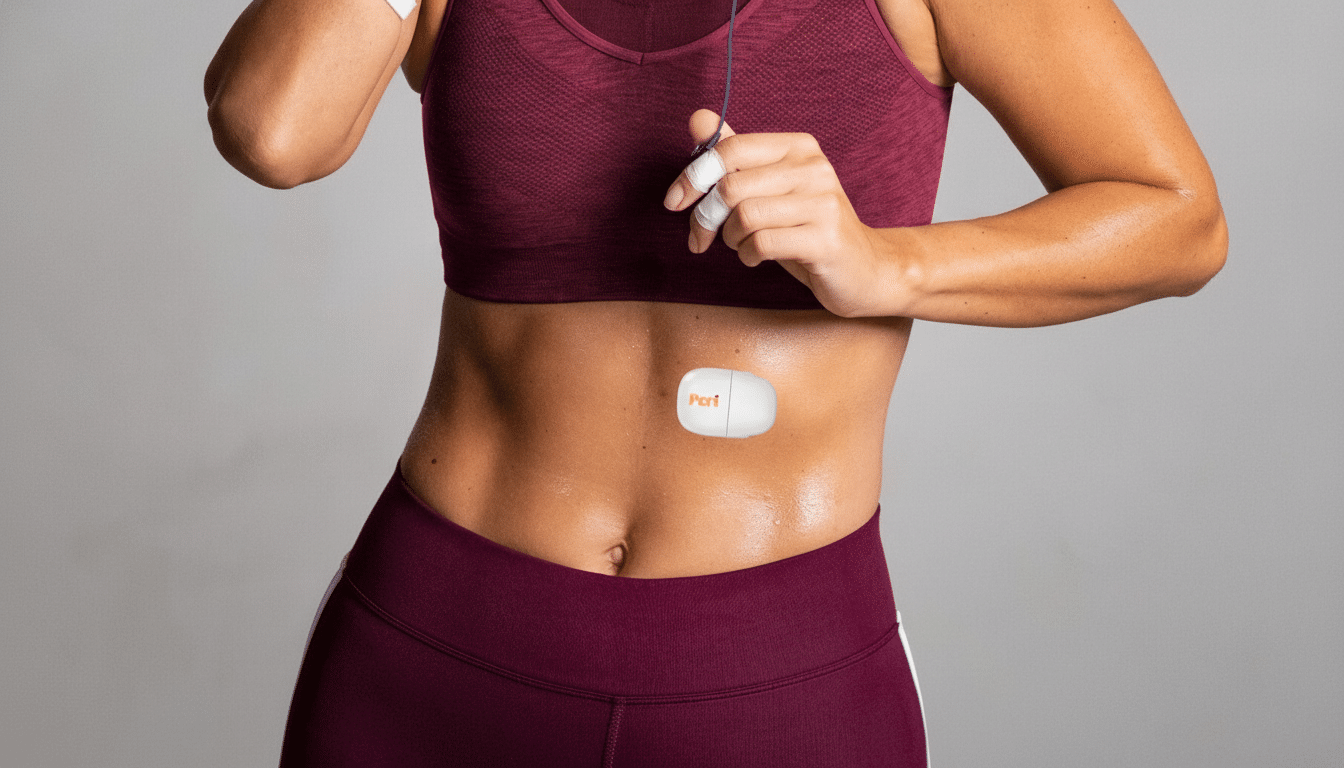
Debuted at CES, the Peri wearable offers tailored information about hot flashes, night sweats, sleep disturbances, anxiety, and menstrual changes by connecting a discreet torso-worn tracker with an app that translates raw biosignals into meaningful trends.
What the Peri Wearable Tracks and How It Works
Peri attaches to the body with a thin, 3M-developed, low-profile patch meant to be worn for days at a time. The adhesive is replaceable every 10 to 14 days, and the device comes with two interchangeable batteries so one can charge while you’re wearing the other — a clever setup for around-the-clock monitoring that’s particularly useful when symptoms often spike at night.
Under the hood, Peri combines a sensor suite that will be familiar to anyone who’s experienced advanced wearables: accelerometry (movement and sleep staging), electrodermal activity (EDA; sympathetic nervous system arousal), photoplethysmography (PPG; heart rate and HRV), as well as skin temperature. Where the company hopes to make its mark is in algorithms that recognize vasomotor events (hot flashes and night sweats) from the aggregated signals, instead of having to depend on manual symptom logs.
The app also aggregates data by symptom and begins to render patterns across time — think clusters of nighttime hot flashes, connections between anxiety spikes and restless sleep, or the ways cycles change in the ramp-up to menopause.
One limitation the company is quick to note: Its device can’t directly measure cognitive symptoms like brain fog.
Why We Need Better Data for Perimenopause
Perimenopause is pervasive and under-measured. According to the North American Menopause Society, up to 75% of women have vasomotor symptoms, and a long-term SWAN study showed that such symptoms can last for a median of 7 years or even longer for some groups. Sleep disturbances affect approximately 40–60% of women in the transition and contribute to fatigue, mood alterations, and quality of life.
Standard care is a matter of infrequent visits and recording past journal entries. Mining for continuous biosignals is the one thing memory can’t produce: timing, frequency, and intensity of events, plus context such as activity, temperature shifts, or stress states. For clinicians, this sort of longitudinal, signal-hosted diary will be able to help inform decisions about changes in lifestyle behaviors, supplements, or hormone therapy — and provide patients with a more coherent narrative about what’s going on with their bodies.
Inside the Hot Flash Signal and What It Reveals
Hot flashes aren’t just a matter of feeling hot — they are an entire cascade of thermoregulatory and autonomic responses. EDA increases as the sympathetic nervous system activates, skin temperature changes occur rapidly, and heart rate is likely to vary. By combining the EDA, temperature slope, and PPG dynamics, Peri will seek to identify these events and distinguish them from exercise or environmental heat. If confirmed by other studies, this could take tracking from the subjective — “I think I had three last night” — to a reliable, time-stamped, and graded count of them.

How It Compares With Other Options on the Market
General-purpose wearables like the Apple Watch, Fitbit, and Oura Ring already track temperature, heart rate, sleep, and menstrual cycles — some users infer what might be perimenopause patterns from those signals. But they generally do not make the claim that they have detected a hot flash. For relief, there’s the Embr Wave, which provides symptom relief through cooling, not measurement.
Peri specializes in focused detection and interpretation for the menopausal transition. If its algorithms hold true and the adhesive doesn’t get too unpleasant after a while, it’s filling in the middle of that Venn diagram between generic users who want more information than their really low-bar daily tracker will show, because it can dole out physiology data as a periodic, perimenopause-specific report card.
Price, Availability, and Important Caveats to Know
You can preorder Peri for $449, with shipping promised shortly after the company’s CES unveiling. The company says a subscription is not needed to use the app — welcome news in a category stuffed with expensive subscriptions. Users will need to consider frequent adhesive replacements; however, the product is built on a swappable battery system and is designed for low friction.
Like any new health wearable, questions of validation and governance arise. Was the hot flash detection compared with a reference standard or an independent blind comparison? Is the product being marketed as a health device, or is it seeking regulatory approval? For comparison, the vast majority of consumer wearables are used as wellness devices unless they receive FDA clearances for specific health claims.
Privacy is another priority. Menopause information is sensitive, and a majority of consumer health apps aren’t subject to HIPAA. Look for clear policies on:
- Encryption
- Data retention
- De-identification
- Whether information is shared with other parties
Large medical organizations — including NAMS and the American College of Obstetricians and Gynecologists — are putting even more emphasis on informed, shared decision-making, as part of which data transparency is critical.
Who the Peri Wearable Is For and Who Might Skip It
Peri’s attachment format won’t suit every taste; others will lean toward rings or wristbands. But for people struggling with nocturnal sweats, irregular cycles, or spikes in anxiety, passive detection on the torso — near core temperature and sweat gland–rich skin — might pick up more fine-grained vasomotor physiology than wrist-only devices.
The promise here is customized trendlines: when the symptoms began, how they’re progressing, and what determines better or worse days. That’s the difference, for many people, between “I feel off” and a science-based strategy to change sleeping habits, stress management, or treatment.
Bottom Line: Where Peri Fits in Menopause Care Today
Peri enters as menopause care finally begins to receive the attention and investment it has long deserved. By turning biosignals into perimenopause-specific insights, free from a monthly fee, it could bridge the gap between lived experience and clinical decision-making. The next test is rigor: real-world accuracy, comfort over months, and transparent data practices. If those prove out, Peri won’t just tally hot flashes; it could quantify at last a major physical experience that millions of women have but one that has so far been under-tracked.
