


Pennsylvania health officials have confirmed two measles-associated deaths among unvaccinated residents of Lancaster County, the state’s first deaths related to measles in 35 years. The announcement comes during a statewide outbreak that had reached 393 confirmed cases in 28 counties in 2026 when the state released its update.
The deaths underscore the potential severity of a disease that is preventable through vaccination but remains highly contagious when it reaches communities with enough susceptible people. The Pennsylvania Department of Health announcement did not release ages, medical histories, dates of illness or details about complications, citing privacy protections for the individuals and their families.

State officials used the terms “measles-associated” and “related to measles.” That wording is important: the available public information establishes the state’s designation, but does not provide the clinical records needed to determine the precise role measles played in each individual death. It would be premature to describe a more specific cause of death or to speculate about either person’s circumstances.
Outbreak figures can shift with reporting updates
The official figure of 393 cases in 28 counties is the clearest statewide snapshot tied to the death announcement. Case surveillance is dynamic, however, and contemporaneous accounts did not all use identical geographic totals. WHYY reported 393 cases across 29 counties, while reporting from the University of Minnesota’s CIDRAP News cited differing Lancaster County totals at a particular reporting point.
Those discrepancies do not necessarily indicate conflicting diagnoses. They can arise as local and state health agencies receive new reports, complete investigations, revise residence information or update dashboards at different times. For that reason, the state’s 393 cases in 28 counties should be understood as a dated surveillance count, rather than a fixed final measure of the outbreak.
CIDRAP News, citing Pennsylvania health officials, described the two deaths as the first measles-related fatalities reported in the United States in 2026. Pennsylvania’s announcement itself focused on the state outbreak and said they were its first measles-related deaths in 35 years.
Why measles can spread quickly
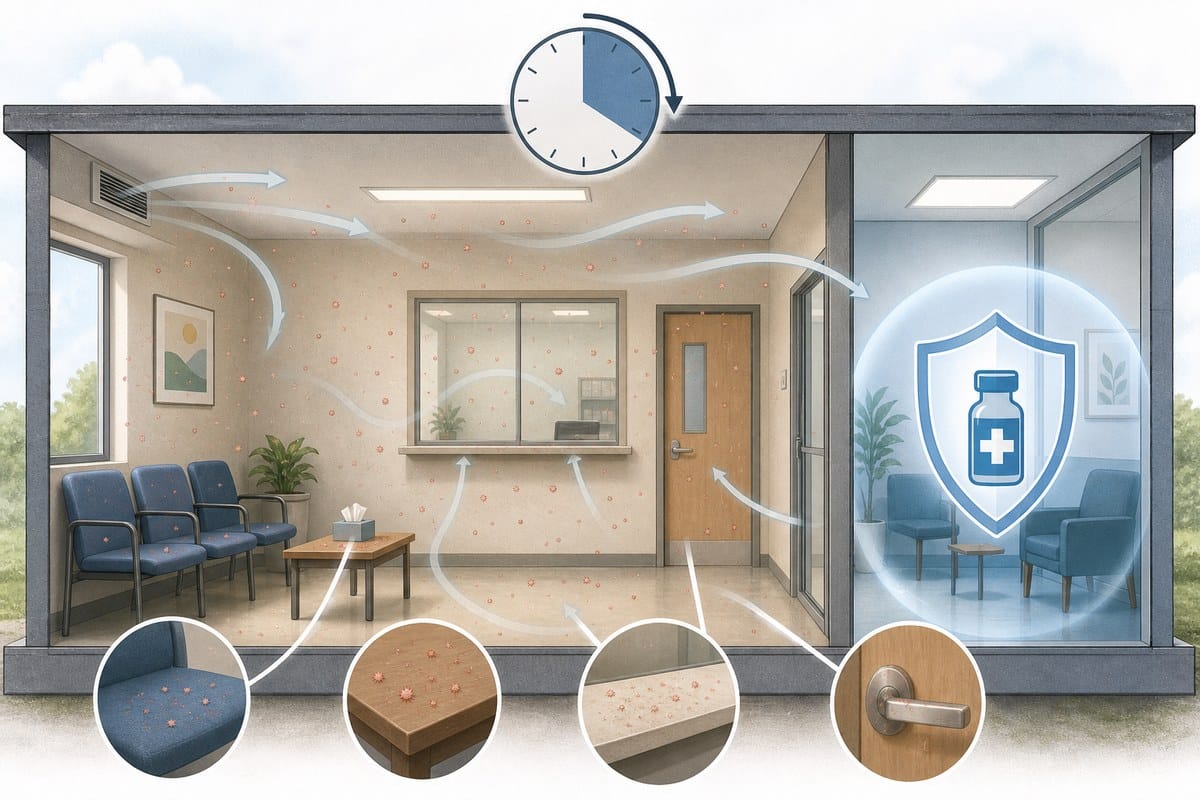
Measles is a respiratory virus that can spread when an infected person coughs or sneezes. The Pennsylvania Health Department says the virus can remain infectious in the air and on surfaces for as long as two hours after an infected person has left an area. That persistence can make exposure investigations difficult in places such as waiting rooms, schools, workplaces and other indoor settings.
Illness can include fever, cough, runny nose, red or watery eyes and a rash. The department says serious complications can include pneumonia and brain swelling. Death related to measles occurs in an estimated one to three patients per 1,000 cases, according to the state’s public-health guidance. That is a population-level estimate, not an explanation of what occurred in the two Lancaster County deaths.
The risk of severe illness is not distributed evenly: young children, pregnant people and people with weakened immune systems can face particular danger. But public announcements about this outbreak have not disclosed whether either person who died had conditions that increased their risk, and no conclusions about that can be drawn from the limited information released.
Vaccination remains the main prevention tool
The state says two doses of measles, mumps and rubella vaccine, or MMR, are the best protection against measles and provide 97% lifetime protection. Vaccination does more than reduce an individual’s chance of infection; high coverage also reduces opportunities for the virus to move through a community and helps protect people who cannot be vaccinated or may not mount a strong immune response.
Gov. Josh Shapiro said skepticism and misinformation about the MMR vaccine have left more people vulnerable, according to WHYY. He also linked a rise in families seeking philosophical or religious vaccine exemptions to reduced vaccination coverage, a claim reported by CIDRAP News. Those statements are assessments by state officials, not causal findings from the death report itself. The announcement does not establish why either deceased person was unvaccinated, nor does it assign responsibility for the outbreak or the deaths to any particular group.
Public-health officials have urged people to check their vaccination status and to contact a health-care provider or local health department if they think they may have been exposed or develop symptoms. People who suspect measles should call ahead before arriving for medical care, so a facility can take steps to limit possible exposure to others. The state’s report makes clear that the outbreak was still active when the deaths were announced, with hundreds of confirmed infections already recorded.

