


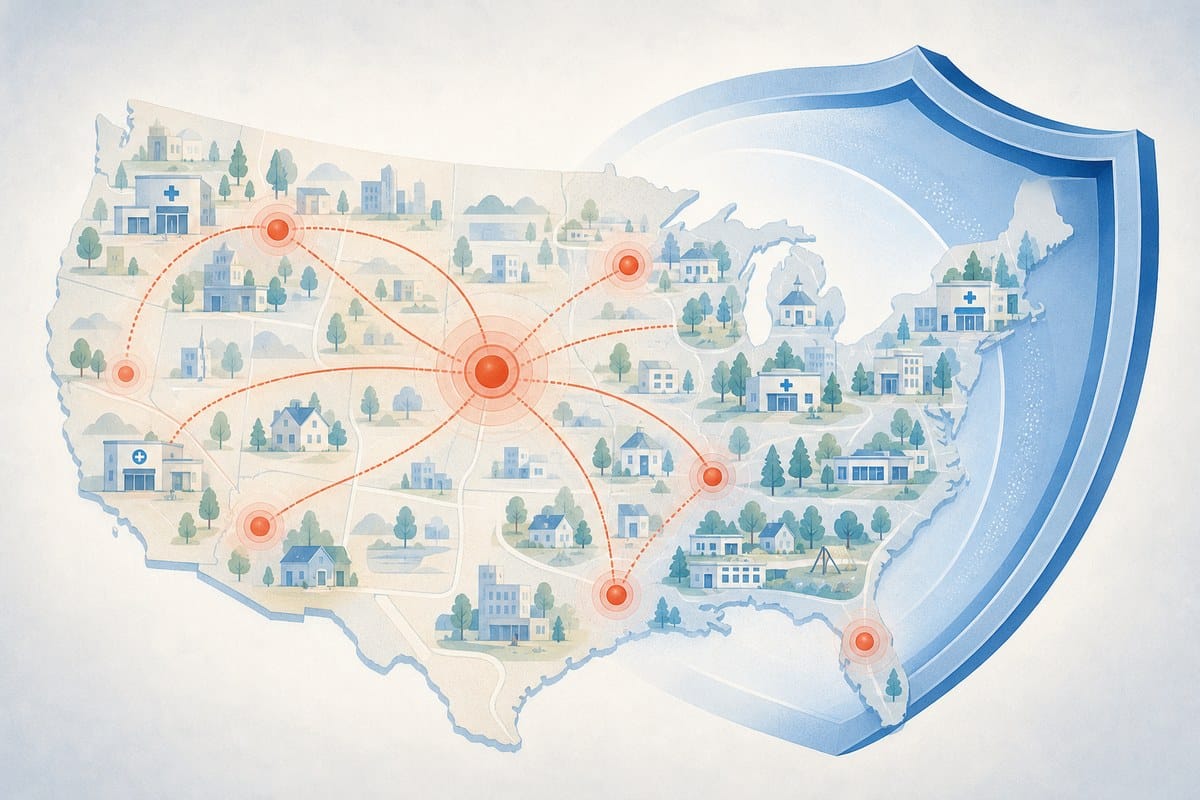
The Pan American Health Organization has withdrawn the United States’ measles-elimination status after determining that the virus had been transmitted continuously in the country for at least 12 months. The decision, announced November 17, ends a public-health designation the United States had held since 2000 and signals that sustained domestic spread, rather than isolated imported cases, has been re-established.
The finding does not mean the United States had been free of measles for 26 years. Under the regional standard, elimination means a country has interrupted continuous local transmission of a particular virus strain for at least a year, even though travelers can still introduce measles and spark limited outbreaks. PAHO’s decision instead indicates that transmission persisted long enough to cross that threshold, creating a more difficult environment for protecting people who are not vaccinated or cannot receive vaccination.
What PAHO’s decision measures
PAHO reviewed U.S. epidemiological and laboratory evidence from January 2025 through January 2026, according to NBC News’ account of the assessment. Such reviews examine more than a raw case total. They can incorporate patterns of spread, viral genetic evidence, vaccination coverage, the quality of surveillance and the capacity to investigate and stop outbreaks.
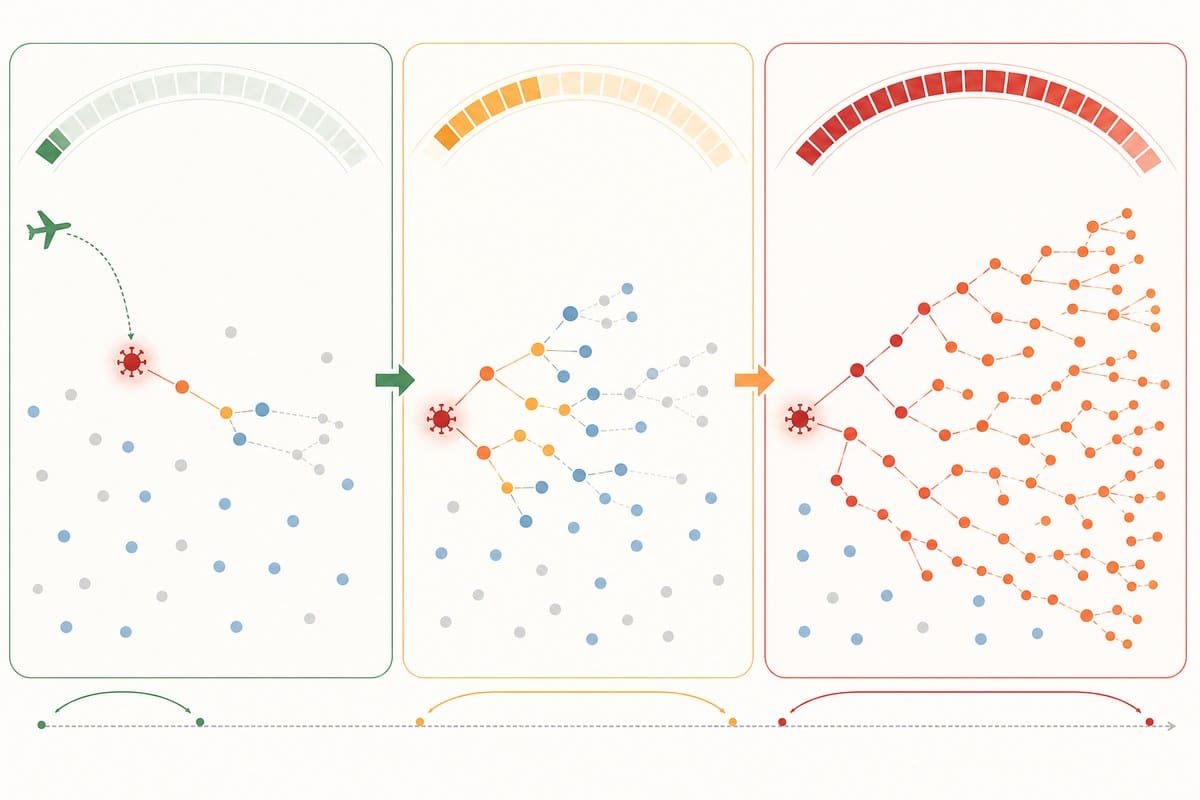
That distinction helps explain why a status determination and a current case count should not be treated as the same measure. The formal PAHO review concerned evidence during a defined 2025-26 period. Separately, the Centers for Disease Control and Prevention had recorded 5,412 measles cases nationwide by November 12 or 13, based on figures reported by the Delaware Division of Public Health and national news organizations. That later surveillance total illustrates the scale of continuing activity, but it was not itself the sole basis for the earlier review period.
PAHO also found that Mexico and Bolivia no longer met the regional elimination standard. The United States is expected to submit a corrective action plan in the coming weeks, according to reporting by CNBC. U.S. health officials have said they remain committed to containing outbreaks and recovering the designation.
Vaccination gaps raise the risk of prolonged spread
Measles is among the most contagious infectious diseases. It can cause pneumonia, encephalitis and other severe complications, and it poses particular risks to infants too young for routine vaccination, unvaccinated people and some people with weakened immune systems. Measles vaccination protects both recipients and, when uptake is high across a community, people who have less direct protection.
Two doses of measles, mumps and rubella vaccine are about 97% effective at preventing measles, according to the Delaware health department and CDC information cited in the coverage. But CDC-aggregated kindergarten MMR coverage for the 2025-26 school year was reported at 92.4%, below the roughly 95% community coverage level public-health officials commonly use as a target for limiting sustained measles transmission.
That population-level benchmark is not a sharp line separating safety from danger, and it does not describe an individual’s chance of infection. Local coverage can vary substantially, leaving clusters of susceptible people even when a statewide or national average appears higher. The available reporting links immunity gaps to the ability of outbreaks to continue, but the PAHO assessment is not a causal study assigning the loss of status to one policy, institution or reason for lower vaccination.
CDC Director Erica Schwartz said the federal government had invested $100 million in state and local health departments to reach communities where measles transmission is occurring. The work required to regain elimination status is likely to include increasing vaccination, quickly detecting cases, tracing exposure networks and limiting further spread, as public-health specialists told CBS News.
Case and death totals require careful reading
National measles numbers are updated as health departments investigate and classify infections, so counts can change. Reports in mid-November consistently described more than 5,400 CDC-reported cases, with the more precise 5,412 figure carrying a November 12 or 13 cutoff. Geographic totals also differ across reports because they refer to different periods and definitions: some counted states reporting cases in 2026, while PAHO’s review considered outbreaks across states and territories during its own January 2025-to-January 2026 window.
Death figures require a similar qualification. CBS reported that the CDC had recorded at least six measles-related deaths, while state health departments had reported additional fatalities. Other outlets reported 10 deaths counted by state health departments in 2026. As Al Jazeera noted, the gap appears to reflect differences between federal confirmation and state-reported totals; the two figures should not be added together or presented as interchangeable.
The loss of the designation is a reversal of a benchmark reached after decades of vaccination campaigns and surveillance work. It does not change the effectiveness of MMR vaccine or mean every community faces the same immediate risk. But it records that the country has not contained measles transmission at the level required for elimination, and it puts renewed pressure on health departments to identify outbreaks early enough to prevent them from becoming entrenched.