


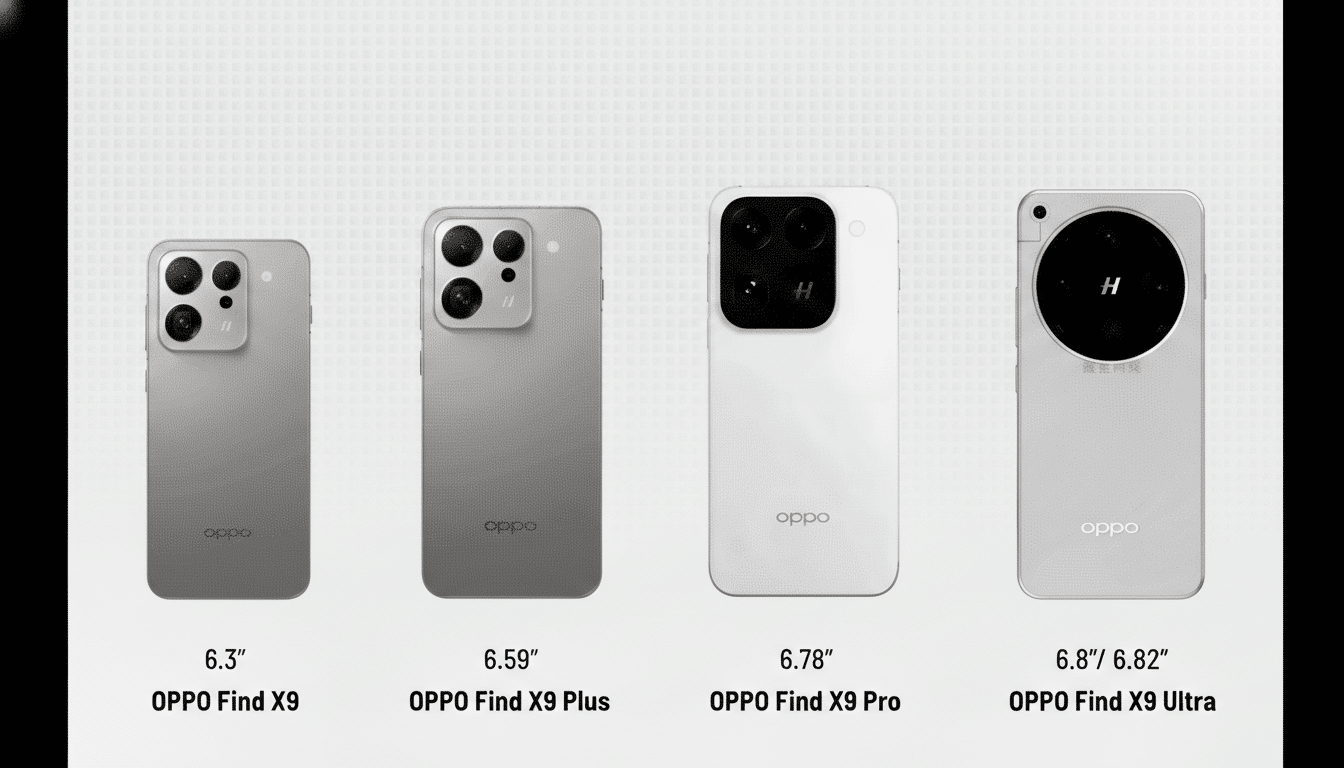
Fresh renders and spec leaks point to the Oppo Find X9 Ultra chasing the camera crown with a rare one-two punch: dual 200MP sensors and a detachable 300mm telephoto extender that promises 13.2x optical reach. If the details hold, this Ultra could reshape what mobile zoom and detail look like in 2026’s flagship class.
Two 200MP Sensors Change The Imaging Equation
According to a report and CAD-based renders shared by Smartprix, Oppo is preparing a 200MP Sony LYT-901 primary camera on a large 1/1.12-inch sensor with an f/1.5 aperture. Pair it with a 200MP OmniVision telephoto (1/1.28-inch, f/2.2) offering 3x optical zoom, and you have a rare configuration that favors both detail and flexibility across focal lengths.
High-res sensors aren’t just about big numbers. With 16-in-1 pixel binning, a 200MP chip can output cleaner 12.5MP images with improved dynamic range, while still allowing sizeable in-sensor crops that behave like lossless “pseudo-optical” steps. A dual-200MP setup also opens the door to computational fusion across focal lengths, potentially reducing texture smearing and preserving micro-contrast where phones typically struggle—think concert lighting or night cityscapes.
The leak also mentions a 50MP ultrawide (reported as JN5) and chatter around an additional 50MP long-range unit. Camera arrays can shift late in development, but the core takeaway is unchanged: Oppo appears to be prioritizing large sensors and high native pixel counts at multiple focal lengths, a strategy rarely seen in tandem.
A 300mm Extender And What It Means For Mobile Photography
The standout accessory is a 300mm telephoto extender that reportedly lifts the 200MP telephoto from 3x to 13.2x true optical zoom. That’s a very different proposition from digital “Space Zoom” gimmicks: you’re physically changing the optical path to magnify the image on the sensor, preserving detail and reducing noise.
There are trade-offs. Longer focal lengths demand aggressive stabilization and precise autofocus, especially in low light where even tiny hand movements can blur frames. Expect Oppo’s OIS and EIS pipelines to do heavy lifting, with multi-frame stacking to stabilize and enhance fine detail. The company’s ongoing collaboration with Hasselblad suggests a focus on consistent color and skin tones, areas where pro tuning pays off at extreme focal lengths.
Smartphone makers have flirted with modular optics before, from clip-on lenses to concept devices with mount adaptors. What’s different here is the marriage of a large telephoto sensor with a native, branded extender. If execution matches ambition, it could offer real, repeatable gains for wildlife, sports, and travel shooters without defaulting to muddy digital zoom.
Hardware Beyond The Cameras: Display, Chipset, Battery
Beyond imaging, the Find X9 Ultra is tipped to use Qualcomm’s next-gen Snapdragon 8 Elite Gen 5, a 6.82-inch 2K flat AMOLED at 120Hz, and a hefty 7,300mAh battery with fast wired and wireless charging. That capacity is roughly 46% above the common 5,000mAh flagship baseline, a notable buffer for heavy shooting, 4K recording, and long GPS sessions.

Renders suggest a premium mix of glass, metal, and faux leather on select finishes, with black, orange, and brown among the launch colors, plus an all-glass variant. Software is expected to be ColorOS 16 based on Android 16, aligning with the AI-heavy direction we’ve seen across the industry for denoising, depth mapping, and subject recognition.
How It Stacks Up Against Rivals In Camera And Zoom
The Galaxy S24 Ultra leans on a single 200MP main sensor and a 5x telephoto, while Xiaomi’s 14 Ultra uses a 1-inch-class 50MP primary and dual telephotos for excellent consistency. Huawei’s Pura 70 Ultra and Honor’s Magic series continue to rank highly in independent testing from organizations like DXOMARK, thanks to robust low-light pipelines and stabilized periscopes.
Oppo’s rumored 1/1.28-inch telephoto sensor would be notably larger than the periscope sensors on most rivals, which should pay dividends in dim scenes where phone zooms often fall apart. Add the extender for true 300mm reach and you have a potentially unique advantage: long-range shots that don’t crumble into watercolor artifacts.
Video could be another battleground. With more processing headroom and larger sensors at multiple focal lengths, expect robust 4K stabilization and high bit-rate HDR capture—even if exact frame rates and codecs remain under wraps. The real test will be thermal control and focus reliability during extended telephoto recording.
What To Watch Before Launch: Processing, Optics, Availability
Key questions remain. Two 200MP sensors demand serious bandwidth; image processing speed, shutter lag, and thermal limits will make or break the experience. Optical quality of the extender—edge-to-edge sharpness, vignetting control, and added light loss—will determine whether 13.2x is more than a spec sheet flex.
Leaks point to an initial launch in China with global availability to follow. If Oppo nails stabilization, color consistency, and autofocus at long focal lengths, the Find X9 Ultra’s mix of dual 200MP sensors and a 300mm extender could set a new benchmark for mobile zoom—and force rivals to rethink their camera roadmaps.
