


Clawdbot’s viral ascent has morphed into something bigger and more consequential. Rebranded as OpenClaw after a brief stint as Moltbot, the fast‑moving personal AI agent now sits at the center of a security storm, illustrating how quickly “agents that do things” can become agents that break things.
Built by Austrian developer Peter Steinberger and propelled by a zealous open-source community, OpenClaw has amassed more than 148,000 GitHub stars and drawn millions of visits. The momentum is undeniable—and so are the risks that come with unleashing an autonomous assistant wired into your digital life.
- What OpenClaw Actually Does as an Autonomous Agent
- Why Security Pros Are Alarmed by OpenClaw’s Abilities
- A Rapid Patch Cycle With Gaps Exposes Ongoing Risks
- Ripple Effects Beyond One Project Show Wider AI Risks
- What Enterprises Should Do Now to Secure Autonomous Agents
- The Bottom Line on OpenClaw’s Promise and Security Risks
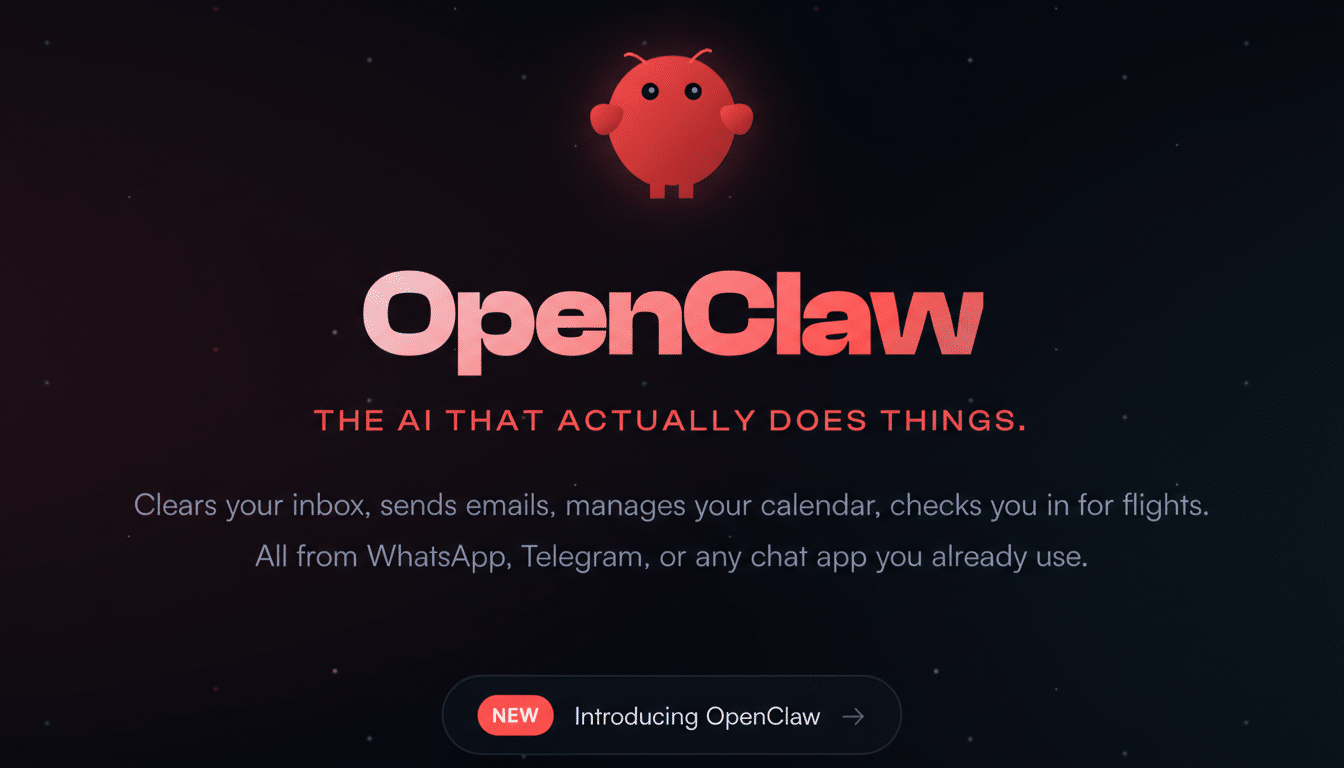
What OpenClaw Actually Does as an Autonomous Agent
Unlike traditional chatbots, OpenClaw is designed for autonomy. It runs locally, can tap models from Anthropic, OpenAI, Mistral, and others, and talks to you via messaging apps like iMessage and WhatsApp. The appeal: users can install “skills,” connect calendars, email, smart-home hubs, and work apps, then let the agent take initiative—scheduling, scripting, fetching, posting, and more.
To do that, it asks for wide-ranging permissions: running shell commands, reading and writing files, interacting with APIs, even executing scripts. That potent capability stack is exactly what makes it useful—and exactly what makes security teams nervous.
Why Security Pros Are Alarmed by OpenClaw’s Abilities
An agent with persistent memory plus high OS privileges expands the attack surface dramatically. A single prompt injection hidden in an email, calendar invite, or web result can nudge the agent into exfiltrating data or executing a malicious command. OWASP’s Top 10 for LLM Applications explicitly flags these patterns, and MITRE’s ATLAS knowledge base is already mapping adversary techniques targeting AI-enabled systems.
The “local equals safer” instinct also misleads. Local autonomy reduces cloud exposure but concentrates risk on the endpoint, where plugins, secrets, and personal data cohabit. The result is an agent supply chain problem: every added integration introduces new trust boundaries and potential escalation paths.
A Rapid Patch Cycle With Gaps Exposes Ongoing Risks
To its credit, the project is moving quickly to shore up defenses. The latest releases include dozens of security-related commits, with recent fixes covering one-click remote code execution and command injection bugs. Steinberger says security is now a top priority and has pointed to “machine-checkable security models” and community hardening as ongoing workstreams.
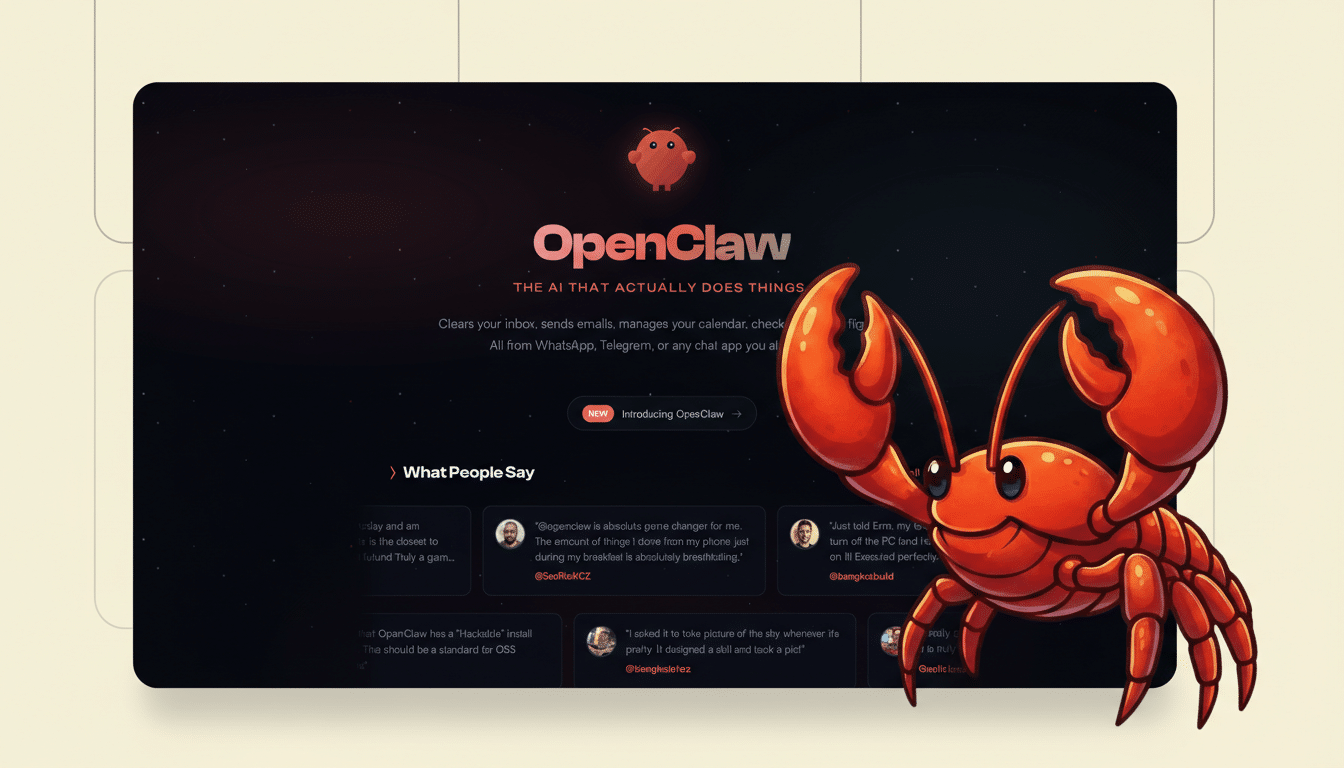
But speed cuts both ways. Viral adoption tends to outpace threat modeling, and community skill repositories can harbor subtle flaws. Without strict permission gating, sandboxing, and update signing, the long tail of vulnerabilities—race conditions, unsafe deserialization, token leakage, and privilege escalation—will persist. NIST’s AI Risk Management Framework stresses governance and monitoring; with agentic systems, that guidance isn’t optional, it’s table stakes.
Ripple Effects Beyond One Project Show Wider AI Risks
The risks aren’t confined to OpenClaw’s codebase. A separate experiment, Moltbook, created a Reddit-like arena where agents converse publicly. Security researcher Jamieson O’Reilly reported that the platform’s entire database was briefly exposed, including secret API keys that could let anyone post as any agent. One affected agent was linked to Andrej Karpathy, who has 1.9 million followers on X—an illustration of how quickly agent compromise can spill into the human social graph.
Researchers also observed waves of prompt-injection attempts, anti-human trolling, and crypto-scam content associated with agent interactions. Beyond reputational fallout, there’s a quieter, longer-term cost: data contamination. As AI and agents retrain on polluted outputs, biases and jailbreak instructions can boomerang back into future models, a risk AI practitioners like Mark Nadilo have warned about.
What Enterprises Should Do Now to Secure Autonomous Agents
If teams pilot OpenClaw or similar agents, isolate them.
- Run inside locked-down containers or VMs.
- Enforce filesystem sandboxes.
- Adopt capability-based permissions with explicit scopes for file access, network egress, and command execution.
- Use default-deny policies and time-limited “just-in-time” grants to reduce blast radius.
Harden the agent supply chain.
- Require signed skills, vetted update channels, and SBOMs for plugins.
- Gate external content with retrieval filters.
- Use strong model choices for instruction following.
- Add outbound content signing to track provenance.
- Build telemetry for prompts, actions, and data flows.
- Red-team agents with adversarial prompts and runbooks aligned to OWASP and MITRE ATLAS.
- Treat secrets as radioactive: use short-lived tokens, vaulting, and egress controls.
The Bottom Line on OpenClaw’s Promise and Security Risks
OpenClaw captures where AI is headed: autonomous, pervasive, and wired into everything. That’s precisely why security leaders see a nightmare forming. The technology is impressive and the community is moving fast, but autonomy plus broad permissions is a combustible mix. Organizations that insist on guardrails now—sandboxing, least privilege, signed skills, and continuous monitoring—will be the ones still smiling when the next viral agent arrives.
