


OpenAI is reportedly building a premium smart speaker that takes a controversial leap beyond voice. According to a report from The Information, the device would ship with a built-in camera to personalize responses, understand your surroundings, and even verify your identity for purchases—an ambitious move that could redefine the category while raising fresh privacy concerns.
What the report says about OpenAI’s camera speaker plans
The Information says OpenAI has assigned more than 200 employees to its hardware push, exploring multiple products including smart glasses, a smart lamp, and a smart speaker. The speaker is understood to be first in line, with an earliest potential debut around 2027, and a premium price target in the $200 to $300 range. That would place it near Apple’s $299 HomePod and above most Google and Amazon speakers.
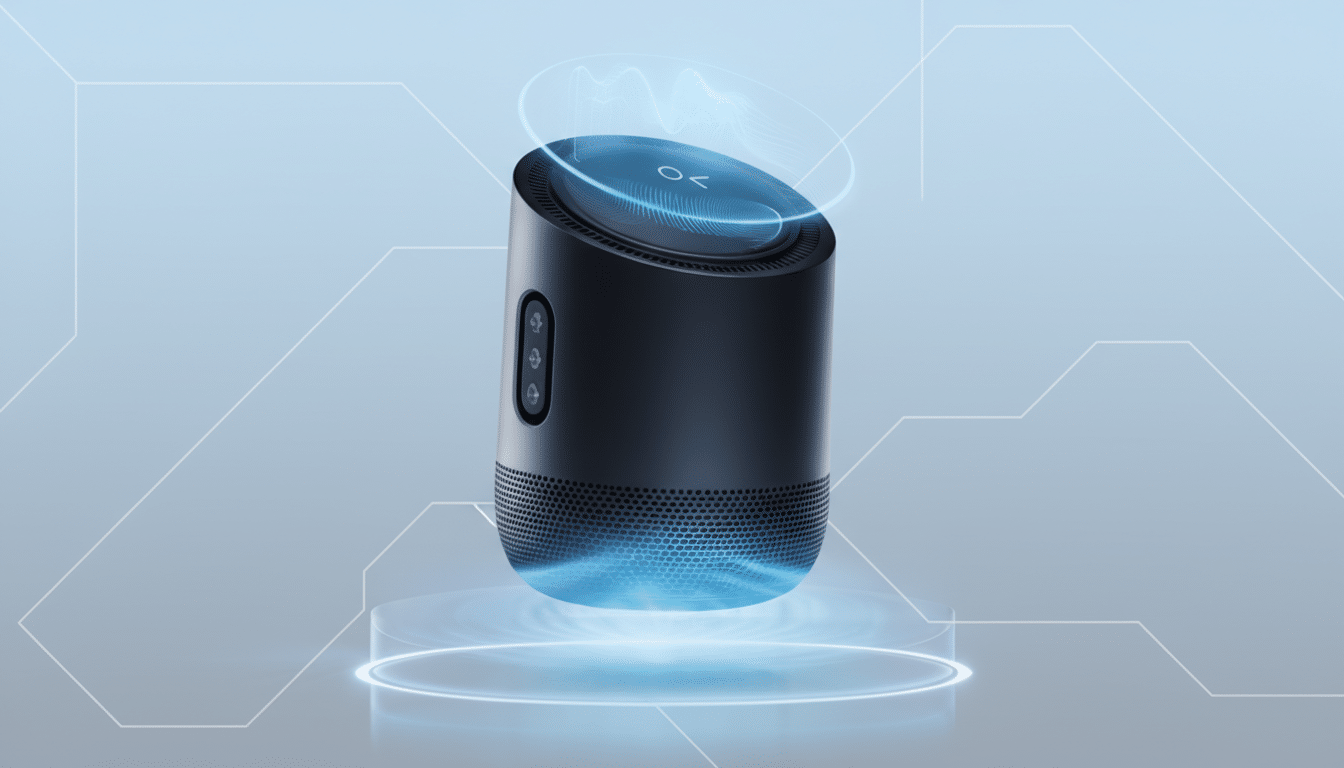
The speaker’s headline feature is a camera paired with microphones. The camera would feed contextual cues—who is in the room, what’s happening, where objects are—into OpenAI’s models to shape more relevant responses. The report also suggests facial recognition might be used to authenticate payments or personalize profiles, a capability more common on phones and smart displays than on audio-first speakers.
Design direction is said to involve Jony Ive, the renowned former Apple designer, signaling an emphasis on physical form and intuitive interaction. Still, all products remain in design and prototyping, and none are guaranteed to ship.
Why a camera on a smart speaker could change the game
Smart displays from Google and Amazon already use cameras for video calls, presence detection, and face-based personalization. But a camera on a speaker—without a conventional screen—suggests an AI-first device built to “see” and reason about the environment in real time. Think reminders triggered when you walk into the kitchen, music that follows you between rooms, or nudges when the system notices you’re out of coffee.
It also opens the door to purchases authenticated by your face, an extension of what phones do today. Google’s Nest Hub Max applied Face Match for personalized content, while Apple and Amazon rely more on voice profiles and PINs. If OpenAI blends facial recognition with large multimodal models, it could create hyper-personalized, context-aware experiences—useful, yes, but also edging into what many users will perceive as creepy.
Privacy stakes, compliance, and biometric data risks
Embedding a camera in a home speaker raises high-stakes questions. Biometric identifiers used for unique identification can fall under stringent rules: the EU’s GDPR treats such data as sensitive, requiring explicit consent and strict safeguards, and Illinois’ Biometric Information Privacy Act has driven costly lawsuits over improper notice and retention policies. The U.S. Federal Trade Commission has also stepped up enforcement on voice and video devices, including recent actions involving Alexa voice data and home cameras.
Privacy advocates such as the Electronic Frontier Foundation typically push for on-device processing, clear data minimization, and visible recording indicators. For OpenAI to win trust, the device will need transparent settings, local storage for facial templates, easy deletion controls, physical camera shutters, and mic mute switches that cut power at the hardware level. Consumer Reports and Mozilla’s privacy labels have shown that defaults and clarity matter as much as features.
The competitive landscape for AI-enabled smart speakers
The timing pits OpenAI against entrenched ecosystems. Amazon and Google dominate household penetration with robust smart speaker lineups, and both are injecting generative AI into the home—Amazon via its upgraded assistant experiences and Google via Gemini-centric devices reportedly in development. Apple’s HomePod leans on audio quality and ecosystem tightness rather than cameras.
Industry trackers like Canalys have noted that smart speaker growth has cooled after the initial boom. A camera-enabled, AI-native speaker could revive interest—if it delivers clear value beyond music, timers, and weather. The risk is misalignment: a premium price with a feature that some users won’t accept in their living rooms. A successful launch would need not just superior conversational AI but also tangible household utility—routine automation, proactive assistance, and seamless smart home control—while proving the camera earns its keep.
What to watch next as OpenAI develops its smart speaker
OpenAI’s recent advances in real-time, multimodal AI hint at where this could go: fast, natural back-and-forth dialogue that incorporates what the device hears and sees. The open questions are whether the camera delivers must-have experiences, how rigorously privacy is engineered, and how the product integrates with existing smart home standards like Matter and Thread.
If the report holds, we’re still years away from store shelves. That gives OpenAI time to refine industrial design, build developer hooks, and craft a privacy model that survives regulatory scrutiny. The result could be the first truly AI-native home device—or the most divisive smart speaker yet.
