


OpenAI has quietly switched on ChatGPT Translate, a dedicated web translator that mirrors the simplicity of Google Translate while layering in AI-native controls for tone and audience. The site, accessible at chatgpt.com/translate, appeared without a formal announcement, signaling OpenAI’s intent to compete in one of AI’s most-used consumer utilities.
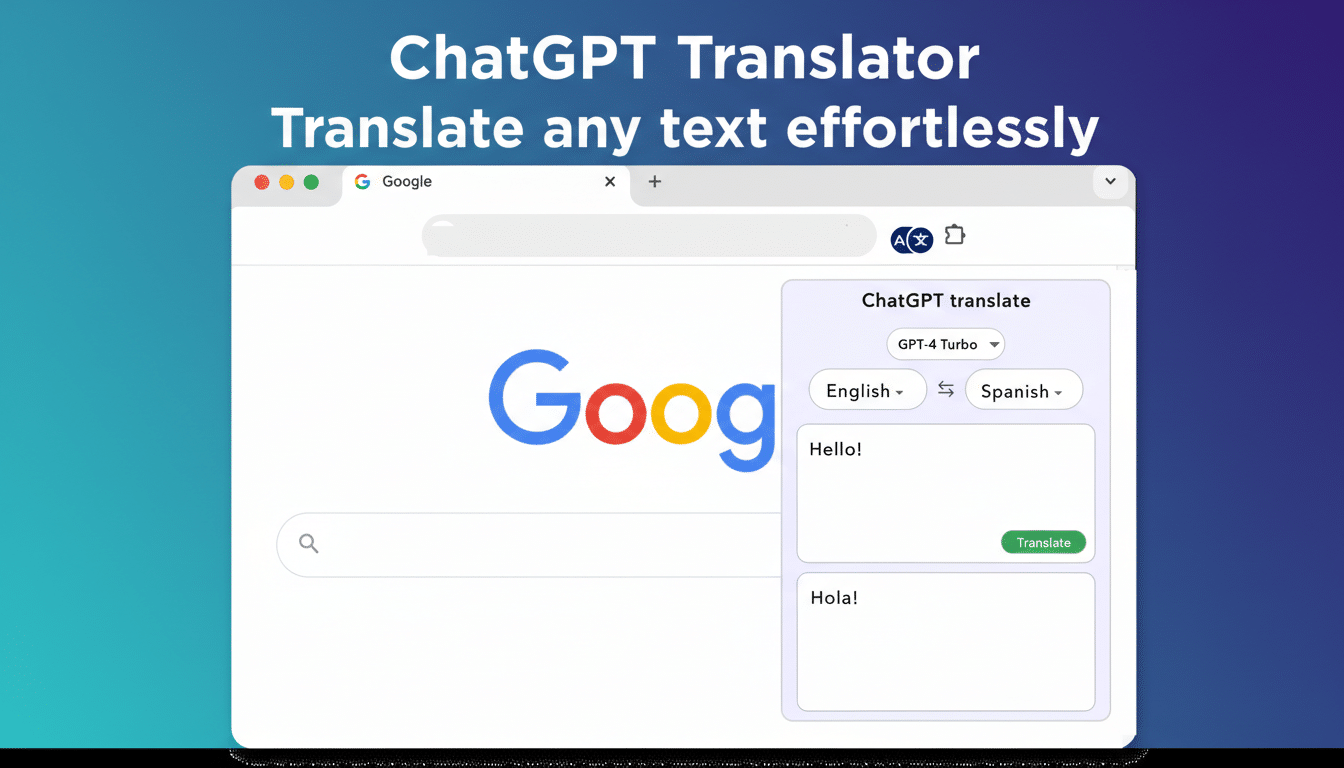
Early impressions suggest a pragmatic first release: a clean two-pane interface, instant language switching, and a copy-to-clipboard button. What’s different is the “style” guidance underneath, which lets users transform the output to be business formal, kid-friendly, or academic without leaving the page. It’s translation plus intent, wrapped in one flow.
A Familiar Interface With Helpful AI Extras
Functionally, ChatGPT Translate starts with a straightforward promise—paste text, pick source and target languages, and get an answer. But the tool’s AI-driven tone controls are a notable twist, aligning with how people actually use translations in emails, product docs, and customer support. If you simply type “translate this to [language],” it yields a plain translation designed not to over-interpret.
OpenAI has not specified which model powers the page, though the company recently released GPT-5.2. In practice, the model choice will influence idiom handling, domain-specific terminology, and whether the system resists inventing missing context—critical issues for enterprise use.
Languages Today and What’s Next for Users
OpenAI says the tool can translate into 50+ languages, but the current dropdown exposes 28 options, including regional variants like Brazilian and European Portuguese. That mismatch hints at a staged rollout or fast-follow roadmap as feedback arrives.
Image and voice translation are also in flux. OpenAI claims the ability to handle images, but that option isn’t visible on the site yet. Voice input works on mobile browsers by tapping the microphone, as first spotted by The Verge, but desktop support appears absent for now. Expect those modalities to matter as users bring signage, menus, and recorded interviews into their daily translation flows.
Taking Aim at Google, DeepL, and Microsoft
Google Translate remains the default choice for many, benefiting from more than a decade of data collection and product polish. Google has publicly said Translate serves hundreds of millions of users and processes over 100 billion words daily, a scale that sets a high bar for speed, cost, and reliability.
DeepL, meanwhile, built a reputation for natural phrasing in European languages and has steadily expanded coverage while offering pro features such as glossaries and formal/informal toggles. Microsoft Translator integrates widely across Office and Windows, giving it enterprise reach.
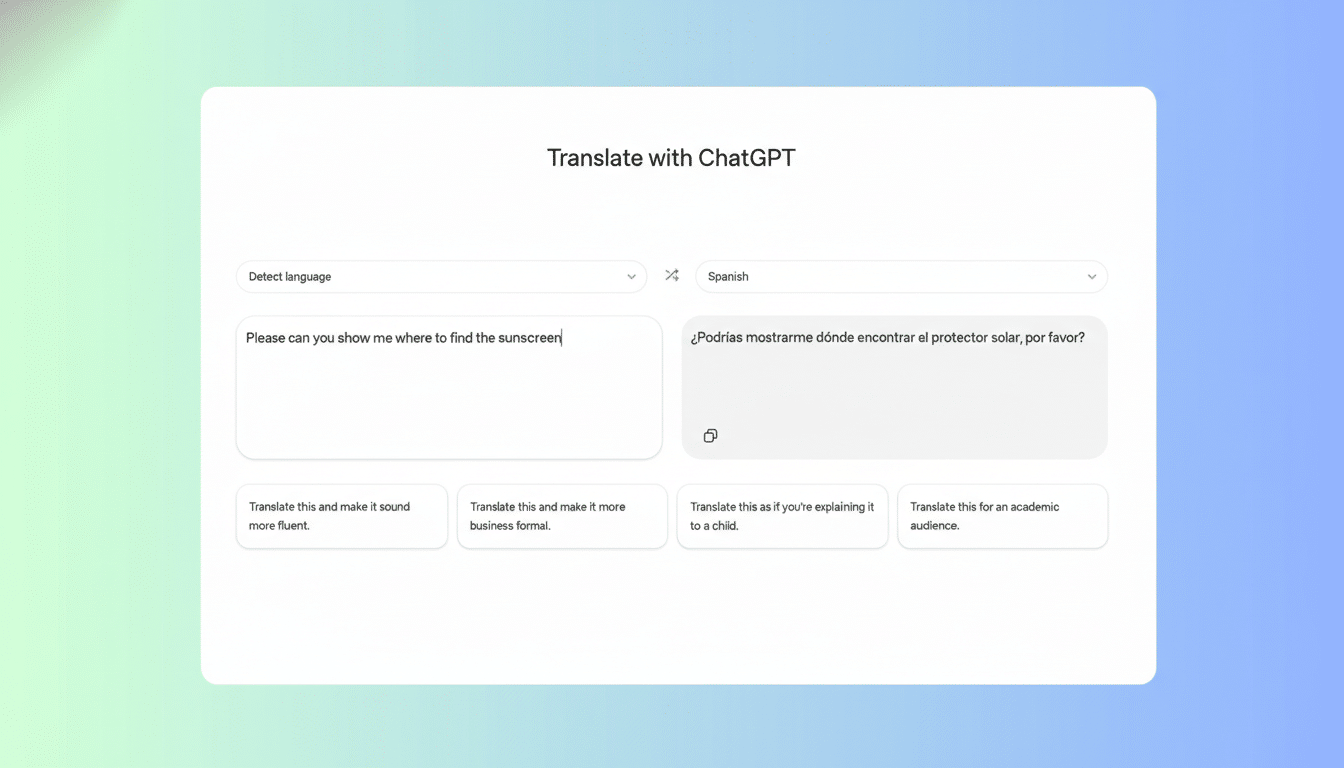
OpenAI’s differentiator may be contextual fluency and tone shaping out of the box. Large language models are better at carrying nuance across sentences, preserving intent in longer passages, and adapting to audience, which traditional neural machine translation can miss. The trade-off is consistency on jargon and the need for guardrails to avoid “creative” edits when users want strict fidelity.
Quality, Benchmarks, and Building User Trust
Translation quality is typically measured with metrics like BLEU and COMET on WMT test sets, but those scores don’t capture everything users care about: tone, register, brand voice, and domain-specific accuracy. Here, ChatGPT Translate’s style prompts could be an edge—if the system resists over-stylizing when fidelity matters.
For businesses, two questions loom large: privacy and cost. Enterprises will want clarity on whether text is retained for model training and what controls govern data use. They’ll also weigh per-seat or per-character economics against incumbents. The global language services market exceeds $50 billion annually, according to CSA Research, and a credible AI entrant can reshape procurement decisions beyond casual consumer use.
Early Limits and What to Watch in Rollout
The reduced language picker, missing image support, and limited desktop voice input suggest this is an early, public beta in all but name. BleepingComputer first spotted the page going live, reinforcing that OpenAI is testing interest before a formal splash. Rapid iteration—more languages, file uploads, glossary controls, and enterprise policies—will determine how quickly it can win power users from Google, DeepL, and Microsoft.
If OpenAI adds robust document handling, consistent jargon controls, and on-device or low-latency speech, it could challenge incumbents not just on novelty but on professional-grade throughput. A tight loop between chat, translation, and editing within the same model may also reduce workflow friction for marketers, support teams, and educators.
Bottom Line: What ChatGPT Translate Signals Now
ChatGPT Translate lands with a clear message: translation is no longer just about swapping words between boxes. It’s about preserving intent, audience, and voice—areas where generative AI can excel. Google’s scale and DeepL’s precision won’t be easy to unseat, but OpenAI now has a visible, focused entry point. If the company closes the feature gaps and proves reliability at scale, the translation play could become one of its most practical—and widely adopted—consumer tools.
