


Online education has transformed access to learning. From professional certifications to university degrees, millions of learners now study entirely online. Yet despite massive growth, outcomes remain mixed. Completion rates are often low, learner satisfaction varies widely, and the effectiveness of online learning is still widely debated.
The reason is simple: online education itself is not inherently effective or ineffective. Its success depends on design, delivery, learner behaviour, and context. Understanding what works — and what consistently fails — is essential for learners, educators, and platforms alike.
- Introduction: The Promise and the Reality of Online Education
- What Online Education Does Better Than Traditional Learning
- When Online Learning Actually Improves Outcomes
- Structure Matters More Than Content
- Active Learning vs Passive Consumption
- The Role of Feedback and Human Interaction
- Motivation Is the Weakest Link
- What Technology Helps — and What It Doesn’t
- Assessment — What Online Education Gets Wrong
- Social Learning Is Not Optional
- Who Online Education Works For — and Who It Doesn’t
- Credentials vs Skills — A Critical Divide
- The Economics of Online Education
- Common Myths About Online Education
- What Institutions and Platforms Must Do Better
- Conclusion: Online Education Works — But Only When Designed for Reality
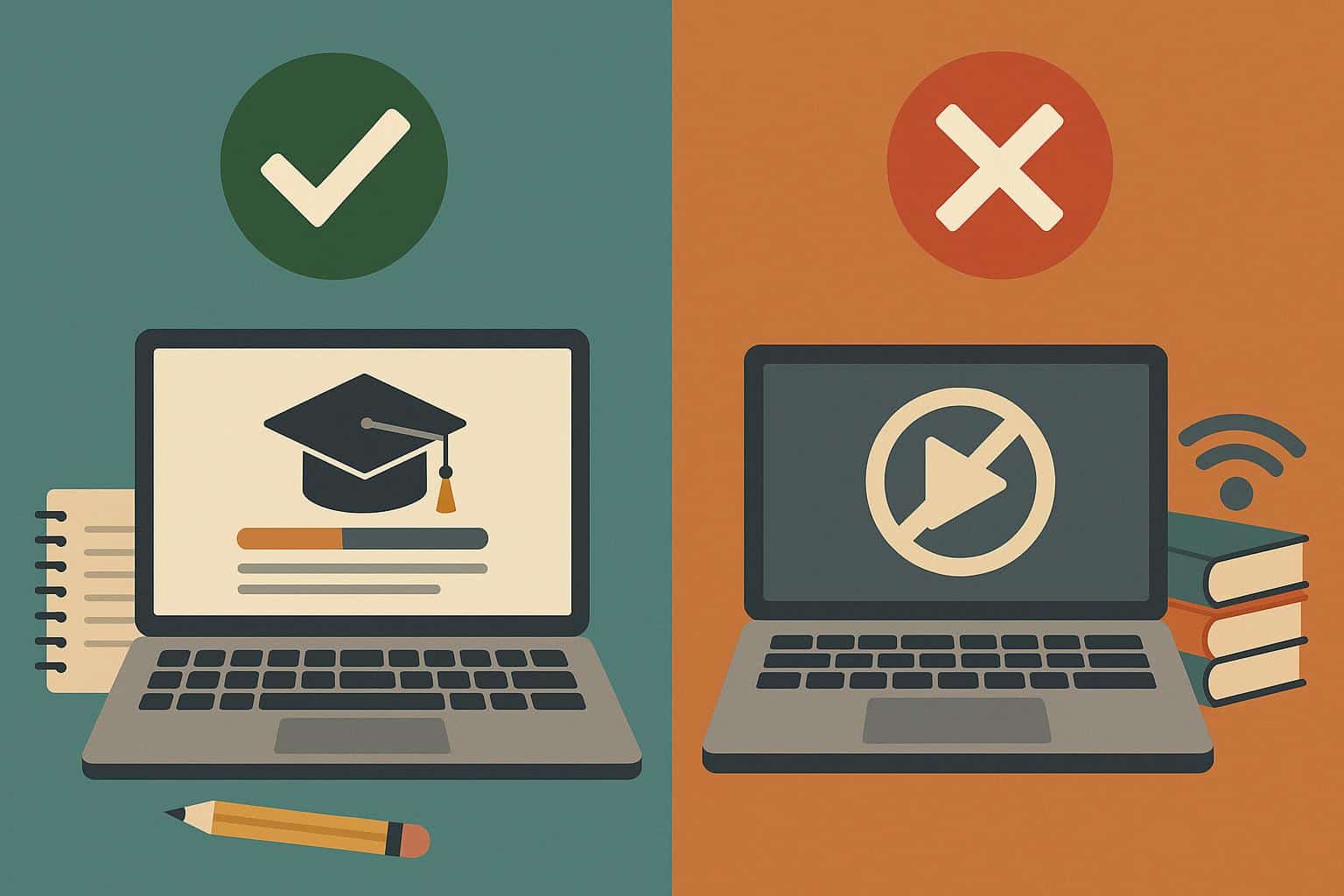
Introduction: The Promise and the Reality of Online Education
What Online Education Does Better Than Traditional Learning
Accessibility and Flexibility
One of the clearest strengths of online education is accessibility. Learners can study regardless of location, schedule, or physical constraints.
Key advantages include:
- Learning without geographic barriers
- Flexible pacing for working professionals
- Access to global expertise
- Reduced cost compared to in-person education
Research consistently shows that flexibility increases participation — especially for adult learners balancing work, family, and education.
When Online Learning Actually Improves Outcomes
H3: Self-Directed, Goal-Oriented Learners
Online education works best for learners who:
- Have clear objectives
- Are comfortable managing their time
- Possess baseline digital literacy
- Understand why they are learning
For these learners, online formats often outperform traditional classrooms by enabling focus, repetition, and autonomy.
Expert insight:
“Online learning amplifies existing learning habits — good or bad.”
Structure Matters More Than Content
Why Well-Designed Courses Succeed
A common misconception is that high-quality content alone ensures success. In reality, structure determines outcomes.
Effective online courses include:
- Clear learning pathways
- Defined milestones
- Regular assessments
- Feedback loops
Without structure, learners drift — even when content is excellent.
Active Learning vs Passive Consumption
Watching Is Not Learning
One of the biggest failures of online education is overreliance on passive formats, such as long video lectures.
What consistently works better:
- Interactive exercises
- Problem-solving tasks
- Reflection prompts
- Application-based learning
Studies show that learners retain significantly more when they do something with information rather than just consume it.
The Role of Feedback and Human Interaction
Why Fully Automated Learning Often Fails
While automation enables scale, learning still requires feedback.
Successful online programmes incorporate:
- Tutor or mentor feedback
- Peer discussion
- Progress reviews
Learners who receive regular feedback are far more likely to complete courses and apply what they learn.
Motivation Is the Weakest Link
Why Dropout Rates Are So High
Most online courses suffer from high dropout rates — often exceeding 80%.
The main reasons include:
- Lack of accountability
- Competing priorities
- No immediate consequences for disengagement
- Overestimation of self-discipline
Online education works best when motivation is designed into the system, not left entirely to the learner.
What Technology Helps — and What It Doesn’t
Tools Are Enablers, Not Solutions
Learning platforms, analytics dashboards, and adaptive systems can enhance learning — but only when used thoughtfully.
Midway through effective online learning experiences, learners often rely on decision-support tools or progress-tracking systems to reflect on their habits and adjust strategies. In some programmes, this includes lightweight analytical tools — you can click here as an example of how reflection tools support learning rather than replace it.
Technology supports learning best when it:
- Provides clarity
- Encourages reflection
- Reinforces consistency
It fails when it attempts to replace thinking or discipline.
Assessment — What Online Education Gets Wrong
Testing Knowledge vs Measuring Understanding
Many online courses rely heavily on quizzes that test recall rather than understanding.
What works better:
- Open-ended assignments
- Real-world projects
- Scenario-based assessments
These methods measure whether learners can apply knowledge — not just recognise correct answers.
Social Learning Is Not Optional
Why Isolation Undermines Learning
Humans learn socially. Online education that ignores this reality often struggles.
Effective programmes integrate:
- Discussion forums with moderation
- Group projects
- Peer feedback
Even minimal social interaction increases commitment and learning depth.
Who Online Education Works For — and Who It Doesn’t
Matching Format to Learner Type
Online education works well for:
- Professionals with clear goals
- Lifelong learners
- Skills-based training
- Continuing education
It often fails for:
- Learners needing heavy structure
- Those without time-management skills
- Early-stage learners without guidance
Recognising this distinction prevents unrealistic expectations.
Credentials vs Skills — A Critical Divide
Learning for Proof vs Learning for Use
Some learners pursue online education for credentials; others for practical skills.
Online education is most effective when:
- Skills are immediately applicable
- Learning outcomes are tangible
- Progress translates into real-world capability
Credential-only programmes often struggle unless paired with strong assessment and recognition.
The Economics of Online Education
Low Cost Doesn’t Mean Low Effort
One reason online education disappoints is misaligned expectations around effort.
Low price and accessibility can subconsciously signal low commitment. Successful learners treat online education with the same seriousness as formal study — scheduling time, setting goals, and tracking progress.
Common Myths About Online Education
What Evidence Disproves
Persistent myths include:
- “Online learning is easier”
- “Anyone can succeed online”
- “Technology guarantees engagement”
- “Content quality is everything”
Evidence consistently shows that design, behaviour, and accountability matter far more.
What Institutions and Platforms Must Do Better
Designing for Human Behaviour
To improve outcomes, online education providers must:
- Design for limited attention
- Build in accountability
- Support motivation
- Measure meaningful outcomes
Scaling education without supporting learners leads to poor results — regardless of platform sophistication.
Conclusion: Online Education Works — But Only When Designed for Reality
Online education is neither a silver bullet nor a failure. It is a powerful tool that works when aligned with how people actually learn.
What works:
- Structure
- Active learning
- Feedback
- Social interaction
- Clear goals
What doesn’t:
- Passive content
- Assumed motivation
- Over-automation
- One-size-fits-all design
The future of online education lies not in more content, but in better learning experiences — grounded in evidence, behaviour, and human needs.
