


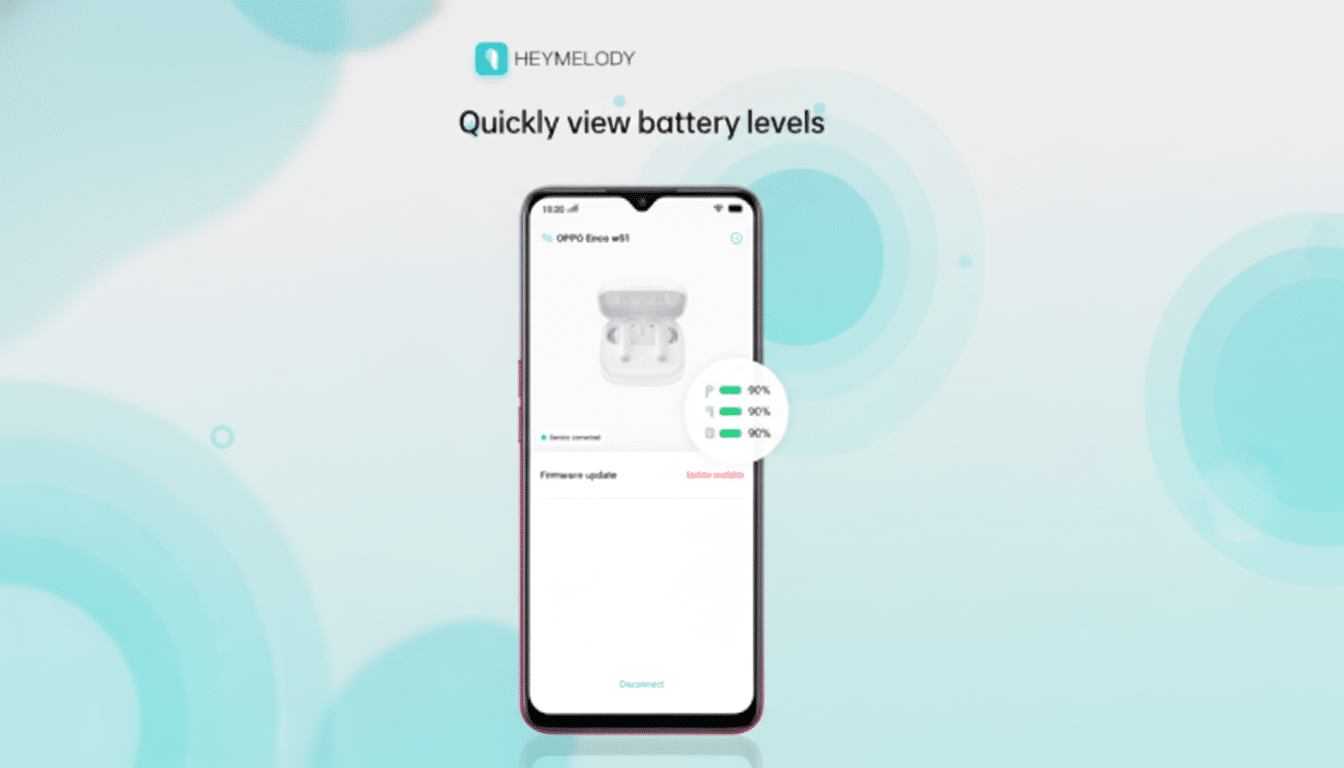
Plenty of people should be so lucky as never to lose a true wireless earbud. OnePlus, along with its sister company Oppo, seems to be working on just such an after-the-fact solution — a feature called “earbud fall detection” that has been found inside the latest build of the HeyMelody companion app.
App strings and a dedicated settings screen indicate the function will sense when a bud slips out, sound an audible chime in response, and send your phone a prompt so you can instantly track it down. You can’t use it yet, and the companies behind those apps haven’t announced compatibility with it, but the evidence in the app itself would seem to suggest that a near-term software update will add support.
What Earbud Fall Detection Would Accomplish
According to what is visible in the app, the function can be switched on or off and, when turned on, creates a sound through both earbuds if one should fall out of your ear unexpectedly. A notification on your phone leaves a visual breadcrumb so you can retrace your steps without wading through menus.
There are caveats. The app cautions that if you take away notification permissions or force-close the app, then the phone alert may not appear. This is because the system must communicate with the companion app, just like nearly all ring-to-find and firmware features.
To put a finer point on it: imagine going out for a run and your left bud dislodging when you hit the downhills and falling right into your hand. A chime goes off the second an earbud gets left behind while still in Bluetooth range, and your phone throws up a prompt — speed is of the essence when that earbud might roll under a bench or into some grass.
How It Could Work Behind the Scenes on Earbuds
Many of today’s earbuds already have in-ear detection, using infrared or skin-contact sensors that stop playing if you take a bud out. Most also have accelerometers for tap gestures and motion-based functions. Fall detection may merge such signals: the quick difference of acceleration, abrupt variation of orientation, and sharp change in proximity to skin can characterize a slipping as opposed to an intentional removal.
The trick is detecting when the behavior becomes routine — for example, taking a bud offline to chat — and indicates an actual drop. That’s usually dealt with using thresholds and pattern matching. A rapid downward acceleration, followed by free motion, is not the same as a smooth lift and steady orientation that you get when you pinch a stem and set a bud in its case.
And battery impact should be minimal if OnePlus tunes its detection to piggyback on top of sensors that are already awake for other purposes. The larger engineering challenge is how to avoid false alarms when people work out or take windy commutes yet still respond speedily when a bud does fall.
How It Compares to Existing Find and Ring Features
Apple’s AirPods, Samsung’s Galaxy Buds, and Google’s Fast Pair ecosystem of earbuds all offer “ring my earbuds” and location hints when you go looking later. Apple also leverages the Find My network to aid in finding compatible cases and buds when they’re not in Bluetooth range, while Android’s expanded Find My Device network likewise will crowdsource locations for supported accessories.

OnePlus’s concept is focused on the vital first few seconds — when a bud drops. Add proactive detection and/or an immediate chime, and this thing could save you from the loss in the first place rather than asking you where you last had it. It is a subtle move from recovery to prevention, and that distinction can be the line between “found fast” and “gone for good.”
The approach could also supplement, not supplant, broader finding tools. If the bud rolls on or is pocketed, a good old-fashioned find network still counts. But in most instances, losses occur within a few feet, and with any luck, a chime and alert will resolve many of those on the spot.
Compatibility and Timeline for OnePlus and Oppo Buds
HeyMelody works with a variety of OnePlus and Oppo models, from the flagship Buds Pro lines to the midrange Nord and Enco series. Even this isn’t confirmed, as whether fall detection would be sensor-specific or come in a more general form via firmware is still unknown. The features that rely on motion sensing might favor newer hardware, but even older buds with proximity sensors may qualify, assuming the algorithm can work with less-than-ideal data.
As is the case with any unannounced feature, plans can change. Features often go through tests within companion apps, release regionally, or are reserved for large product launches. We’ll keep an eye on app release notes and firmware changelogs to confirm supported models when it becomes official.
Why It Matters in a Crowded Wireless Earbuds Market
Analyst companies like IDC and Counterpoint publish regular reports on the wearables market, positioning hearables as the dominant category — there are hundreds of millions sold every year. In such a crowded field, small, user-oriented changes can make a big splash — particularly if they tackle a true pain point.
One, replacing a single lost earbud typically runs $70 to $100, depending on the brand, and two, the hassle factor of researching those brands is even greater. An intelligent, battery-saving feature that staves off loss could save customers money and increase loyalty for phone makers like OnePlus and Oppo while providing a handy selling point to promote alongside sound quality and battery life.
What to Watch Next as OnePlus Tests Fall Detection
If fall detection ships, it will probably live next to in-ear detection and find functions within HeyMelody, reminiscent of a plain old toggle and permission. Mature behavior will need to be judged by how rarely real-world false-positive triggers are set off. If OnePlus can strike that balance, this may be one of those features you didn’t know you wanted — until it saves an earbud someday.
