


Here’s the nickel version: the OnePlus Buds Z are a stripped-down version of what most people actually want in noise-cancelling earbuds—noisy-bus shushing and thrumming through funky Baseline Chilled Apple album cuts: great active noise cancellation, lively sound, comfortable fit and a good connection—are priced to match (with a retail launch price well below AirPods and other premium high-end earbuds). And right now, with a present promo code that brings the price down to $100 from $130, they’re hard to resist.
Why I’d choose these over more expensive options
Flagship buds from Apple, Sony, and Bose still hold the edge in some niceties, but the gap has narrowed and midrange sets like the Buds 4 just make more sense for most listeners. That’s active noise canceling to tame commutes and flights, punchy sound with a tasteful bass lift, multipoint for two devices and quick USB-C charging — all for less than half the price of many “halo” models.
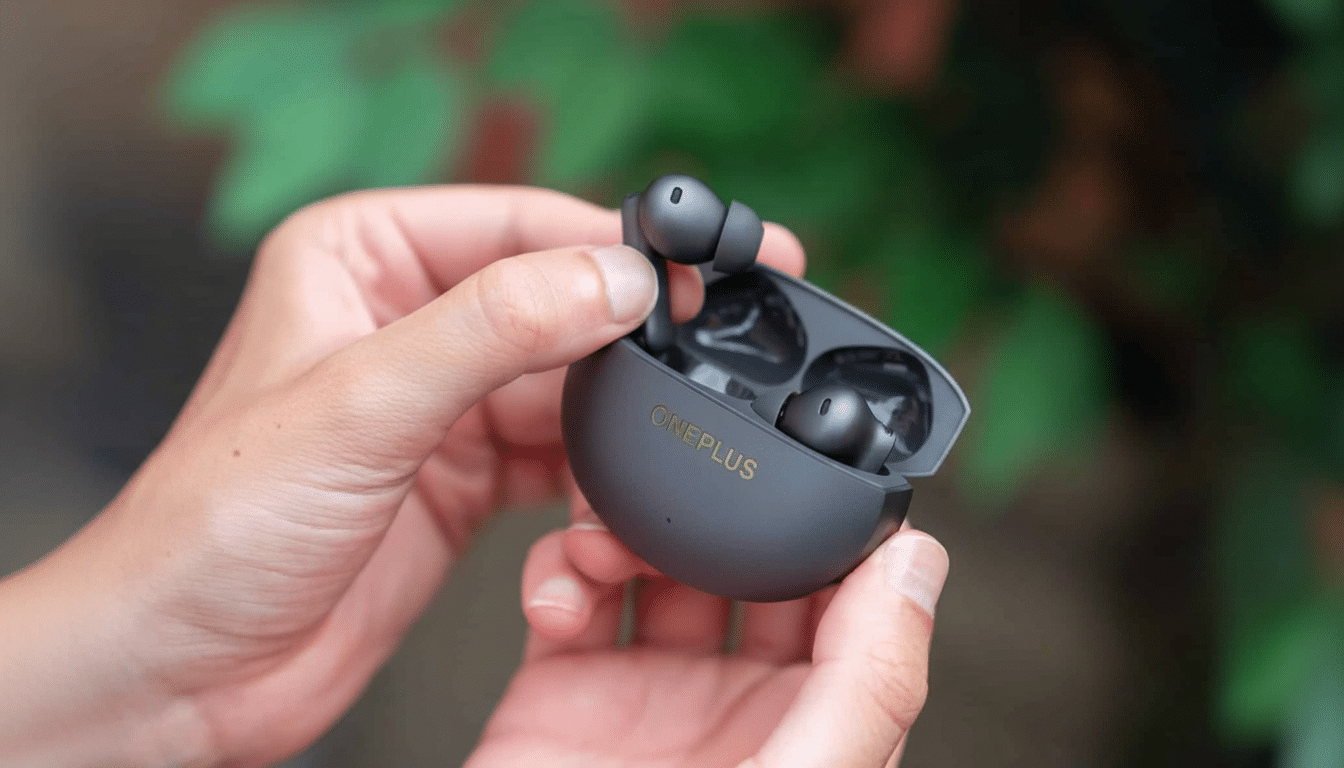
Market data supports this move. “All the cool-tech now filters down superfast to what we call the midend,” meaning middle-tier devices below the $150 or $160 price point, says an analyst from Counterpoint, while micromarket researchers Canalys says that sub-$150 true wireless earbuds are growing faster than the premium tier. The Buds 4 are a textbook example of this: They focus on what’s essential, instead of edge-case features you’ll use maybe twice.
Punchier noise cancellation
In practical use — subway platforms, open-plan offices and a transcontinental flight — the Buds 4 slashed low-frequency rumble and drone to the point I was surprised. Though industry tests from groups like Rtings regularly crown Sony and Apple as the titans of ANC, the gap between these champions and the Buds 4 felt smaller than the price gulf implied. You still hear punchy transients and vocals in very loud spaces, but the general hush is about equal to what you’d get from many $200 rivals.
Transparency mode is equally crucial, and the Buds 4 eschew the honky, hissy sound of cheaper sets. The sounds of the street come through naturally, which is important for safety along with convenience.
Modern listening capability
OnePlus buys in to a two-DAC-per-earbud design and tuning that sees a clean lift in sub-bass. The result is an engaging, contemporary profile that does justice to pop, hip-hop and streaming mixes, without turning cymbals into sandpaper or squashing the vocals. Highs are dampened sufficiently so as not to be tiring, while mids accommodate podcasts and acoustic tunes.
If you prefer more control, there’s a companion app (it’s the same HeyMelody platform found on all of the audio products from OnePlus and Oppo) and it offers EQ presets and custom curves. On a OnePlus phone, you also get deeper integration, which includes a low-latency gaming mode that keeps taps and gunfire in sync without typical Bluetooth lag. That “just works” seamlessness — frequently touted as a benefit of using AirPods inside the Apple bubble — is actually quite nice here on Android.
Comfort, fit and everyday reliability
The Buds 4 have a flatter stem and a light weight shell that does a good job of distributing weight across the ear to make sure you secure enough product in your ears to easily run with them without wearing enough material for ear fatigue. The app has a fit test that helps lock in a seal (which is critical for both bass and ANC), and it ships with three sizes of tips. Comfort: I would rate comfort slightly higher in Comfort than AirPods Pro for small ears due to the less deep insertion and lighter feel.
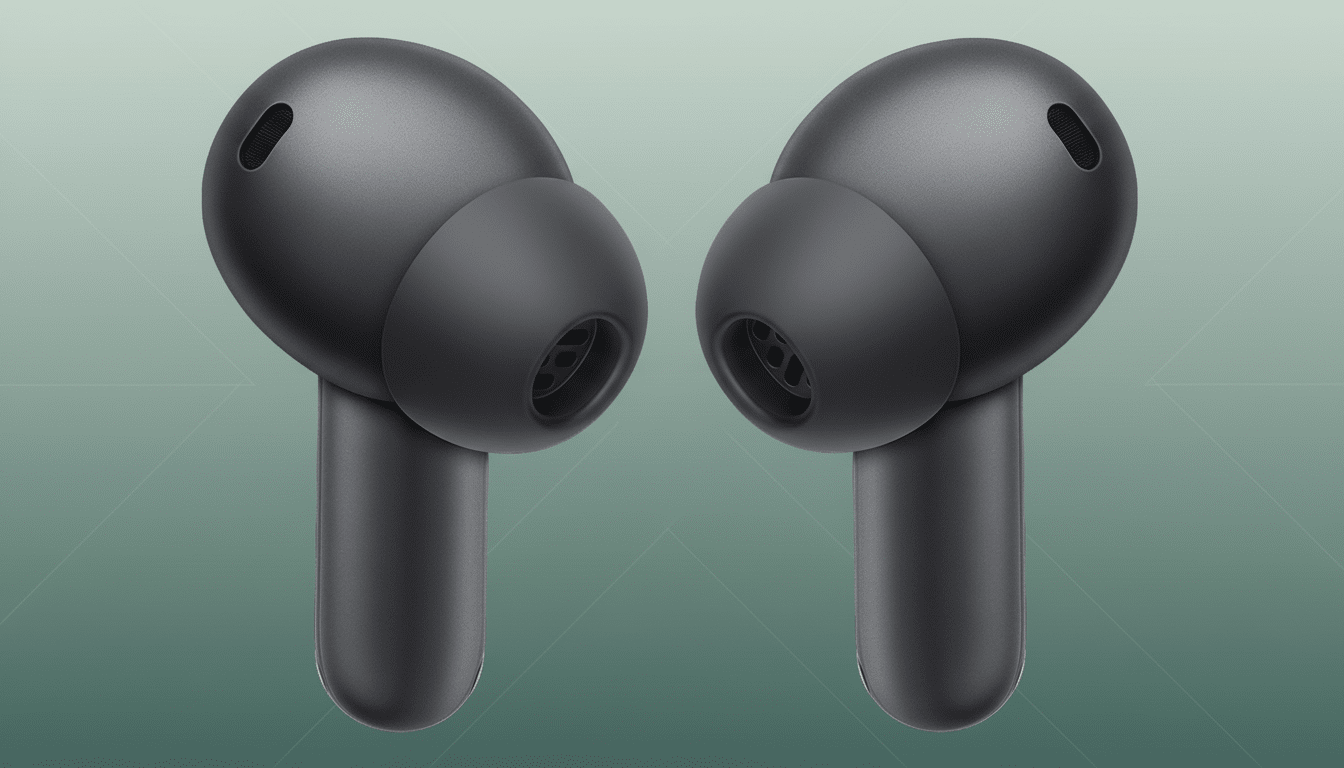
Controls are snappy and accurate and taps and slides feel on point for volume and adjusting modes. Because the touch area is on the outside of the stem, you might find yourself steadying the bud as you change volume, so it’s a small point, but if you’re always tweaking the volume, here’s something to think about.
Battery, calls and the connectivity checklist
Battery life easily surpasses a full workday with anc mixed use and the case extends total playtime well past what most folks will go between charges. Fast charge with USB-C the latest and greatest in charging tech for up to 3.5 more hours with 10 minutes of charge, on your cLutch way out the door.
Call quality is strong: Beamforming mics preserved my voice clearly on city streets, and wind rejection is above average in this tier of headphones. In testing, multipoint pairing proved stable between laptop and phone, and Google Fast Pair made initial setup easy on Android. Bluetooth performance was rock-solid: there were no random desyncs you get from interference in busy RF environments like airports.
How they compare to AirPods and $300 flagships
AirPods Pro still > if you live inside Apple’s ecosystem and care about head-tracked spatial audio, deep iOS integration, or ultra-polished ANC in edge cases. Sony and Bose tout the absolute noise-canceling strength and more expansive soundstage properties they can offer through their apps.
But for regular listening and the daily grind, the Buds 4 get you 85–90% of the way there for a fraction of the price. You give up some niche features — wireless charging, intricate spatial effects — but in exchange you get superior battery life on paper to AirPods, snappier Android integration, and a sound signature most people will probably find more agreeable out of the box.
The deal that lets it happen
Currently, a checkout code for OnePlus takes off $30 from the OnePlus Buds 4, dropping them to $100 in Zen Green or Storm Gray. The box contains the buds, charging case, USB-C cable and three ear tip sizes. At this price, they’re undercutting AirPods Pro by more than $100, and beating most midrange competitors on value for the feature set you get.
If you’re getting earbuds for commuting, working, working out and chilling, not to chase audiophile rabbit holes, the OnePlus Buds 4 are a really good spot. Spend less, save on what counts, and pocket the difference.
