


As OnePlus announces its new flagship smartphone, the 5G-capable OnePlus 15, the headline is twofold: value champ as always, and now a full global release for more markets worldwide, without its long-running Hasselblad camera partnership.
That combination paves the way for one of the most interesting Android launches this cycle: raw hardware ambition running up against a reset camera identity.
A Value Flagship With Global Ambitions Confirmed
Following an Asia-centric release for its most recent T-series model, it was unclear if the company’s future big-name phone would come to North America and Europe. The company followed with an official tease on Chinese social platforms today, confirming a wider push in the months ahead—and confidence that the formula of top-tier silicon, fast charging, and aggressive pricing can undercut rival flagships from Samsung, Google, and Apple all over again.
The brand is well regarded among enthusiasts who want premium speed, battery longevity, and a crisp display without the four-figure outlay. Operators and retailers have amplified that proposition with trade-in deals to make those phones even more affordable, a trend that market researchers like IDC and Counterpoint Research say puts these devices in the “affordable premium” category and continues to lift overall shipments even as volumes ebb.
Design Shift And The New Shortcut Button Explained
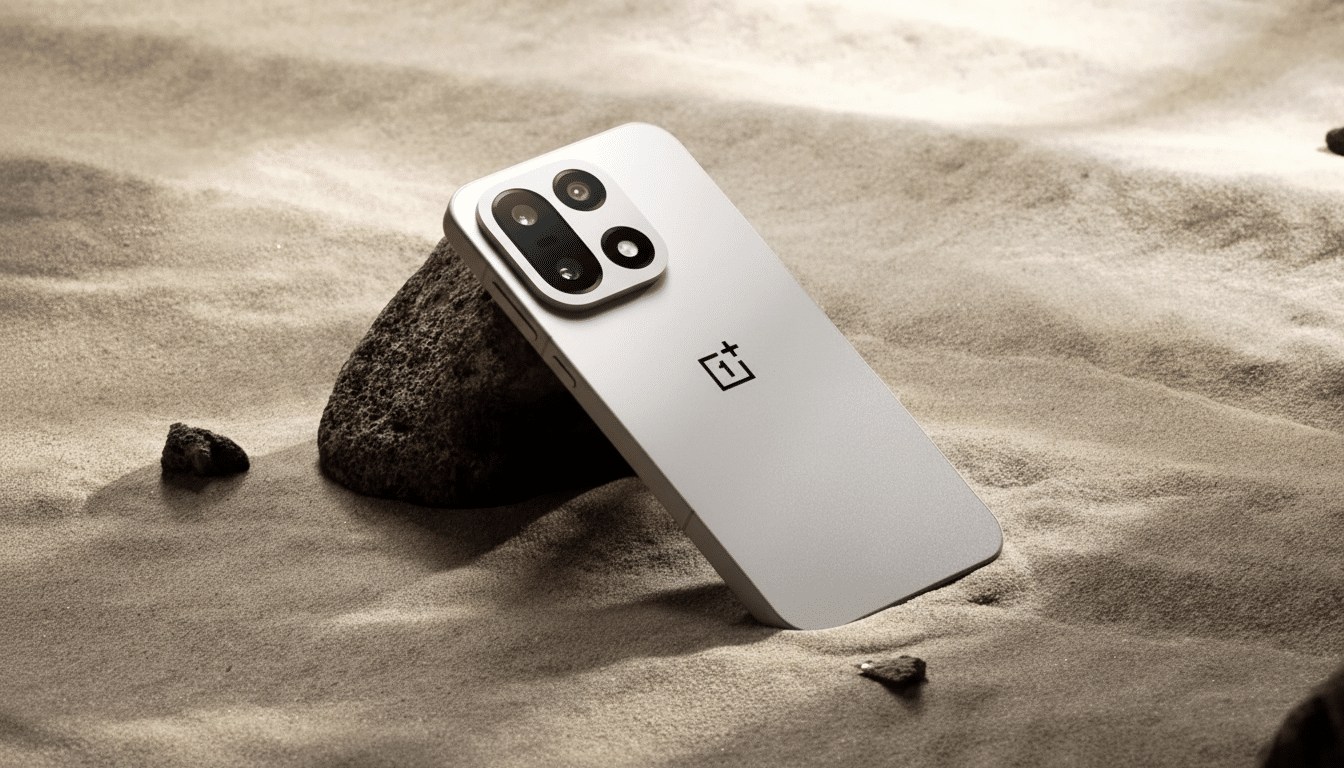
Early images show a sand-colored finish and a move from the circular camera island to a rectangular module that mimics the regional T-series device. The back looks like a fiberglass composite, while the frame will use ceramic-coated metal. The company says this method enhances durability over traditional aluminum frames yet still provides a polished hand feel.
There’s also a new Plus Key onboard, essentially a hardware shortcut button that changes depending on what you’re doing with the phone at any given time, placed where many would expect to find an alert slider or a custom action button. It can be easily remapped to shortcuts such as launching the camera, recording voice notes, changing focus mode, or saving snippets in a separate workspace. It’s a small addition with oversized daily impact, reflecting a larger trend toward real-world controls that put software features literally at your fingertips.
Display And Silicon Engineered For Speed
There’s a 165Hz display on the spec sheet, higher than the refresh rates some niche gaming phones support. Expect dynamic behavior that dials it back for ebooks and always-on moments, or ramps up when you start fast scrolling or running supported games. In practice, that means smoother touch response and less input latency, which you feel when flicking through feeds or lining up a headshot in the latest competitive title.

Under the hood, the phone will make use of Qualcomm’s latest flagship platform, which sports improved CPU cores, more efficient graphics, and a bigger on-device AI toolkit that offers advanced image editing, voice-related features, and real-time translation. OnePlus has a history of putting flagship chipsets inside robust thermal-design phones, so the question isn’t one of peak performance but how long the phone can keep up high frame rates without getting throttled back.
Life After Hasselblad And The DetailMax Gambit
The most momentous update is in optics, but not just on the camera: the camera system is ditching its Hasselblad co-branding. That means signature extras like XPan mode may not be returning, and color science won’t necessarily lean on the Swedish maker’s tuning. The company is instead boasting about its in-house DetailMax Engine, a computational pipeline devoted to detail and faithful image reproduction as opposed to stylized treatment.
That stance matches what leadership has publicly relayed: when comparing cameras, users prioritize how pictures look zoomed in—not buzzwords. The technical challenge is to maintain micro-contrast/texture and lifelike skin tones along with a consistent experience in HDR. Over-sharpening can penalize faces; under-tuned noise reduction can sap detail in low light. Competitors set high standards here—Google leverages semantic segmentation, Samsung pounds the pavement on multi-frame fusion with bigger sensors, and Apple focuses more on natural tone transitions—so OnePlus needs consistent, strong results across wide, ultrawide, and telephoto; a great main camera doesn’t cut it.
Why Value Still Wins In The Modern Flagship Tier
Value, in the flagship tier, is no longer a euphemism for compromise. Fast wired charging that outstrips the mainstream competition; premium screens—among the best you will find for brightness and smoothness; and chipsets that cope with console-grade games have reset expectations at this price band. Market watchers point out that consumers are buying more on longevity and total cost, which makes software support, battery health features, and trade-in values just as important as specs.
Key Questions Before The Reveal And Global Launch
There are still some unknowns that will ultimately decide if this sequel retains the value crown: the specific camera hardware (this has been a weak spot for OnePlus’s devices), how widely you can customize the Plus Key, and the size and brightness of the display, along with charging and battery specs. Software policy also matters; top rivals have made OS and security support table stakes. If OnePlus pairs its new imaging engine with consistent tuning and an attractive price, the lack of co-branding could be a non-issue rather than a drawback. If it’s not, then the camera might be the one thing that holds an excellent all-rounder back from being truly fantastic.
