


Samsung is working on a smarter method for dealing with poor connections, and it’s a tweak that could make the daily tug-of-war between Wi‑Fi and your mobile data allowance far less frustrating. As per SammyGuru (116,883), One UI 8.5 brings a new set of AI-based controls that will determine when your Galaxy phone ought to ditch a crappy Wi‑Fi link and hop over to cellular, or stick with it because data — waste not. The claim is simple: less stuttering while playing your tank battles, fewer pauses when buffering wheel, and less time spent doing those manually in quick settings.
Two AI Toggles, With Lower Drops in Their Sights
First up is Intelligent Link Assessment, which we’re told “assesses Wi‑Fi link data to determine whether the connection is worth maintaining.” In practical terms, that probably means tracking throughput, latency, jitter, and packet loss — measurements your phone can take in real time — to decide whether that Wi‑Fi network is going to hold up for a call or a video stream. If it drops below a quality threshold, the system prods the phone down to cellular before your app stutters.
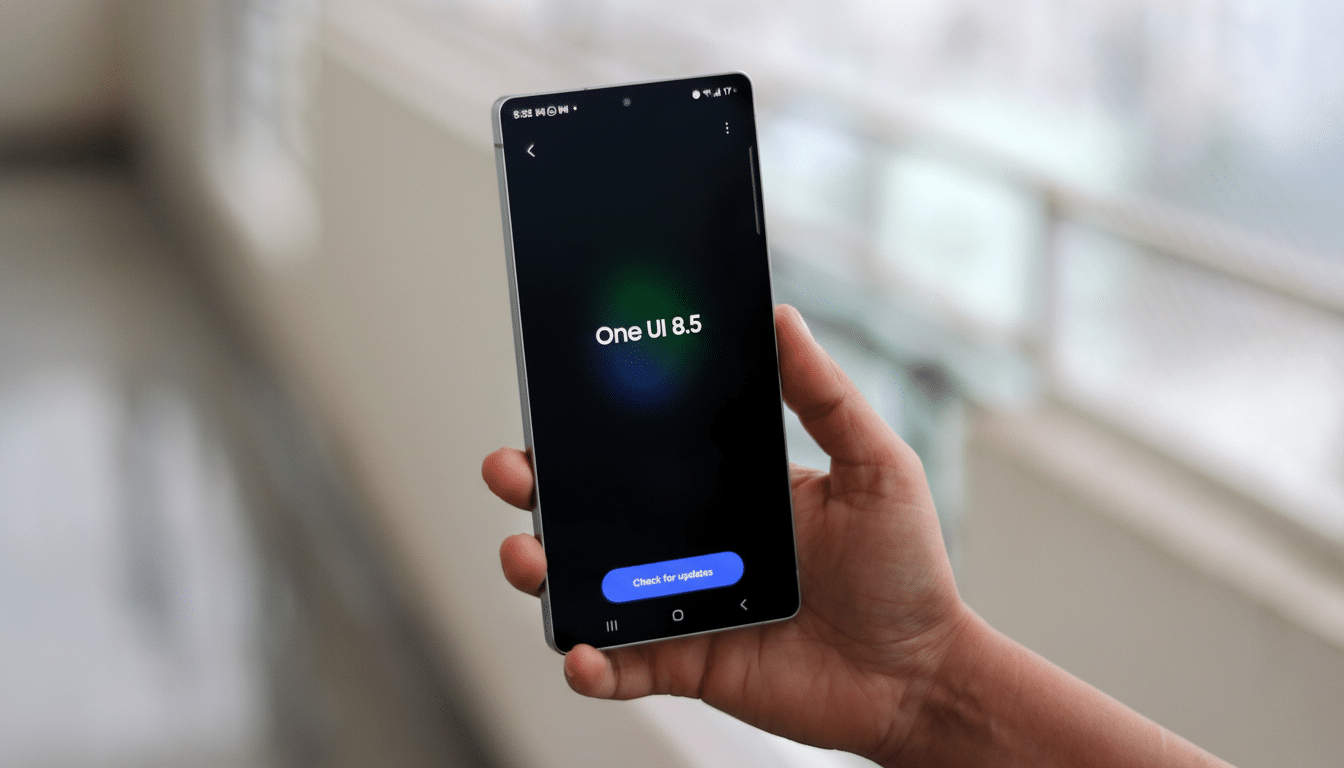
The latter, Intelligent Network Switch, seems more presumptive. Menhawy adds that it takes into account the user’s “Wi‑Fi handover history along user movement path,” indicating on‑device learnings of your habits. If you consistently lose the office Wi‑Fi in the waiting room and have to manually switch to 5G, the phone might preempt that weak zone on your next trip there and switch over to mobile data just before entering it, saving your call or meeting audio.
Between them, these features address both sides of the problem: a deterministic check on current link quality and a predictive handoff based on where you’ve been going. This is a more subtle version of the same thing as the current “Switch to mobile data when Wi‑Fi quality is poor” toggle shared by many Android phones.
What Makes This Different From Other Options
Automatic back-and-forth isn’t new, though; Google and other Android vendors have sent out their own versions for years now, and Apple’s Wi‑Fi Assist has been around since iOS 9. And everything sounds fine for a while. There are two different toggles, so you can go with a purely quality‑based switch (meaning it works the same all the time), or add route‑aware prediction (which is good for anyone who daily punches through the same weak zones), or both!
There’s also a potential privacy upside if Samsung does the learning on the device. New mobile platforms already in practice engage in this type of lightweight, on‑device inference without transmitting patterns or traces such as location or usage history to the cloud. Samsung has not provided specifics on its implementation, but a local model for storage that contains only de‑identified handover patterns is consistent with industry best practices currently practiced by Android and leading chipset vendors.
As always, turning to cellular early can yield higher data usage. Wi‑Fi Assist caught some users off‑guard when it was introduced by Apple years ago, leading to complaints of excess mobile data usage. I would expect Samsung to make sure this stuff is opt‑in and explicitly labeled as such so people on capped plans can actually stick with conservative settings.
Why It Matters for Calls, Video and Online Games
When resources are scarce, stability always trumps peak speed. ITU’s G.114 recommendation is to maintain one‑way latency less than approximately 150 ms for good conversational quality. Short bursts over that threshold — as anyone who’s ever stood on the edge of a weak Wi‑Fi network — or performed an access point handoff — that account for what gamers know too well: clipped audio, frozen faces, or rubber‑banding. A proactive switch to 4G or 5G in a split‑second often can save the session.
SammyGuru also mentioned a Real‑time Data Priority Mode in Wi‑Fi settings that gives video call and gaming traffic priority over background tasks. Samsung already has a rather similar feature named “Prioritize real time” in existing builds, so to what extent 8.5 is taking things further isn’t clear just yet, or whether it might be making it more visible to users than before. In an overstuffed home network — where a TV stream, a cloud backup, and a console download all converge at the same router — some prioritization might not only smooth out jitter but also obviate the need for handoff in the first place.
Industry reports consistently show that the bottleneck isn’t always the broadband line for users but, increasingly, the last few meters over Wi‑Fi inside the home or at work.
Regulators and measurement companies have said that interference, walls, and aging routers can weigh down link quality even if customers pay for fast internet service. That gap is also filled by smarter handoffs and better ways to prioritize traffic, all without the need for new hardware.
Small Touches Add Up to Noticeable Everyday Improvements
These network smarts are part of a broader wave of understated quality‑of‑life upgrades throughout Samsung’s software. If Intelligent Link Assessment and Intelligent Network Switch work as advertised, they should cut down on the number of times you have to mess with settings or put up with a jumpy phone call at the far edge of that café network. The result is not flashy, yet it’s the kind of polish people sense.
Although Samsung has not formally described One UI 8.5 in such terms, that approach jibes with the direction Android networking has gone: more context‑aware decisions, less babysitting of people (and creatures) that simply need to get what they ask for, and explicit controls for those who do care. The newest Galaxy flagships should see these features first, with wider compatibility down the line depending on device support and carrier certification.
If you depend on Wi‑Fi at home and use 5G outside, keep an eye out when One UI 8.5 lands. Smarter switching won’t alter your plan or your router, but it may make your phone feel faster, steadier, and a lot less fussy about which network it uses to keep you connected.
