


Three of the nation’s largest offshore wind developers have filed suit over the Trump administration’s orders this month ending a seven-year permitting process that had yet to approve any of their projects, potentially scuttling five farms with a generation capacity of 6 gigawatts and about $25 billion in investments. The companies contend that the abrupt stop is illegal and endangers near-finished construction, not to mention thousands of jobs connected to the nascent U.S. offshore wind supply chain.
Developers Go to Court Over Offshore Wind Pause
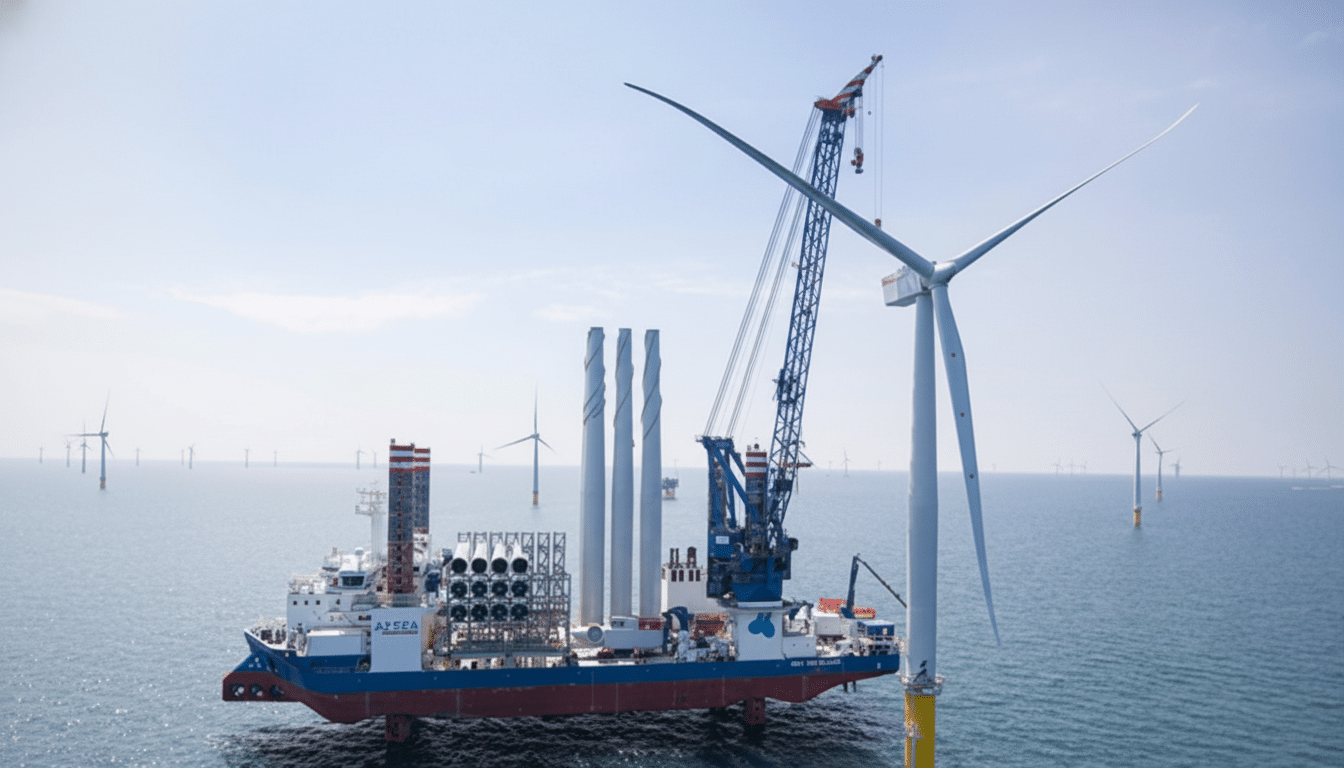
Ørsted and Equinor both sued over stop-work orders on their specific projects, in Revolution Wind and Empire Wind, respectively; Dominion Energy filed a lawsuit aimed at reversing the suspension of construction for its Coastal Virginia Offshore Wind project. Revolution Wind is nearly 90 percent complete, and Empire Wind and Coastal Virginia Offshore Wind are roughly 60 percent complete, the companies said.
- Developers Go to Court Over Offshore Wind Pause
- National Security Rationale Questioned by Industry
- What’s at Risk for Energy Supply and Jobs
- Legal Questions and Possible Outcomes for Developers
- Radar Mitigation Is Not a ‘Blank Slate’ for Defense Radars
- Market and Policy Ripples Across the Offshore Sector
- What to Watch Next in the Offshore Wind Dispute

Dominion says the hiatus is costing about $5 million a day as ships, labor and manufacturing slots remain idle. Avangrid, the developer behind Vineyard Wind 1, has not taken legal action but said that some continuation of its project stays active while the rest is in limbo. The five affected projects taken together are linchpins of state clean energy mandates in the Northeast and Mid-Atlantic.
National Security Rationale Questioned by Industry
The Interior Department cited national security risks but did not describe the analysis involved in that assessment. Industry executives and policy experts say the likely culprit is radar interference from turbine arrays, a problem that defense agencies and energy planners have been investigating for years. A recent report from the Department of Energy detailed remedies including software filters, gap-filler radars and more sophisticated siting and turbine layout.
Offshore wind leases and permits are already being reviewed in an interagency process that involves the Bureau of Ocean Energy Management, as well as the Department of Defense’s Military Aviation and Installation Assurance Siting Clearinghouse. For many projects, that process results in de-conflicted layouts or conditions to safeguard mission-critical operations. Developers say the government’s sudden U-turn flies in the face of those processes and sidesteps promised protections.
What’s at Risk for Energy Supply and Jobs
The capacity at stake, about 6 gigawatts, could produce enough electricity to power an estimated 2.3 million homes given average offshore wind capacity factors compiled by the National Renewable Energy Laboratory. For states including New York, Massachusetts, Rhode Island and Virginia, the projects are central to decarbonization plans as well as grid reliability strategies in an age when old fossil plants are retiring.
“Offshore wind construction employs tens of thousands of jobs, when considering steel, cables, foundations, offshore substations, installation vessels and port infrastructure upgrades,” the American Clean Power Association has estimated. Ports like New Bedford, Mass., and the Portsmouth Marine Terminal in Va., have been retooled for these projects, which come with long-lead manufacturing orders that can be difficult to pause or restart without extra expense.
Legal Questions and Possible Outcomes for Developers
The grievances are likely to argue that Interior’s action is arbitrary and capricious under the Administrative Procedure Act, violates lease rights under the Outer Continental Shelf Lands Act and disrupts settled reliance interests without an articulated justification. Developers are also asking for temporary restraining orders and preliminary injunctions to allow construction to continue as the cases make their way through court.
Courts have also in the past demanded that agencies offer robust, evidence-based justifications for reversing prior approvals, particularly if companies have made significant investments based on federal conditions of compliance. If a judge determined that the stop-work orders were unsupported by enough facts or did not consider possible mitigations, then the projects could quickly be given a green light. Or the court could guide the parties to a negotiated framework that limited the scope of the pause.
Radar Mitigation Is Not a ‘Blank Slate’ for Defense Radars
The interference that wind turbines cause for air and sea radar is real, but also manageable. Technical solutions include filtering turbine returns from radar signal processing, providing additional radar coverage in blind spots, strategically spacing turbines and corridors for flight paths and shipping lanes which are taken into account during data collection periods to avoid areas where multiple radars intersect, with curtailments when military training is sensitive. They are widely used in the North Sea and have been tested along the coast of the United States with tight military coordination.
Analysts point out that the expense of upgrading or supplementing radar installations is typically a small fraction of what’s at stake economically when projects costing many billions are left stranded. An indexed approach that links site-specific mitigation to monitored implementation could meet mission requirements without squandering energy, jobs and supply chain momentum.
Market and Policy Ripples Across the Offshore Sector
The stoppage is adding layers of credit and scheduling risk up and down the industry, from turbine suppliers to cable manufacturers. Lags can also push projects beyond dates at which specialized installation vessels would be available and complicate eligibility for federal tax incentives tied to project construction milestones. State procurement schedules linked to individual delivery years also could be compelled to re-price or reopen awards, pushing up costs for ratepayers.
Outside the courtroom, industry groups are calling on the administration to explain the risk assessment which prompted the pause and detail specific, time-bound mitigation measures. A clear plan, however, would let developers marshal resources and construction workforces in keeping with grid needs as they attend to defense priorities.
What to Watch Next in the Offshore Wind Dispute
Preliminary rulings on emergency motions will decide whether crews can return to sea in the short term. At the same time, anticipate stepped-up negotiations between Interior and the Department of Defense, coastal states, as well as with developers over radar upgrades and tweaks to sitings. The result will indicate whether the United States can marry national security and clean energy buildout at scale — or if a legal overhang will drag on an essential part of the energy transition.
