


As a powerful winter system blankets large swaths of the U.S., Nvidia is touting new AI weather models that may have flagged the threat weeks earlier — and with more confidence — than many forecast suites. The company’s Earth 2 platform, introduced to meteorologists at the American Meteorological Society meeting in Houston, targets the hardest parts of prediction: medium-range guidance, hyperlocal nowcasts, and the data assimilation step that feeds every model.
Medium Range Model Puts Lead Time Front And Center
The headline act is Earth 2 Medium Range, a transformer-based model Nvidia says outperforms Google DeepMind’s GenCast across more than 70 verification variables. GenCast, unveiled in late 2024, already raised the bar for 10–15-day forecasts. Nvidia’s claim, if borne out by independent testing, suggests a meaningful bump in skill at the timescales emergency managers rely on for staffing, salt procurement, and pre-positioning utility crews.
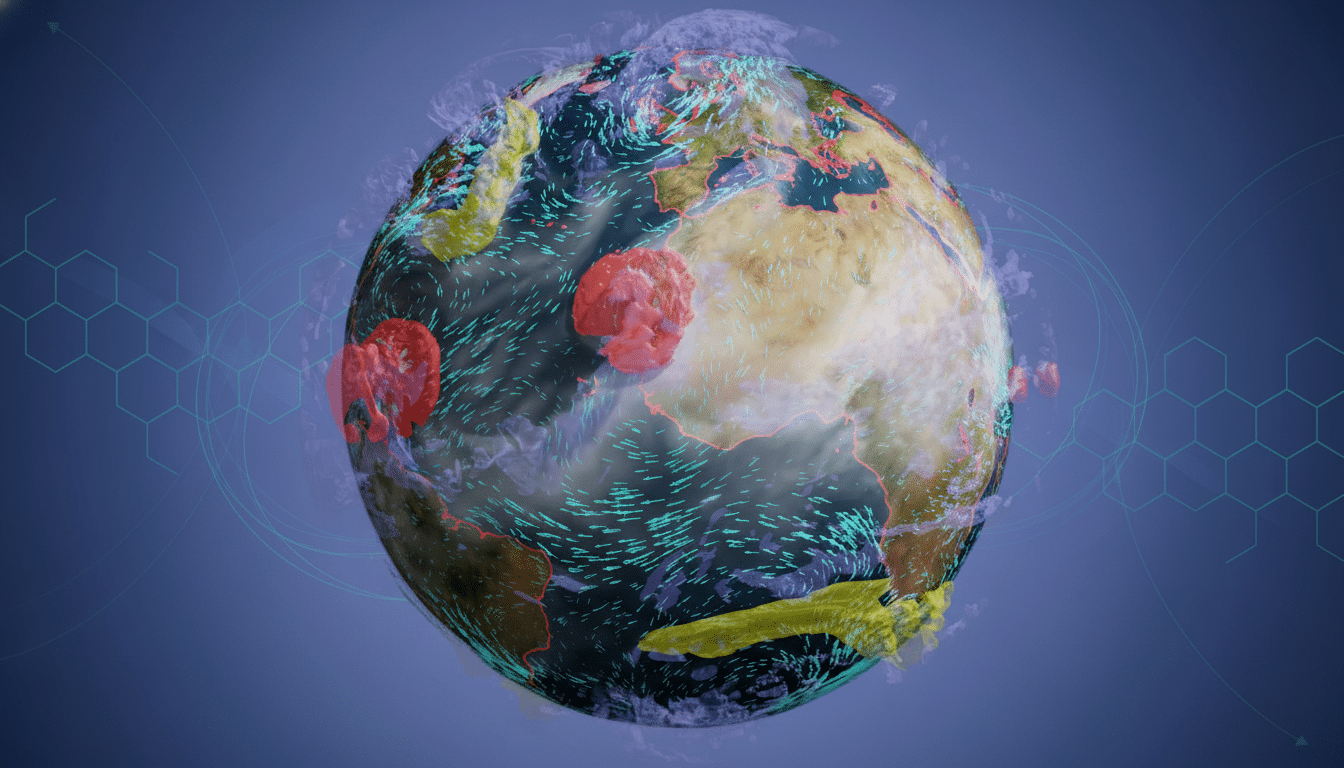
Why that matters: small improvements in medium-range accuracy compound into big operational wins. A storm track nudged 100 miles south or a precipitation phase shift from sleet to snow days in advance can swing school closures, airline schedules, and power demand planning. Ensemble spread — the range of plausible outcomes — is where forecasters live, and a model that narrows that spread without sacrificing reliability translates to actionable lead time.
Nvidia attributes the gains to its new Atlas architecture, a “simple, scalable” transformer stack trained on vast global archives, rather than hand-tuned, niche networks. In practice, that means faster inference and a common backbone that can be retrained as new observations and reanalyses are released by agencies like ECMWF and NOAA.
Nowcasting Built From Spaceborne Satellite Imagery
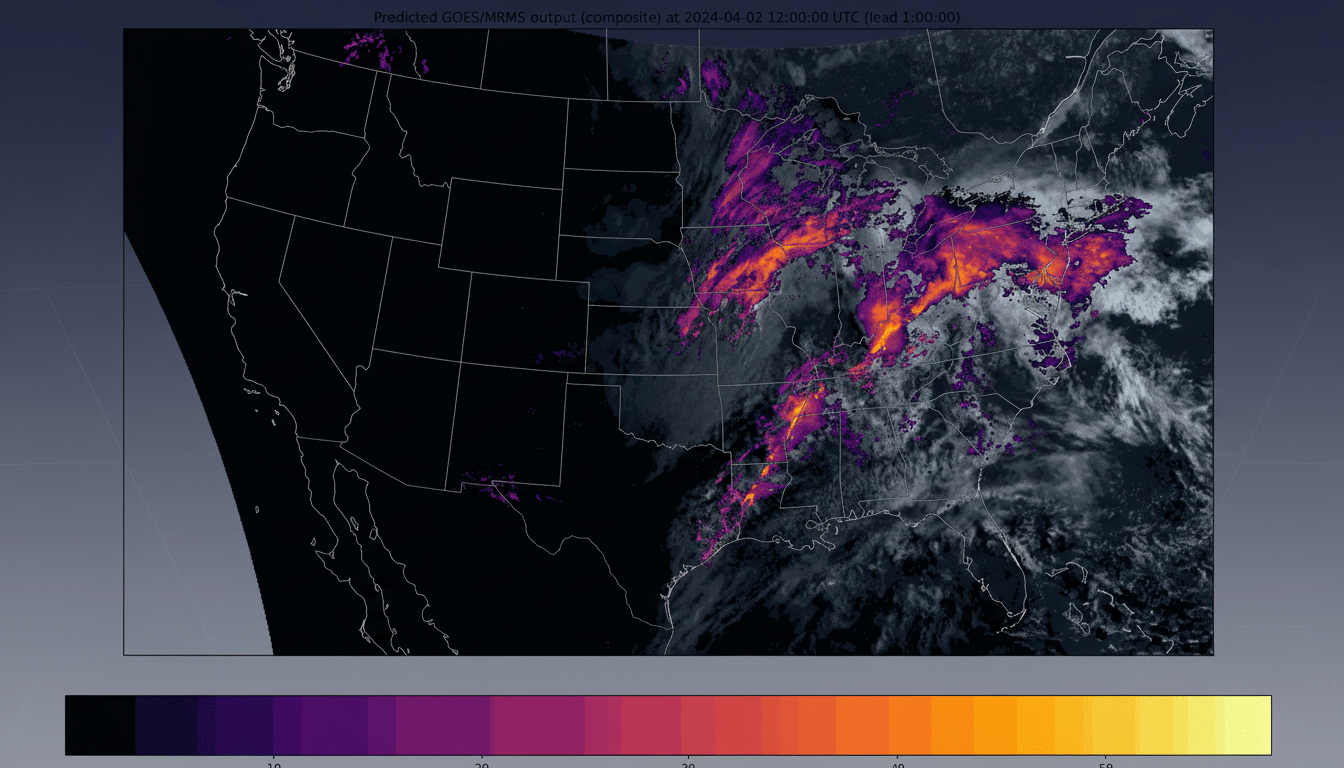
For the first 0–6 hours — where thunderstorms, fog banks, and banded snow systems wreak havoc — Nvidia’s Nowcasting model ingests geostationary satellite imagery directly. That choice sidesteps regional dependencies and lets the system generalize wherever there’s robust satellite coverage, including GOES over the Americas, Meteosat for Europe and Africa, and Himawari across the western Pacific.
In operational settings, nowcasts fill a critical gap between radar scans, surface observations, and the next model update. A more trustworthy short-term picture can reduce false alarms for airport ground stops, sharpen flood guidance for urban corridors, and improve safety margins for power restoration teams threading storms.
Data Assimilation In Minutes, Not Hours For Forecasts
Every forecast stands on the quality of its starting point. The Global Data Assimilation component ingests a firehose of observations — from weather stations and radiosondes to aircraft and satellites — and fuses them into a consistent global snapshot. Traditionally, this step eats roughly 50% of supercomputing time in numerical weather prediction. Nvidia says its GPU-first approach compresses that workload into minutes, not hours, freeing compute for higher-resolution runs and larger ensembles.
Speed here isn’t just a luxury. Faster cycles mean more frequent updates as new data arrive, fewer stale initial conditions during rapidly evolving events, and the ability to run multiple competing scenarios to quantify risk. In storm setups like the current one, that can be the difference between forecasting a nuisance snow and flagging a crippling, multi-day event.
From Supercomputers To GPUs And The Cloud
Earth 2 builds on Nvidia’s earlier CorrDiff and FourCastNet3, which accelerated high-resolution downscaling and single-variable prediction, respectively. Together with Medium Range, Nowcasting, and Global Data Assimilation, the suite points to a future where AI augments, and in some cases replaces, traditional physics-heavy runs for many day-to-day needs — while leaving mission-critical edge cases to the gold-standard dynamical models at centers like ECMWF and NOAA.
Cost matters as much as accuracy. Historically, the best guidance has been concentrated in nations and corporations that can afford time on the biggest machines. By moving core steps onto GPUs and cloud infrastructure, Nvidia and its partners argue they can expand access. Early pilots underscore that shift: meteorologists in Israel and Taiwan have already tapped CorrDiff for rapid, high-resolution outputs, while The Weather Company and TotalEnergies are evaluating the new Nowcasting approach for operations.
Sovereignty And Verification Still Rule
National meteorological services will ask the right questions: How does skill vary by region and season? Do extreme events verify, or are tails clipped? What are the reliability diagrams and Brier scores for high-impact thresholds? Independent benchmarking by groups like the World Meteorological Organization and shared intercomparison datasets will determine how, and where, Earth 2 gets slotted into official guidance.
Sovereignty also looms large. Weather is critical infrastructure, and many countries want models they can run and audit themselves. Nvidia’s pitch acknowledges that reality: some users will subscribe to centralized services; others will insist on national deployments with tight data governance. The common denominator is modular building blocks that can be tuned to local observing networks and hazards.
What This Means For The Next Big Winter Storm
If Earth 2’s performance holds up, the practical outcome is earlier, clearer guidance — not just more maps. Think utility grids shifting generation days in advance of a cold blast, cities calibrating plow routes with higher confidence, and insurers quantifying portfolio exposure with sharper ensembles. For the current system, that could have meant a steadier narrative sooner, even as totals and tracks evolved.
AI won’t eliminate uncertainty, and no single model owns the truth. But a faster, more skillful blend of AI and physics — fed by better assimilation and validated in the open — is edging forecasts closer to what decision-makers have asked for all along: more lead time, fewer surprises, and clearer odds when the stakes are highest.
