


There’s a new budget-friendly way to turn rough ideas into high-performing AI prompts, and it’s landing with an attention-grabbing 92% discount. The Prompting Systems Gold Plan, a lifetime offer priced at $139.99 (regularly $1,764), promises to help users consistently generate stronger prompts across leading AI tools without buying credits or juggling model-specific tricks.
As generative AI becomes standard in everyday work, the bottleneck is no longer access to models—it’s the quality of instructions. This deal centers on a practical fix: guided, self-adaptive prompting that captures context, intent, and tone before assembling prompts that perform across chat, image, and video models.

Why Prompt Quality Matters for Better AI Results
Well-structured prompts don’t just read better—they save time and reduce costly trial and error. MIT researchers have reported sizable productivity gains on writing tasks when workers use structured guidance, with meaningful improvements in speed and output quality. GitHub’s study on AI coding assistants similarly found developers completed tasks faster when prompt patterns were clear and repeatable.
The lesson echoes across industry guidance. OpenAI, Anthropic, and Google all publish prompt design best practices that emphasize role-setting, specificity, constraints, and examples. McKinsey’s research on generative AI’s economic impact notes that better instructions compress iteration cycles, especially in marketing, support, and documentation—domains where prompt clarity translates directly into time saved.
What the Deal Includes in the Gold Plan Offer
The Gold Plan gives lifetime access to a self-adaptive prompting engine designed to transform basic ideas into complete, model-ready prompts. It collects context—such as audience, goals, tone, constraints, and required outputs—then auto-structures instructions for the target task.
Unlike static prompt libraries, the system supports major platforms, including ChatGPT, Claude, Gemini, Midjourney, DALL·E, and Stable Diffusion. Nine “hyper-trained” task models adjust prompting patterns for use cases like content creation, marketing copy, documentation, professional communication, image generation with technical parameters, and video script outlines.
Key for frequent users, the plan lifts usage limits: unlimited prompt generations each month, for life. If your workflow has been constrained by credit-based tools, that alone is a material change.
How It Works in Practice for Text and Visuals
Start with a rough request—say, “announce a new fintech app to early adopters.” The workflow asks for target audience, positioning, compliance constraints, desired tone, channel, and call to action. It then assembles a high-fidelity prompt specifying role, voice, length, structure, key messages, disallowed claims, and evaluation criteria. The result tends to produce on-brief drafts on the first pass, reducing “prompt ping-pong.”
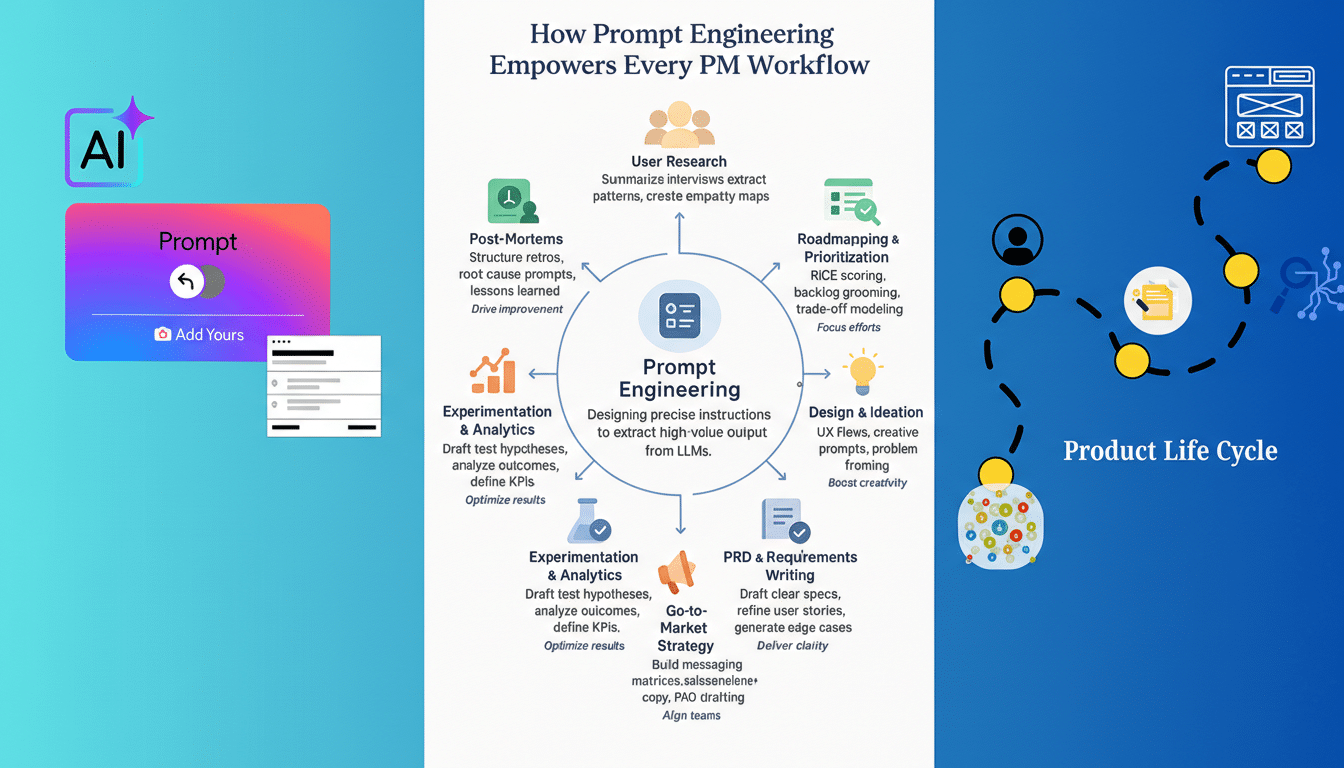
For visual tasks, a simple concept like “minimalist travel poster for Kyoto” is transformed into image prompts with style references, composition guidance, camera details, aspect ratio, lighting cues, and negative prompts, tailored for Midjourney, DALL·E, or Stable Diffusion. Video workflows break down outline, hooks, beats, voiceover notes, B-roll suggestions, and on-screen text.
Who Benefits and the ROI Case for Daily Workflows
Marketing teams, solo creators, consultants, educators, and support leaders stand to gain. If you save even 10 minutes per brief across 50 tasks a month, that’s more than eight hours back—every month. At common hourly rates, the one-time $139.99 spend pays for itself quickly, particularly when prompts work reliably across multiple AI tools and you’re not metering each attempt.
The cross-model approach also matters as companies diversify: many teams pair a chat model for ideation and editing with an image model for visuals, and increasingly a video tool for scripts or storyboards. Having a unified prompting system reduces rework between platforms.
How It Compares and Key Caveats to Consider
Compared with single-purpose prompt packs or one-off templates, an adaptive engine travels better across use cases. It also aligns with what model makers advise—clear roles, constraints, and examples—without users memorizing the nuances of each platform. That said, “lifetime” offers always depend on vendor viability, and outputs still require human oversight for brand voice, accuracy, and compliance.
Teams with strict data policies should confirm how inputs are handled and whether any prompts or context are stored. Many organizations now maintain internal prompt standards; this tool can complement those by enforcing structure and checklists before generation.
Bottom Line: A Practical Path to Better AI Prompts
If you rely on AI for writing, design, or communications, better prompts are the fastest way to upgrade results. With lifetime, unlimited generations and support for today’s leading models, the Prompting Systems Gold Plan offers a practical path to higher-quality outputs at a striking price—precisely the sort of efficiency gain that turns occasional users into daily power users.
