


Artificial intelligence is coming to Firefox, and so are online trackers that you can’t avoid — no matter how hard you try.
This spring, Mozilla intends to release new AI-powered algorithms intended to stop companies even from creating profiles of web users as they browse the internet with its flagship service: its free Firefox browser.
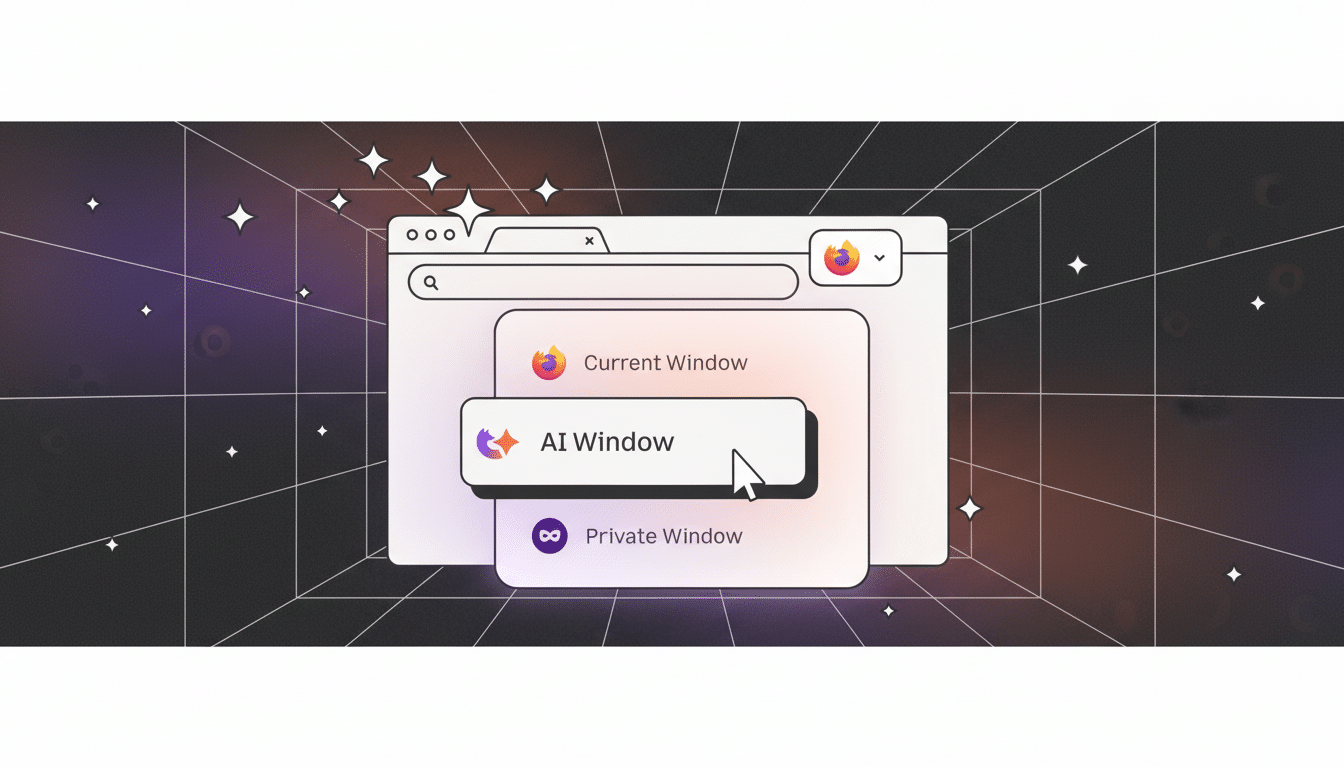
Earlier this week, Anthony Enzor-DeMeo was named Mozilla’s new chief technology officer. In his first public sign of strategy, he committed that AI-powered features would be opt-in, transparent and easy to disable, in an effort to merge innovation with the browser’s tradition of protecting users’ privacy.
The posture threads a needle at a time when browsers are reinventing themselves as AI assistants, summarizers and agents. It also sets Firefox apart from competitors that have established AI defaults, to some user backlash.
The Importance of Opt-In AI for Firefox Users
Firefox’s brand is all about user control — from Enhanced Tracking Protection to Total Cookie Protection. Optional AI, rather than enforced AI, fits that heritage and addresses concerns about data exploitations, model training, and opaque recommendations posed by groups like the Electronic Frontier Foundation.
Users have fresh memories of heavy-handed rollouts elsewhere. Microsoft’s early Copilot partnerships, and the Windows Recall scandal both served as examples of how rapidly default-on AI can erode trust. By just asking, Mozilla is betting on restraint as a means to win loyalty while sacrificing early adoption numbers.
How AI in Firefox Might Look for Everyday Browsing
Look for practical, low-friction tools: page and PDF summaries, search suggestions that are smarter, tabs and reading list organization, and developer assist within the Web Console. Translation and captioning are also real possibilities, particularly if they can be run on-device.
One would be for Mozilla to pursue a model-agnostic strategy, allowing users to pick providers or keep everything local. The on-device model reduces data exposure while the cloud model expands capability. Clear statements on data flows and retention — for instance, whether prompts are recorded or used for training — will be crucial to maintaining credibility.
Telemetry controls will matter, too. Firefox users already have the ability to dial down data collection. Making this transparency available for AI events and providing per-category toggles would make the “AI should always be a choice” promise operational.
Competitive Pressure and the Reality of the Market
Timing is everything and the timing here is a reflection of the ever-changing market. There are also new browsers being built from scratch around AI, like Arc and Opera and Perplexity, as well as Microsoft turning Edge into a Copilot showcase. Even privacy-first competitors like Brave now come with an LLM assistant.

Firefox has to be a part of that conversation. Worldwide, Firefox’s share is in the low single digits on most platforms, with a bit more visibility on desktop, according to StatCounter. Edge has stubbornly stayed at around 5%–6% even with an aggressive AI bundling movement, proving again that features don’t simply move markets overnight.
What sets Mozilla apart is its legacy of trust and stewardship of standards. Its engineers participate meaningfully in web standards at the W3C. If Firefox can put out AI that improves the open web rather than funneling users into closed ecosystems, it can go on the offense without compromising its principles.
Business Model and Ecosystem Plans for Mozilla
Enzor-DeMeo also alluded to an effort to diversify revenues beyond search distribution deals, which have long supplied most of Mozilla’s income according to the organization’s publicly disclosed financial reports. Extracting itself from that dependence would offer Firefox more freedom with defaults and partners.
The journey weaves through a larger product stack. Mozilla already supports the Thunderbird email client, offers a paid-for VPN service and owns Pocket for content discovery. It experimented recently with an AI-powered website creator for small businesses — the kind of utilitarian tool that might be a part of a privacy-forward AI tier.
“Pay for this AI stuff”: local-first AI features may be something that aligns well with Mozilla’s values and provides sustainable monetization, especially if enterprises or developers have a way to control models and policies in GDPR-compliant ways or whatever.
Leadership and Execution Risks Facing Mozilla
Enzor-DeMeo, who comes to the job from ranking as general manager of Key’s Firefox team, with stints before in product at Roofstock, Better and Wayfair, will come on board following restructuring and layoffs that cut about 30% of staff last year. The goal is to ship quickly, not at the expense of what makes Firefox unique.
That means that when the decision is made to save yourself and deploy bots, they should not be deployed “all over the place,” according to Lever, with chatbots. The best of these applications will be ambient and unobstructive: aiding you as you try to parse a research paper, clean up a pile of browser tabs or explain an error message in your terminal — then doing its best to get out of the way.
It also means tough choices about partnerships. Performance drifts fast, and the need to bargain in data safety with AI vendors will be as important as UI/UX design. Mozilla’s history of protecting privacy raises the bar it should be expected to clear.
The Bottom Line on Firefox’s Opt-In Approach to AI
Firefox is entering the AI arms race on its own terms. If Mozilla can deliver valuable, opt-in intelligence while also protecting user agency, it could help re-establish the browser as a trustworthy gateway to AI — not just a funnel into someone else’s platform.
