


Micron has fired the starting gun on the PCIe 6.0 storage era, unveiling enterprise NVMe SSDs that push sustained reads to around 28GB/s and sequential writes to about 14GB/s. The catch is simple and significant: these drives are built for AI data centers, not consumer PCs, so most people won’t be slipping one into an M.2 slot anytime soon.
What PCIe 6.0 Brings to Enterprise Storage Performance
PCIe 6.0 doubles the bandwidth of PCIe 5.0 by moving to PAM4 signaling and fixed-length FLIT packets with forward error correction, per PCI-SIG’s specifications. In practical terms, an x4 NVMe link can deliver north of 25GB/s of usable throughput when the controller, firmware, and platform are tuned to handle the additional encoding and FEC overhead.
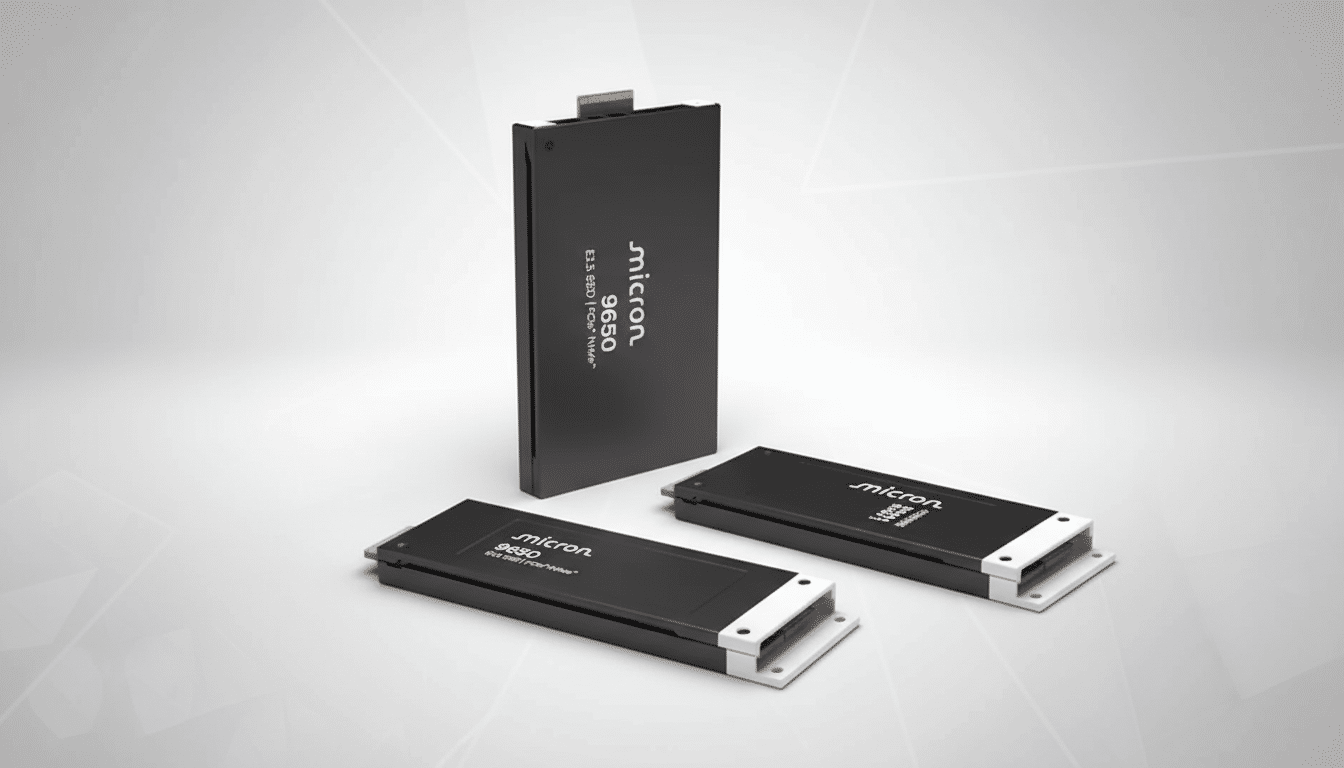
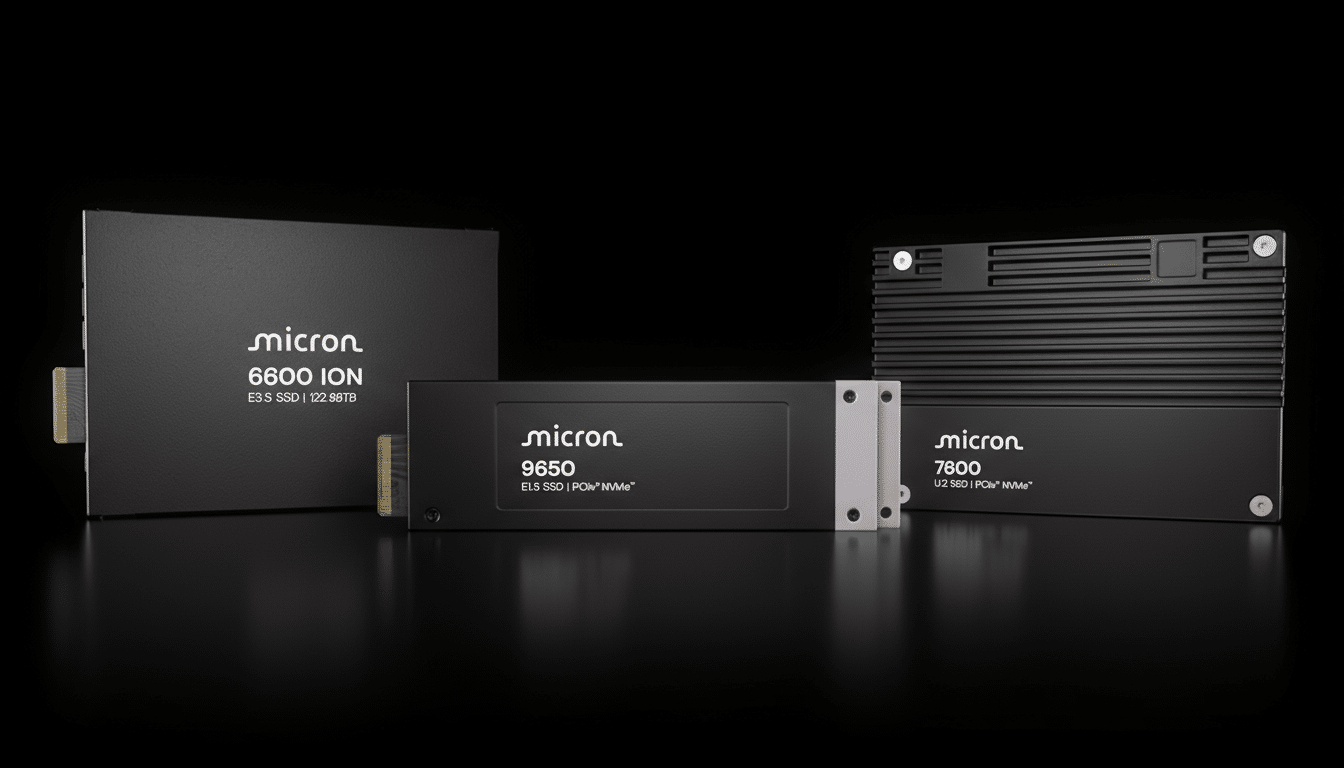
Micron’s new 9650-series SSDs lean into that ceiling, posting sustained reads up to 28GB/s and writes up to 14GB/s, alongside as much as 5.5 million IOPS for random reads. Against today’s PCIe 5.0 enterprise drives, the company cites roughly 100% faster sustained reads, up to 40% faster sustained writes, and sharp gains in random access—about 67% for reads and 22% for writes. The bigger headline for operators, however, is performance per watt: more bytes moved for the same power budget translates into lower total cost of ownership at scale.
Built for AI Workloads, Not Consumer Gaming Rigs
These SSDs are purpose-built for training and inference pipelines where storage is a bottleneck: fast prefetching of massive datasets, rapid checkpointing, and accelerated shuffling for distributed training. Higher bandwidth reduces CPU cycles wasted on I/O wait and trims tail latency across nodes, which is why AI platforms are primed to adopt PCIe 6.0 storage sooner than mainstream servers.
Thermals are a trade-off. With link speeds and controller logic stepping up, Micron is offering both air-cooled and liquid-ready options to maintain sustained performance. According to industry reporting from TechPowerUp, the company completed roughly 18 months of interoperability testing to ensure the drives hold up under continuous high-throughput workloads, with OEM and hyperscale validation now underway.
Why You Probably Cannot Use One of These Drives Yet
Consumer platforms simply aren’t there. Motherboards, CPUs, retimers, and M.2 ecosystems supporting PCIe 6.0 are still in the pipeline, and even when they arrive, firmware and cooling need to catch up. For most desktop users, PCIe 5.0 already outpaces real-world workloads; independent testing shows game load times and everyday app launches barely move beyond PCIe 4.0, because software rarely saturates the bus.
There’s progress on the software side. Microsoft’s recent storage stack improvements for Windows 11, which reduce reliance on legacy SCSI translation paths and better utilize native NVMe, have tightened latency and boosted consistency in some scenarios. Technologies like DirectStorage help too, but they highlight a broader point: end-user benefits hinge on developers optimizing for fast storage, not just on raw interface speed.
The Bigger Picture for Data Centers and AI Platforms
PCIe 6.0 storage doesn’t exist in isolation—it aligns with the shift to composable infrastructure and CXL-attached memory pools, where moving data efficiently is as valuable as computing on it. Faster NVMe tiers can keep accelerators fed with fewer stalls, improving utilization across GPUs, DPUs, and CPUs. That’s why hyperscalers are early adopters: shaving milliseconds off I/O on millions of queries adds up to meaningful savings.
Expect competitors to follow. Enterprise SSD heavyweights like Samsung, Kioxia, Solidigm, and Western Digital have PCIe 6.0 controllers on their roadmaps, and PCI-SIG’s published cadence means PCIe 7.0 isn’t far conceptually—even if deployment cycles take years. As volumes rise and controllers mature, costs and cooling demands will moderate, paving the path for mainstream servers and, eventually, high-end workstations.
What to Watch Next in PCIe 6.0 Storage Adoption
In the near term, look for real-world benchmarks from hyperscale and OEM pilots that validate Micron’s claims under mixed AI workloads—think small-block random reads blended with heavy sequential ingest. Also watch for whether vendors can hold those 28GB/s reads under sustained, multi-tenant conditions without throttling, and how much the new drives improve performance per watt at the rack level.
For consumers, the message is patience. PCIe 6.0 SSDs will arrive in retail when platforms, cooling, and software catch up—and when the benefits move beyond synthetic wins. For now, Micron’s new drives are a milestone for AI data centers, not a must-have for your next PC build.
