


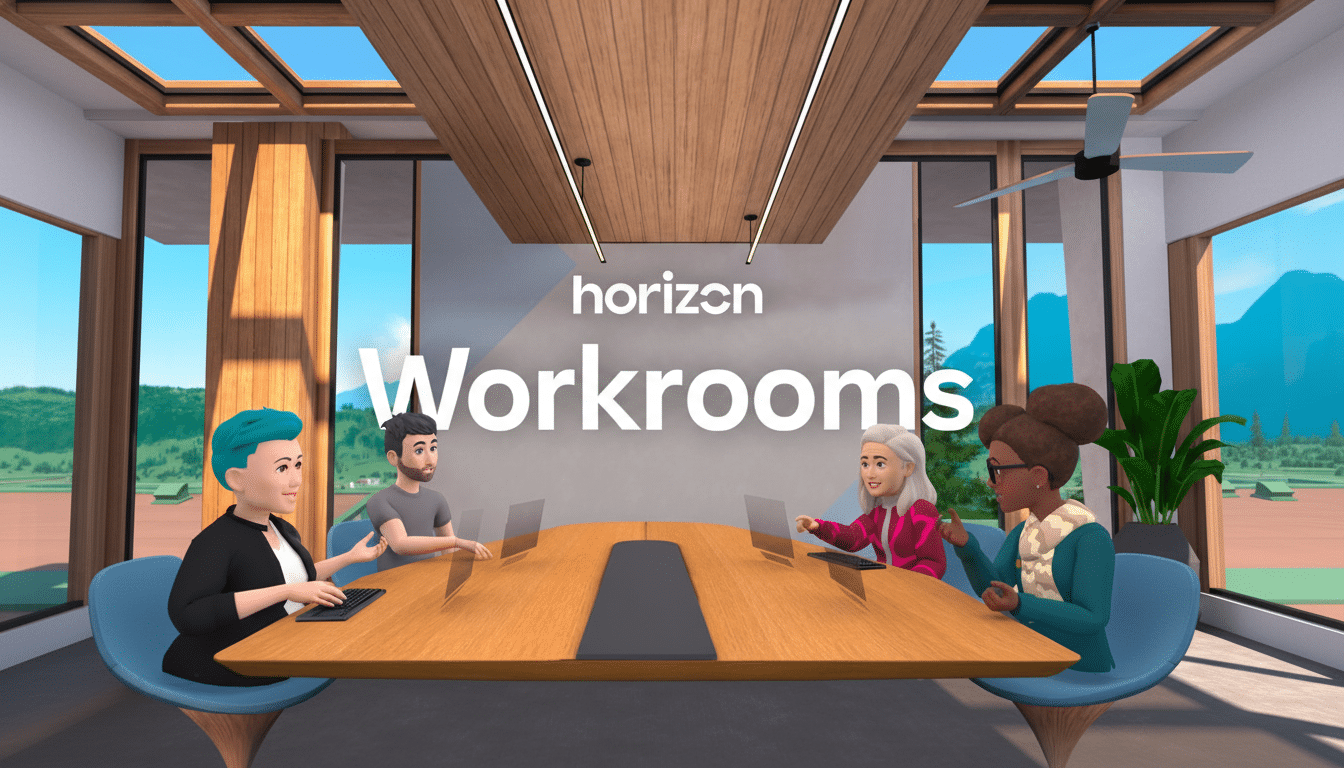
Meta is closing Horizon Workrooms, its virtual reality meeting product for businesses, next month. The shutdown marks a decisive step away from VR-first office collaboration and toward experiences that run on phones and smart glasses, signaling a strategic reset for how Meta thinks people actually want to work.
What Shutting Down Workrooms Means for Users and Teams
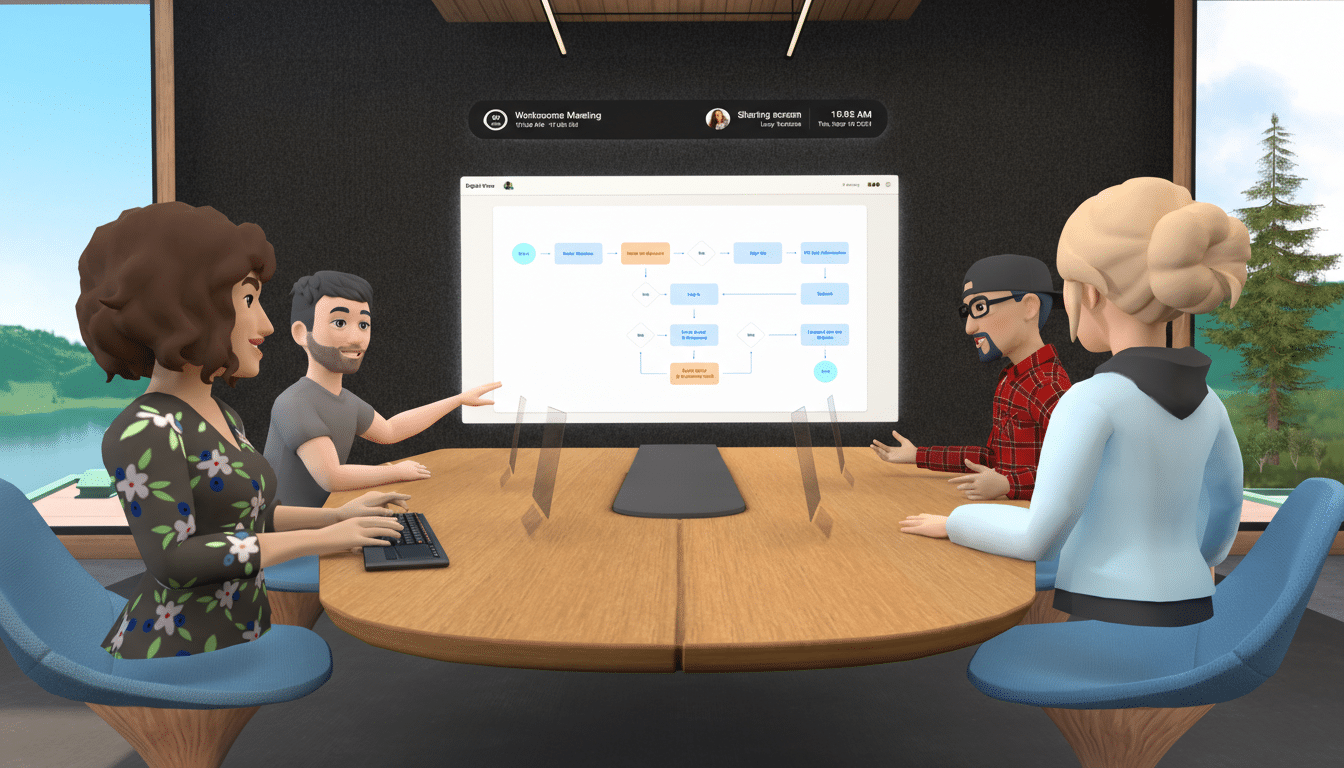
Workrooms was designed to let distributed teams meet around a virtual table using Quest headsets, complete with spatial audio, shared desktops, and whiteboards. After the service is discontinued, access will end and stored content will be deleted. Meta has advised customers to sign in and pull down any materials they need before the cutoff. Notably, there’s no broad, one-click export; companies will likely need to retrieve files room by room or rely on local copies shared during sessions.
Meta points customers to a slate of third-party options that support collaboration in VR, including Arthur, Microsoft Teams Immersive, and Zoom Workplace. Each takes a different approach to presence and interoperability, ranging from meeting-style environments to persistent “rooms” that integrate with productivity suites.
Meta Pivots Toward Wearables and Mobile Experiences
The retreat from Workrooms is part of a broader reallocation of resources toward mobile-scale platforms. According to internal guidance reported by Bloomberg, Meta leadership is steering teams to prioritize experiences that land on devices people already carry or wear every day. That includes the company’s growing push around smart glasses and on-device AI assistants, where friction is lower than asking workers to don a headset for a 30-minute status meeting.
Strategically, this is about distribution and frequency. Smart glasses can be used continuously throughout the day for messaging, camera, and prompts; VR headsets still tend to be session-based. For a company chasing daily active use at scale, the calculus favors lighter, socially acceptable hardware.
Enterprise VR Strategy Gets Trimmed Amid Restructuring
Meta is also winding down commercial sales of its dedicated enterprise VR offerings, while giving existing business customers free Horizon managed services licenses for the remainder of their support window. The company says it will continue to support enterprise management features on current-generation headsets for years, signaling a soft landing rather than an abrupt stop for IT teams that have rolled out devices.
The organizational shake-up goes beyond software. Multiple reports indicate internal VR game studios have been impacted, with posts from former employees pointing to closures at Armature Studio, Twisted Pixel, and Sanzaru. While Meta has not detailed the scope, the pattern underscores a consolidation around fewer bets and platforms with broader addressable audiences.
Why VR Meetings Struggled to Stick in Daily Workflows
Workrooms arrived during the peak of remote work experimentation, but adoption never matched the ambition. The reasons are practical: headset comfort over long meetings, battery life, device management overhead, and the simple fact that most collaborators join from laptops or phones. Even when presence feels superior in VR, meetings default to the lowest-friction option—usually a link that opens in a browser.
Consumer penetration has also been modest. Pew Research Center has found that only single-digit shares of U.S. adults own a VR headset—around 8%—limiting the pool of colleagues who can participate natively. Meanwhile, video platforms embedded in existing workflows have continued to improve with spatial audio, AI summaries, and avatar modes that chip away at VR’s differentiation.
There are bright spots: firms like Accenture deployed tens of thousands of headsets for onboarding and training, citing strong outcomes for repeatable, hands-on scenarios. But those successes tend to be discrete programs rather than the default venue for everyday meetings.
What Users Should Do Now to Prepare and Migrate
Teams that rely on Workrooms should identify critical assets and export them before the service winds down. That includes whiteboard captures, shared documents, and any recordings saved in rooms. Administrators should review headset fleets, confirm remaining support timelines, and plan a migration path—either to a VR-native alternative like Arthur or to immersive modes in Microsoft Teams or Zoom that can accommodate both headset and non-headset participants.
The takeaway is not that immersive collaboration is dead; it’s that the center of gravity is shifting. Meta’s move suggests VR will be most effective where it’s irreplaceable—training, design reviews, simulations—while everyday meetings gravitate to devices and apps people already use. For companies, the pragmatic path is hybrid: VR where it adds measurable value, and familiar tools everywhere else.
