


Meta’s headset lineup is now anchored by two mainstream models that bear a family resemblance but appeal to different pocketbooks. Quest 3 is billed as the flagship all-rounder, but Meta Quest 3S trims costs and features to appeal to a wider audience. If you’re deciding between them, the difference is all in display tech, storage capacity, and a couple of comfort and optics decisions that change how VR and mixed reality actually feel.
After spending a lot of time testing, and talking to developers building for both headsets, the short version is this: Quest 3 offers a sharper, wider, more comfortable view of VR; Quest 3S offers that same set of apps on the same chipset for a whole lot less money.
- Pricing and storage tiers for Meta Quest 3 and 3S
- Lens technology and field of view differences explained
- Mixed reality and passthrough quality compared on both
- Chipset performance and tracking parity across both
- Comfort, battery life, and accessories for each model
- App ecosystem, compatibility, and PC tethering options
- Which Meta Quest headset should you buy right now?
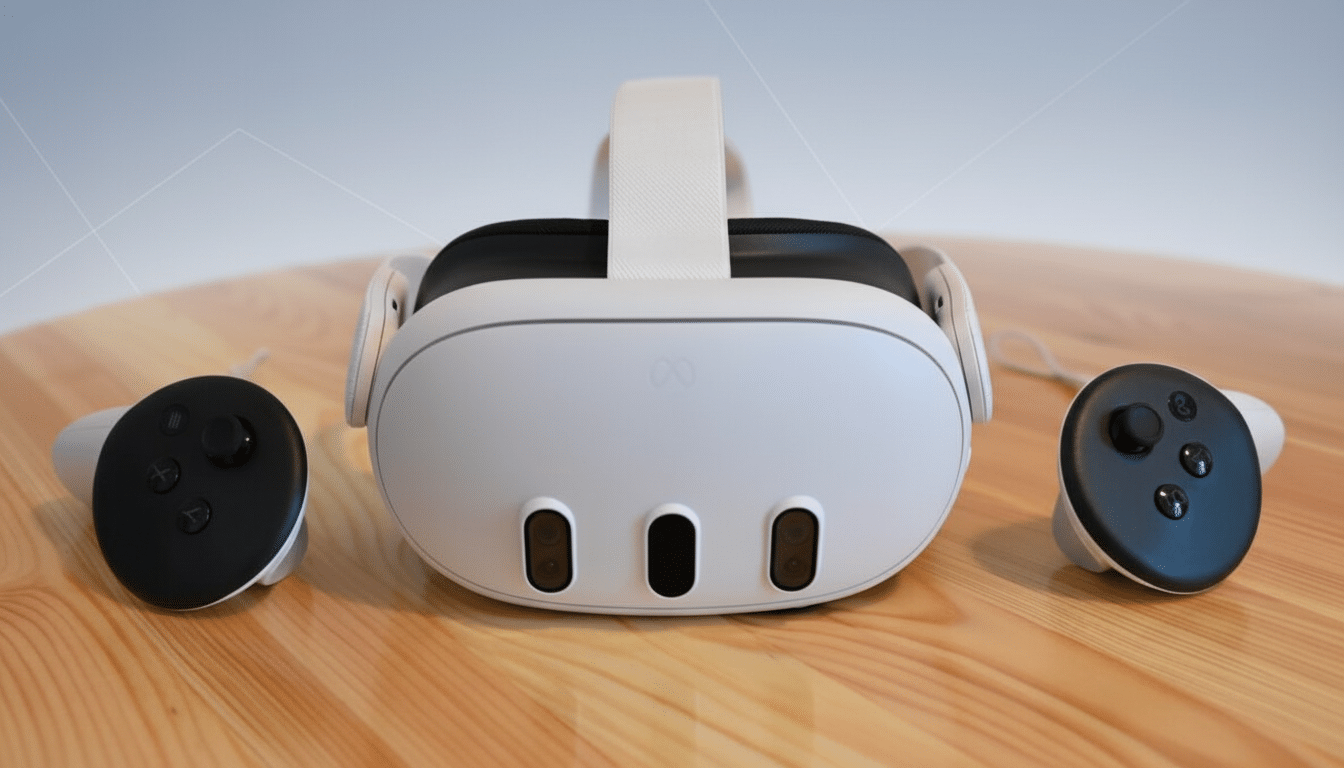
Let me demonstrate how that plays out in practice.
Pricing and storage tiers for Meta Quest 3 and 3S
The Quest 3S costs $299 with 128GB and $399 with 256GB. The Quest 3 costs $499 and comes with 512GB. If you want to load up bigger titles — we’re talking 20GB to 30GB marquee games — the Quest 3’s headroom is helpful. As Meta pushes more high-fidelity assets at higher resolutions, storage will fill up far faster than you might anticipate. Meta’s own Asgard’s Wrath 2, for instance, can easily swallow up tens of gigabytes from that amount based on content packs.
Value verdict: If budget is a concern, the 3S at $299 marks the easiest entry point for standalone VR. If you hate uninstalling games, 512GB on Quest 3 is actually useful.
Lens technology and field of view differences explained
This is the biggest separator. Quest 3 features higher-resolution panels at 2,064 by 2,208 per eye and pancake lenses. The Quest 3S is downgraded to a resolution of 1,832 x 1,920 per eye and back to Fresnel optics with three-stage IPD adjustment. In practice, Quest 3 looks cleaner, with sharper text and better edge-to-edge clarity, with fewer “god rays” from bright UI elements. Pancake lens designs also enable the use of a slimmer optical stack and more accurate, incremental IPD adjustments.
The field of view is broader on the Quest 3 (approximately 110° horizontal by 96° vertical) than for the 3S (about 96° by 90°). You feel that in cockpit sims or rhythm games where peripheral cues matter. Both headsets also accommodate 72Hz, 90Hz and 120Hz refresh rates, though those high-frame games look more vivid at Quest 3’s superior pixel density.
Whether it’s for reading productivity apps or a small HUD element, Quest 3’s clarity is genuinely quality of life. We’ve heard developers creating visually intensive games, such as Red Matter 2, point to the way higher-res panels and newer lenses can preserve fine detail and lessen eye strain.
Mixed reality and passthrough quality compared on both
Both headsets feature full-color passthrough with the same 4MP-class cameras that create room-aware mixed reality, which is a world apart from the grayscale feeds of old.
On Quest 3, in combination with its higher-res display and pancake optics, MR overlays seem more stable and text more legible at a glance. Quest 3S still supports strong MR gameplay and safety awareness, but not labels or fine edges.
Meta’s room scanning and spatial anchoring features act pretty much the same on each, while creators have access to the same mixed reality toolset. In other words, capability parity; presentation favors the Quest 3.
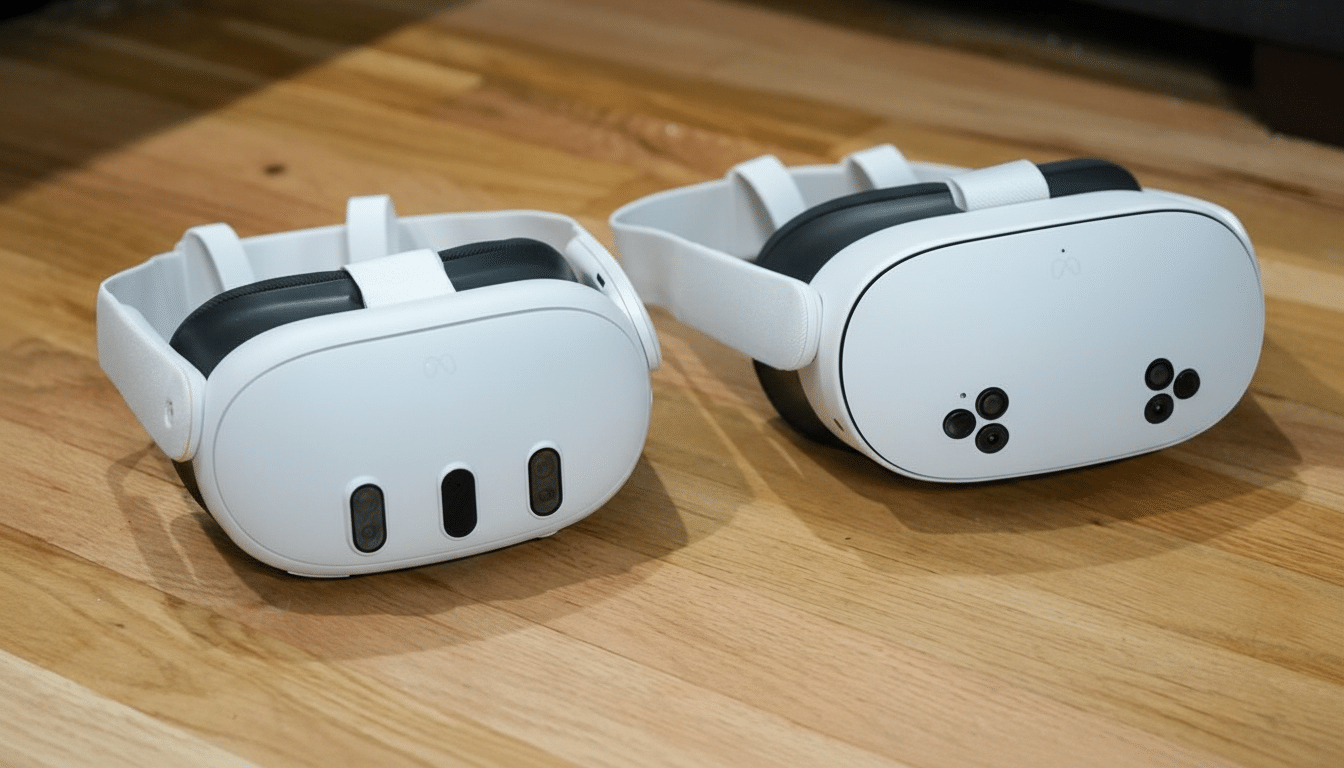
Chipset performance and tracking parity across both
On the inside, both are powered by Qualcomm’s Snapdragon XR2 Gen 2 processor and come with 8GB of RAM. Documentation from Qualcomm itself states up to a 2.5x GPU uplift over the previous generation, and developers are planning for that baseline performance across both devices. In other words, there’s no real-world performance discrepancy between Quest 3 and 3S in the same game build — only sharper looks due to those panels and lenses.
Inside-out tracking is identical. Both rely on the same Touch controllers and support hand tracking. Latency, controller fidelity and room-scale reliability are essentially equivalent — as long as the controllers remain within the cameras’ line of sight.
Comfort, battery life, and accessories for each model
The shell design and basic strap are almost twins, and you can enhance both with Meta’s Elite Strap or the Elite Strap with Battery. The 3S has a smaller battery than the Quest 3, but its lower-resolution screens are generally known for being less power-hungry. Meta’s guidance cautions of a runtime around 2.5 hours for 3S versus about 2.2 for Quest 3, but app choice and refresh rate matter more than the spec sheet here.
Audio is pretty standard as well, the off-ear speakers are clear to listen through and the sound bleed isn’t overly obvious for a standalone unit. Users still have USB-C earbuds or low-latency Bluetooth options for workouts and travel where isolation is preferred.
App ecosystem, compatibility, and PC tethering options
Both headsets are powered by the same Meta platform and store, and both can tether to a gaming PC through Link Cable or Wi‑Fi for SteamVR. It’s the shared ecosystem that’s the real news here: One app purchase usually works on both devices, so it comes down to presentation quality and storage space rather than availability of content.
Watchers like IDC have always listed Meta as the top AR/VR vendor by unit share, since developer interest tends to follow the installed base. Anticipate new launches and optimizations to ensure both Quest 3 and 3S remain in the crosshairs for a while yet, too.
Which Meta Quest headset should you buy right now?
Choose Meta Quest 3 if you give a shit about the best optics in this price class: wider FOV, sharper text definition, cleaner edges and better IPD adjustment accuracy. Sim racers, flight enthusiasts and those who look at a lot of UI meanwhile will likely notice the difference immediately.
Choose Meta Quest 3S if price is more important and having all the same core performance, controllers, app library and mixed reality features for $200 less than this model. It’s a sweet spot for fitness apps, casual games, social VR and anyone buying their first headset.
Bottom line: Quest 3 is for the visual purist. Quest 3S maintains nearly all of what makes current-gen standalone VR great — at a price that makes jumping in significantly more appealing.
