


Meta is taking its wearable AI strategy from “voice in your ear” to information in your field of view. At Meta Connect, the company is also highlighting a reimagined line of Ray-Bans, a high-end “Hypernova” model with an on-lens interface, an Oakley collaboration and a neural wristband that’s supposed to allow for hands-free fingertip control. A gaming-centric Asus ROG headset on Horizon OS completes the message: glasses-first computing is not a side project, but the plan.
Ray-Ban 2 has camera on its mind twice as much
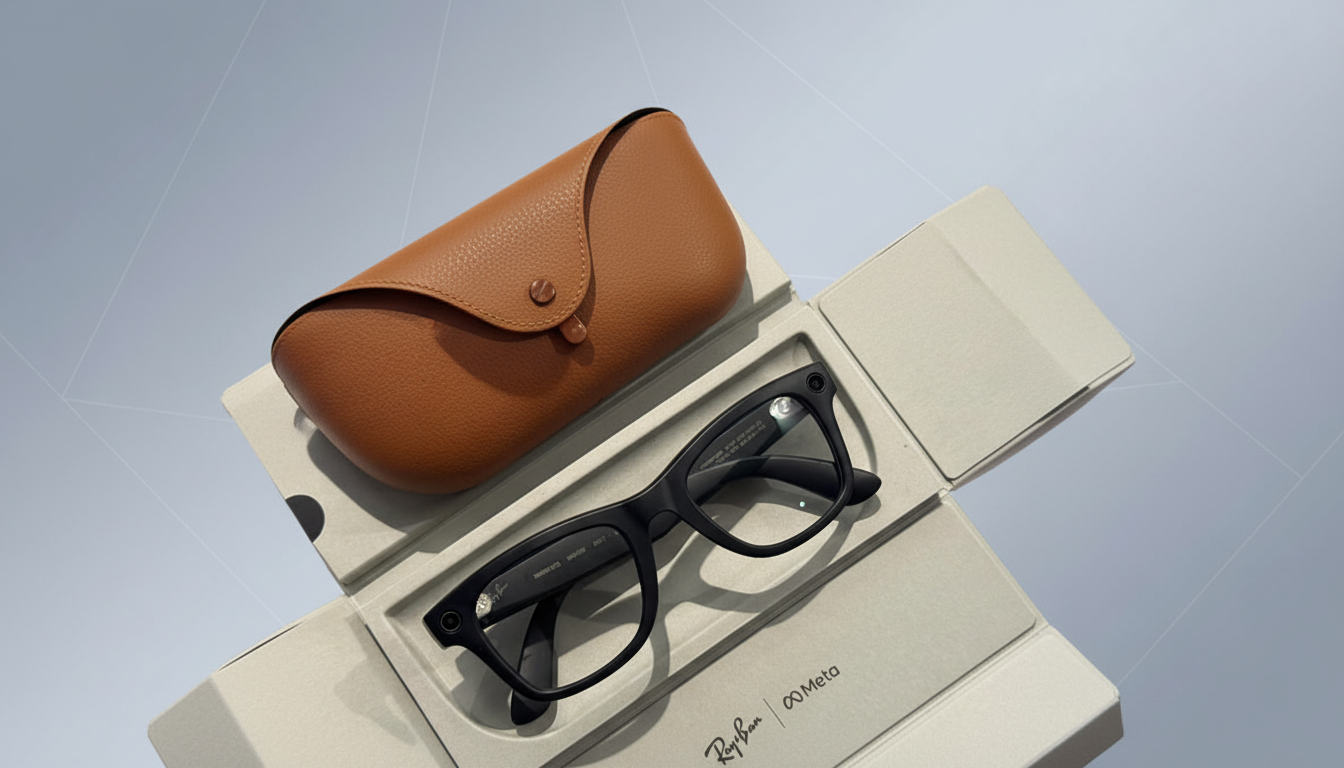
Second-generation Meta Ray-Bans maintain their camera-first focus with the goal of fixing pain points. Anticipate longer battery life, lighter frames and more ergonomic temples for all-day wear. Expanding upon last year’s additions —hands-free, multimodal capture, on-device translations and conversational language queries—this new model continues the progression toward more immediate sharing of information, memory capture and voice-forward assistance without a display. That restraint matters: Comfort and ease are the two strongest predictors of repeat use for smart eyewear, according to Counterpoint Research, and Meta seems to be attentive here.
- Ray-Ban 2 has camera on its mind twice as much
- Ray-Ban tech brings a sleek HUD experience to everyday frames
- Hypernova is looking for an on-the-lens interface
- Ceres wristband translates micro-gestures to clicks
- Oakley Sphaera embraces sport with a center-mounted camera
- Asus ROG gets ready for Tarius with Horizon OS
- AI is the connective tissue linking devices and apps
- What’s important now: comfort, heat and apps
- Bottom line: Meta is betting big on glasses-first computing

Ray-Ban tech brings a sleek HUD experience to everyday frames
For the people who want to see what you see, the Ray-Ban Display tacks on a waveguide-based, monocular HUD (heads-up display). Think navigation arrows, message snippets and translated text that appear in the edges of your vision rather than obscuring it. The design is clunkier-looking around the hinges to accommodate optics and processors, a trade-off that has plagued first-wave display glasses. Meta is framing this as “heads-up help,” not full-scene AR. Of course, the Display is being designed to be used with a neural wristband for accurate, low-friction control.
Hypernova is looking for an on-the-lens interface
The most ambitious reveal and hotly reported is a high-end smart glasses line that has been circulated under the codename Hypernova. The single-eye panel would be built into the lower right of the right lens and have a home screen for core apps such as camera, gallery and maps, according to Bloomberg’s Mark Gurman. First guidance is pricing above mainstream eyewear, corresponding to the optics and compute costs of an always-available UI. It sounds like an intentionally asymmetric experience: look down-right to interface, look up to live your life—an approach that may offer a decreased cognitive load and reduced visual clutter versus full-scene AR.
Ceres wristband translates micro-gestures to clicks
The most difficult UX challenge is controlling glasses without smudging lenses. Meta’s solution is Ceres, a neural-infused wristband that utilizes an electromyography (EMG) sensor to register minuscule electrical signals at the wrist as input to determine finger intent. Pinch to select, rotate to scroll, flick to dismiss — gestures that you can do by your side, invisibly. Since its CTRL‑Labs purchase, Reality Labs has teased EMG prototypes that promise millisecond-level response times coupled with high levels of accuracy for nuanced movements. Assuming Ceres ships with consistent performance and haptics, it could be the default input method for smart eyewear — and a key to unlocking new AR.
Oakley Sphaera embraces sport with a center-mounted camera
Meta’s cooperation with the sport sunglasses maker Oakley goes all out for performance with a Sphaera style that includes a center-mounted camera in a wraparound lens. For cyclists or runners, who are not also full-on vehicle operators, the center-line type of frame geometry and wind-cheating arcs is clever. The larger question is software: will stabilization, horizon leveling and auto-clip highlights bring that action-cam polish to eyewear? If that’s accomplished, Oakley’s model may find an audience among athletes looking for hands-free recording without mounting a separate camera.
Asus ROG gets ready for Tarius with Horizon OS
Meta’s opening of Horizon OS to partners is beginning to pay dividends. The Asus ROG Tarius, a gaming-first headset, marks the beginning of that journey for third-party devices plugging into Meta’s app ecosystem. Leaks have suggested eye and face tracking, along with a premium display stack (be that micro‑OLED or QD-LEDs with local dimming). If true, ROG could cater for higher-end visuals while Meta’s own Quest line targets mainstream price points. This was the console/PC divide, but for XR.
AI is the connective tissue linking devices and apps
That all depends on AI that’s fast and context-aware. Meta has been passing Llama models through glasses for multimodal understanding—see what you’re seeing, translate speech on the fly, summarize a notification. Anticipate greater on-device inference for privacy and latency, with big workloads pushed to the cloud. IDC still forecasts strong multi-year growth for AR/VR as utility increases; the question is whether AI can surface appropriate micro-interactions at precisely the right time.
What’s important now: comfort, heat and apps
Three filters will decide winners. First, comfort: It’s a balance of weight distribution and temple pressure that decides whether glasses last from commute to couch. Secondly, thermals; waveguides and processors generate heat — passive cooling and intelligent power management are do or die. Third, software: a bare minimum of everyday apps is better than a crowded launcher. All that spec-sheet sprinting also matters less than prescription support, water resistance and frictionless pairing.
Bottom line: Meta is betting big on glasses-first computing
Meta is taking smart glasses from the novelty phase into necessity — casual capture with Ray-Ban 2, glanceable HUD with Ray-Ban Display and full on-lens utility with Hypernova—all knitted together by the Ceres wristband. Throw in a gaming push from Asus ROG on Horizon OS and the ecosystem picture clarifies. If ambition meets execution, the next wave of computing won’t live in your pocket or on your desk. It will rest on your nose — and listen to your fingers.
