


A supply squeeze that started with DRAM and NAND is now hammering hard drive shelves. Popular high-capacity HDDs are selling far above their recent lows, with channel tracking showing many models up 40% to 66% in just a few months. While the spike began in Europe, pricing pressure has clearly jumped the Atlantic, and US buyers are feeling it, too.
The driver is simple but stubborn: surging AI and cloud demand is swallowing memory and components across the board, tightening everything from drive-controller PCBs to DRAM cache chips. HDDs, long insulated from flash boom-and-bust cycles, are suddenly caught in the same updraft.
- HDDs Become Collateral Damage in Memory Squeeze
- Data Center Hunger Reshapes the Storage Channel Now
- What the Numbers Show About Recent Hard Drive Prices
- Why Hard Drive Price Pressure May Persist This Year
- How to Buy Hard Drives Wisely in a Volatile Market
- Bottom Line: Expect Elevated HDD Prices for Some Time
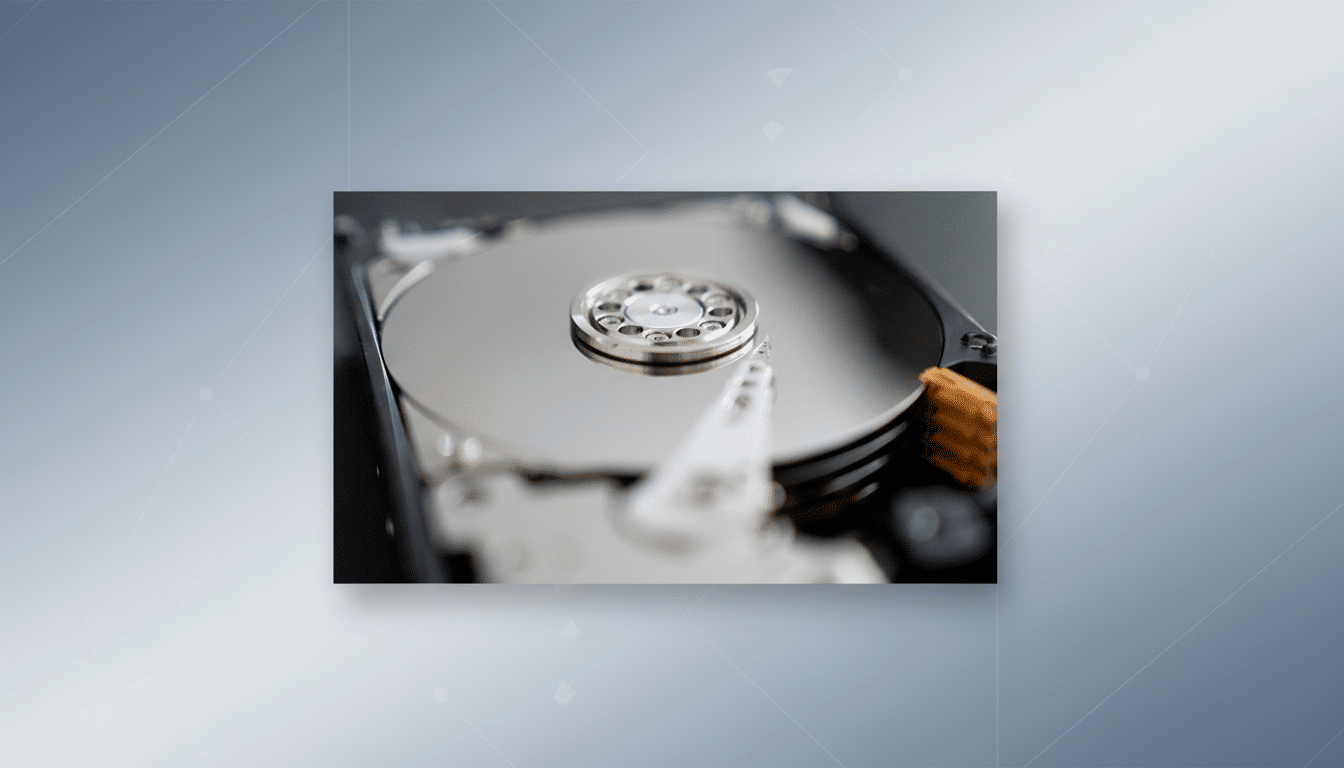
HDDs Become Collateral Damage in Memory Squeeze
Hard drives rely on more than platters and heads. They ship with controller boards, DRAM buffers, power-management ICs, and other parts that share upstream suppliers with SSDs and motherboards. When memory makers trimmed output during the downturn and then redirected supply toward higher-margin AI and server contracts, the spillover hit HDD bills of materials and delivery schedules.
Component chatter from distributors points to shortages reaching into surprising places, including glass cloth for PCBs and even basic machining consumables like drill bits for board houses. That kind of bottleneck doesn’t just lift prices; it slows the flow of finished drives into retail channels.
Data Center Hunger Reshapes the Storage Channel Now
Hyperscale buyers are stacking storage fast to feed AI training, inference logs, and ever-expanding data lakes. Enterprise nearline HDDs—20TB and up—carry higher margins, so manufacturers prioritize them when supply is tight. That leaves fewer units, and less pricing flexibility, for the consumer and prosumer market.
Industry research groups have flagged this dynamic for months: cloud capex has shifted toward AI, but bulk storage remains a foundational line item. Vendors have echoed the trend on earnings calls, highlighting record exabytes shipped to cloud customers and rising average selling prices for high-capacity models.
What the Numbers Show About Recent Hard Drive Prices
European price tracking by ComputerBase illustrates the jump clearly. A 4TB NAS-focused model such as Seagate’s IronWolf climbed from roughly $94 to about $132—around 40% higher. A 24TB desktop-class model like Seagate’s Barracuda moved from about $308 to just under $500, a roughly 60% surge. Several Toshiba and Western Digital options posted increases approaching 66%.
US street prices are following suit, according to reporting by Tom’s Hardware. The same 4TB IronWolf that could be found near $70 not long ago is now around $100, while an 8TB model has shifted from about $130 to roughly $200.
Flash and memory remain even hotter. DDR5 kits in mainstream capacities that once hovered near entry-level pricing have multiplied several-fold, and budget NVMe options that were $50—such as Kingston’s NV3 1TB—are up close to 150% in some listings. The result is an across-the-board storage squeeze with HDDs now squarely in the blast radius.
Why Hard Drive Price Pressure May Persist This Year
Two structural forces could keep HDD prices elevated. First, supply discipline: both HDD and memory makers cut production during the last downturn to protect margins. With demand snapping back, ramping cleanly is harder than cutting, especially when vendors are funneling parts into top-end enterprise SKUs.
Second, technology shifts: manufacturers are rolling out higher-capacity designs, including HAMR-based drives. Early-stage ramps typically mean tighter yields and selective allocation. When nearline buyers will pay a premium for 20TB–30TB units, lower-capacity consumer models don’t get the same bargaining power—or the same volume.
How to Buy Hard Drives Wisely in a Volatile Market
If your upgrade can wait, patience may pay. Price cycles do turn, and channel supply tends to normalize once enterprise orders are fulfilled and component pipelines catch up. Set price alerts and track historical charts to avoid knee-jerk purchases.
If you must buy now, consider capacity sweet spots where price-per-terabyte remains tolerable—often 8TB to 12TB for desktop and NAS. Smaller drives have climbed less steeply than 20TB-plus units. Check reputable refurbished or recertified listings, but weigh warranty length and SMART health carefully.
Also weigh hybrid strategies: keep a modest SSD for OS and active projects, and pair it with the smallest HDD that covers near-term bulk storage. For home backups, rotating multiple lower-capacity drives can spread risk and cost until pricing cools.
Bottom Line: Expect Elevated HDD Prices for Some Time
Memory scarcity and data center appetite have finally dragged hard drives into the inflationary spiral. With many high-capacity HDDs up 40% to 66%, buyers should assume this is not a brief blip. Watch the enterprise cycle, monitor channel inventory, and be strategic with capacity choices—this wave started in memory, but it’s breaking on spinning disks now.
