


I went hands-on with an augmented reality glasses prototype from Lumus, the optics company behind the display lenses in Meta’s Ray-Ban smart glasses. The demo wasn’t just good; it reframed what “normal-looking” AR can do, with a shockingly wide, clean image inside a familiar eyeglass silhouette.
Hands-On With a Wider Canvas for AR Glasses
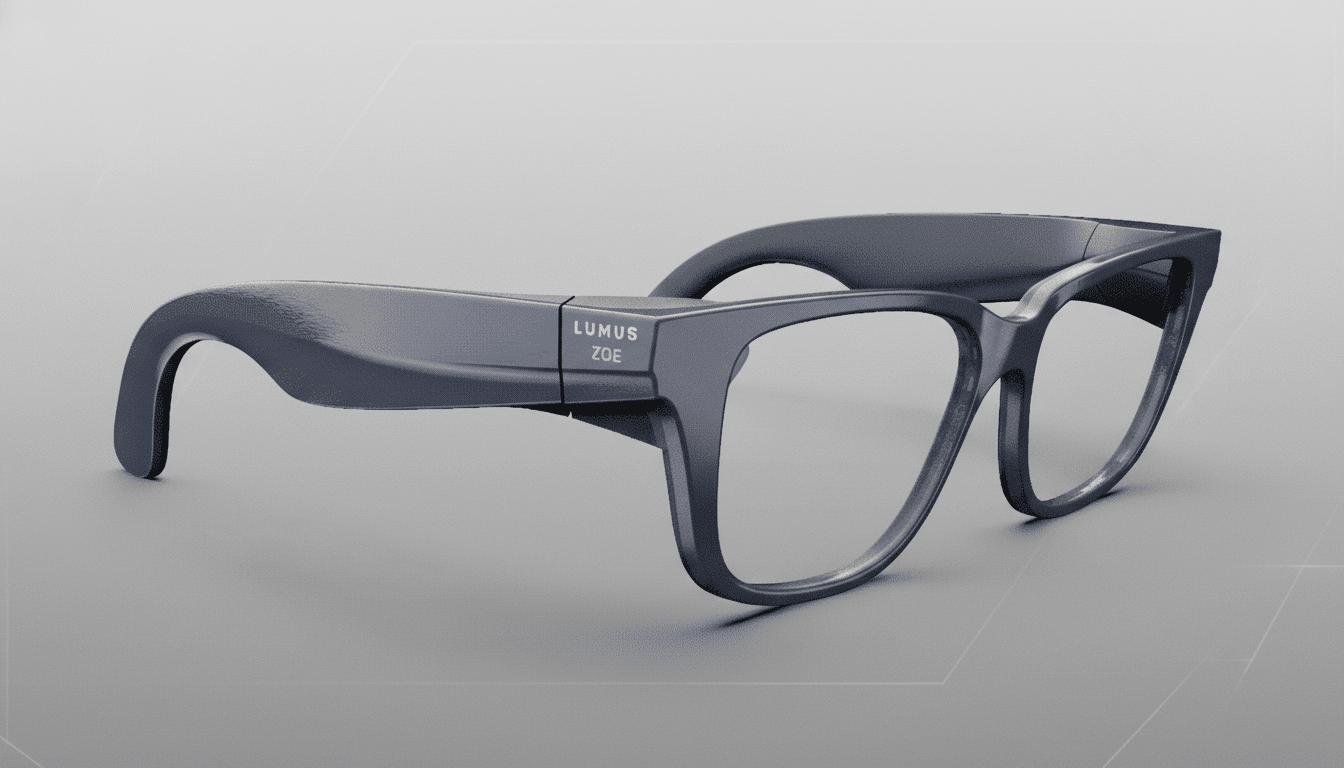
The star was a prototype nicknamed ZOE, delivering a field of view north of 70 degrees—far beyond the 20-degree experience in today’s consumer glasses. The moment the visuals lit up, a wraparound scene occupied a huge swath of my sightline. It was immersive without a bulky visor, and it ran through standard glass rather than exotic materials.
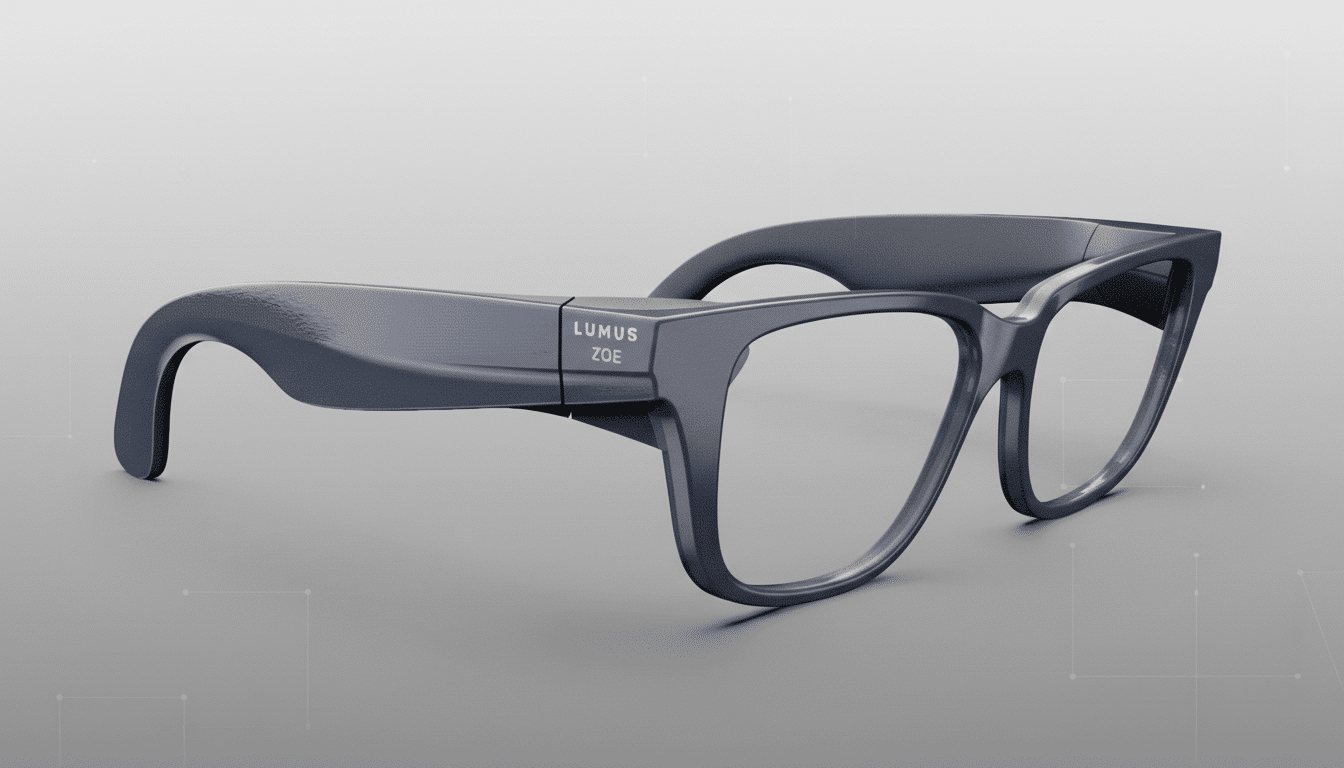
This was a fragile, tape-at-the-edges unit—the kind you cradle like a newborn—but the image held steady and crisp. Test patterns looked tack-sharp at 1080p with vivid color and minimal distortion. Despite lower peak brightness than their smaller engine, the perceived clarity was superb because the image simply occupied more of my view.
Inside the Optics Behind Lumus Wide-View AR Glasses
Lumus uses geometric waveguides—essentially tiny mirrors embedded within glass—to steer light efficiently. That approach contrasts with diffractive waveguides that rely on etched gratings and often trade color accuracy and efficiency for slimness. The mirror-first design keeps light traveling straight, which helps preserve true colors, curb power draw, and maintain image integrity across the lens.
The company’s track record is already in consumer hands: Meta’s Ray-Ban model uses Lumus lenses with a 20-degree field of view rated at around 5,000 nits, bright enough to contend with daylight. The demos I saw push the spec sheet further. An 11-gram Z-30 optical engine hit 8,000 nits per watt efficiency in testing, blanketing a 30-degree window with tiny, legible text and high-contrast graphics without rainbow fringing.
Equally important, forward light leakage—the telltale glow that lets bystanders see your display—was nearly eliminated by advanced AR coatings. That preserves eye contact and privacy, both critical for all-day wear.
Thinner, Lighter, Brighter Optical Engines From Lumus
Lumus also previewed an optimized Z-30 variant boasting about 40% more brightness, plus a Z-30 2.0 concept that trims glass thickness by 40% and weight by roughly 30%. Those changes aren’t just comfort gains—they could reduce manufacturing steps and improve yield, which matters if AR glasses are going to hit mass-market price points.
These compact engines target everyday scenarios:
- Glanceable notifications
- Turn-by-turn navigation
- Real-time translation
- Hands-free assistance
In use, the images looked vivid and clear while the lenses themselves felt unusually thin and light, inching closer to the prescription frames people already wear.
Visibility, Comfort and Safety on a Wider AR Canvas
The 70-degree prototype surprised me by how thoroughly it could command attention. With large on-screen elements, very little of the outside world leaked through the content. That raises valid safety questions, but the counterpoint is compelling: a wider canvas lets systems place elements more intelligently in peripheral zones, avoiding the need to fill every pixel all the time.
Prescription support is baked into the approach. Lumus can bond corrective lenses directly to the waveguide, avoiding dust-prone air gaps. That matters because roughly 70% of people need vision correction, according to optical industry estimates. With near-zero light leakage, the wearer’s eyes remain visible and natural, an underrated win for social comfort.
What It Means for AR Glasses and the Near-Term Path
The broader takeaway is that the core display problem—putting bright, color-true, power-efficient visuals into everyday frames—is being solved in increments that now feel meaningful. Meta’s use of 20-degree lenses proved consumers will wear AR glasses in public. The next leap is expanding field of view and slimming the hardware without torching battery life or blowing up costs. That’s exactly where these prototypes point.
No single demo makes a product, and the wide-FOV unit I tried is still early. But the optics were strikingly polished where it counts. If manufacturers can package this in durable frames with robust software—spatial entertainment, multi-app productivity, gaming, or situational-awareness scenarios for professional use—the gap between “cool demo” and “daily-wear AR” could narrow fast.
Walking away, I didn’t feel like I had glimpsed a science project. I felt like I’d worn a preview of where mainstream AR glasses are headed—and why the next generation might finally look and feel like something you’d use all day.
