


Lockin showed off at CES a smart lock that bypasses the battery fear stalking connected deadbolts. The V7 Max, yes, charges wirelessly through the air so its owners never trade batteries, run power cords or wait for a trickle of sunlight. It’s a swing for the fences at one of smart home security’s greatest pain points.
How the wireless power beam safely charges the lock
Lockin’s system, called AuraCharge, relies on wireless optical power. A small receptor in the inside panel of the lock reads an invisible, eye-safe infrared beam and converts it to electricity. An external transmitter, meanwhile, transmits power from about 13 feet away all day long while you go about your day.
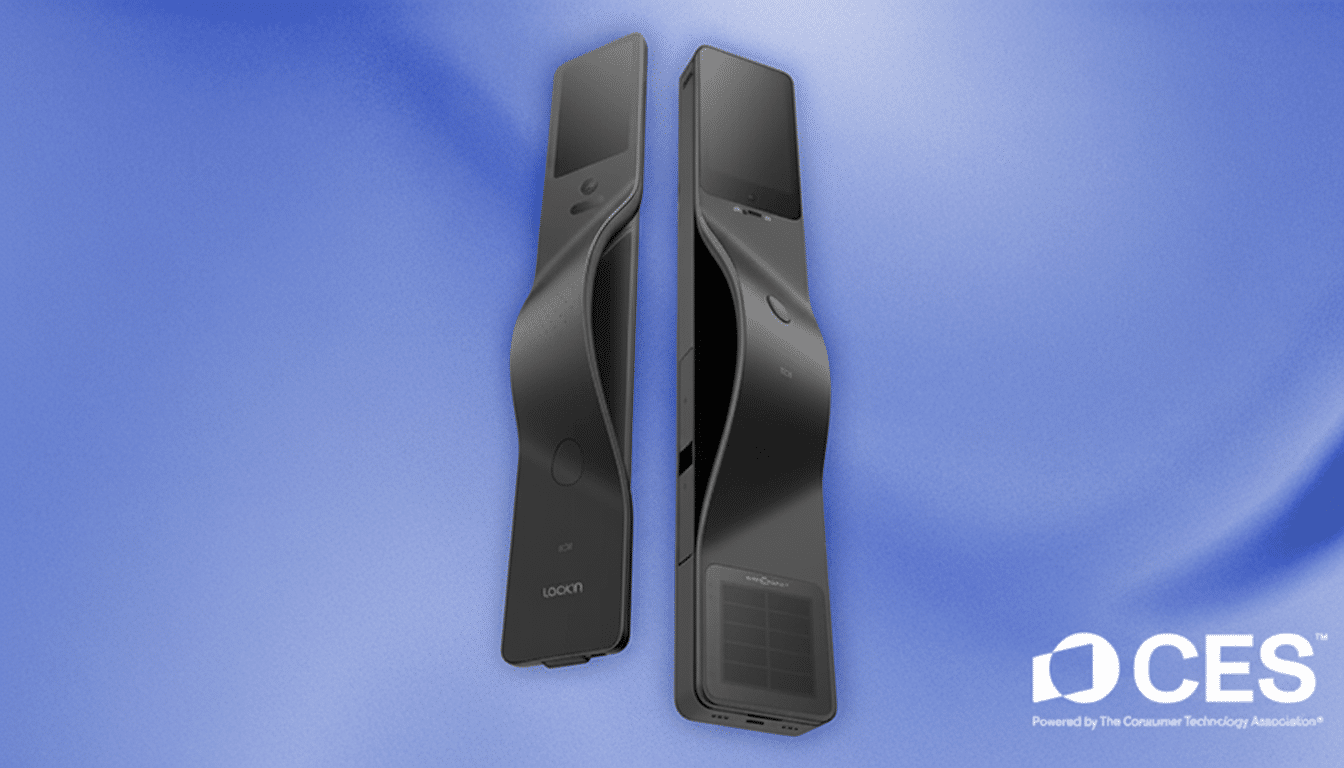
Safety and certification are a huge focus for the company. The beam is eye-safe, and the energy automatically throttles if line of sight is interrupted, representatives said, adding that the solution holds dual certifications from TÜV Rheinland and SGS. It’s that same family of tech pioneered by optical power companies like Wi-Charge—only this time it’s consumer retail, not a custom install.
Practical caveats apply. You’ll also need to locate a clean place for the transmitter, which is about the size of a typical charger brick and needs an outlet. And line of sight counts, but brief obstacles—even you walking in front of it—aren’t going to stop this thing. Unlike solar add-ons, though, this setup doesn’t matter much where windows are placed or what the weather’s doing. And that’s an important reliability edge to project for up-and-coming astronauts.
Why this breakthrough matters for future smart locks
Battery hassles are the dumbest thing about the smartest locks. Older models are power sippers, but video features and regular remote checks and biometric readers can drain cells several times faster than the “six to 12 months” you see on spec sheets. Parks Associates reported that smart lock penetration in U.S. broadband homes is now in the mid-teens, with low-friction upkeep as one lever to increase adoption.
Optical power has reared its head in the category before—Alfred was showing off similar tech years ago—but usually needs a massive, pro-grade installation and is expensive. Lockin’s pitch is out-of-the-box simplicity: fasten the lock on, stick in your transmitter and never worry about charging again. If real-world testing proves that out, it eliminates a very common point of failure: dead batteries and the lockouts they create.
Key features beyond the wireless power charging trick
On paper, it’s a flagship-spec device (with some caveats). It has fingerprint, palm and facial recognition, as well as keypad entry. Two outside HD cameras are located in a panoramic orientation and also serve as a video doorbell. On the inside, a 5-inch LCD touchscreen transforms the lock into a mini monitor for who’s at the door.
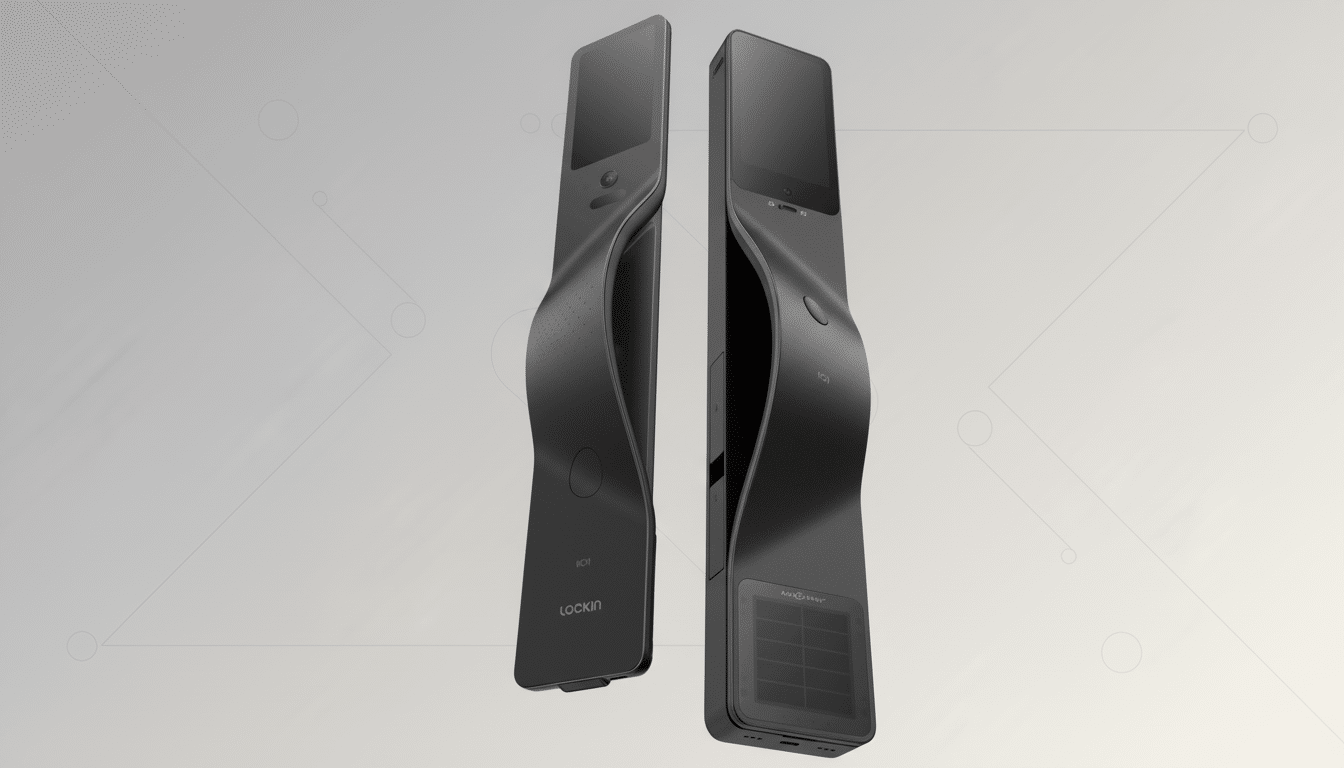
On the software side, Lockin says onboard AI could let you know when a package is at your door or when a family member arrives. It also works with Matter, which is supposed to help standardize cross-platform control between Amazon, Apple, Google and Samsung systems. (Note that Matter support doesn’t stamp out every app quirk, but it is the most future-proofed way to manage multi-assistant households at present.)
(And a side note: AI and video are precisely what suck other locks’ batteries dry.) Why it works: Continuous optical charging lets you use those higher-power features without swapping batteries all the time or having a line in running to your rig.
Price and availability timeline for the Lockin V7 Max
Lockin tells me to expect preorders soon after the show and availability at retail by late summer. One representative mentioned a ballpark figure of $1,300 for the V7 Max, setting it safely ahead of mainstream models (which generally hover between $100 and $200) as well as more expensive video locks in the $300 to $400 range.
For those bristling at the thought of four figures, Lockin also plans a Veno Pro Wireless for $350 that introduces the AuraCharge technology into a more traditional lock design. That model may be the volume mover, especially for renters or condo dwellers who crave set-it-and-forget-it power without premium bells and whistles.
What we’ll be watching as real-world tests roll out
The core questions are practical.
- How much does transmitter placement really forgive, in a real world with walls, decor and kids?
- How much power does the transmitter draw at idle, vs. never having to replace batteries?
- And how well does the system hold up when Wi-Fi is busy and the cameras are streaming a lot?
If Lockin’s implementation is sound, this is an important template for always-on smart home devices that are difficult to wire. The service proposition isn’t just one of convenience; it’s trust. A connected lock that you never have to worry about charging is much more likely to remain connected—and that’s the promise buyers actually care about when security gets smart home.
