


LG’s new W6 OLED has one goal: to make the TV go away until you turn it on. This flagship “wallpaper” set is a mere 9 mm thick, which allows it to be flush-mounted to a wall that’s nearly as flat — moving most of its connections to a separate wireless hub and requiring just one slender power line connected at the display. It is a poster child for minimalist design, the latest in OLED brightness, and the dream of a clean, cable-light living room.
A Design That Embraces the Wall and Disappears
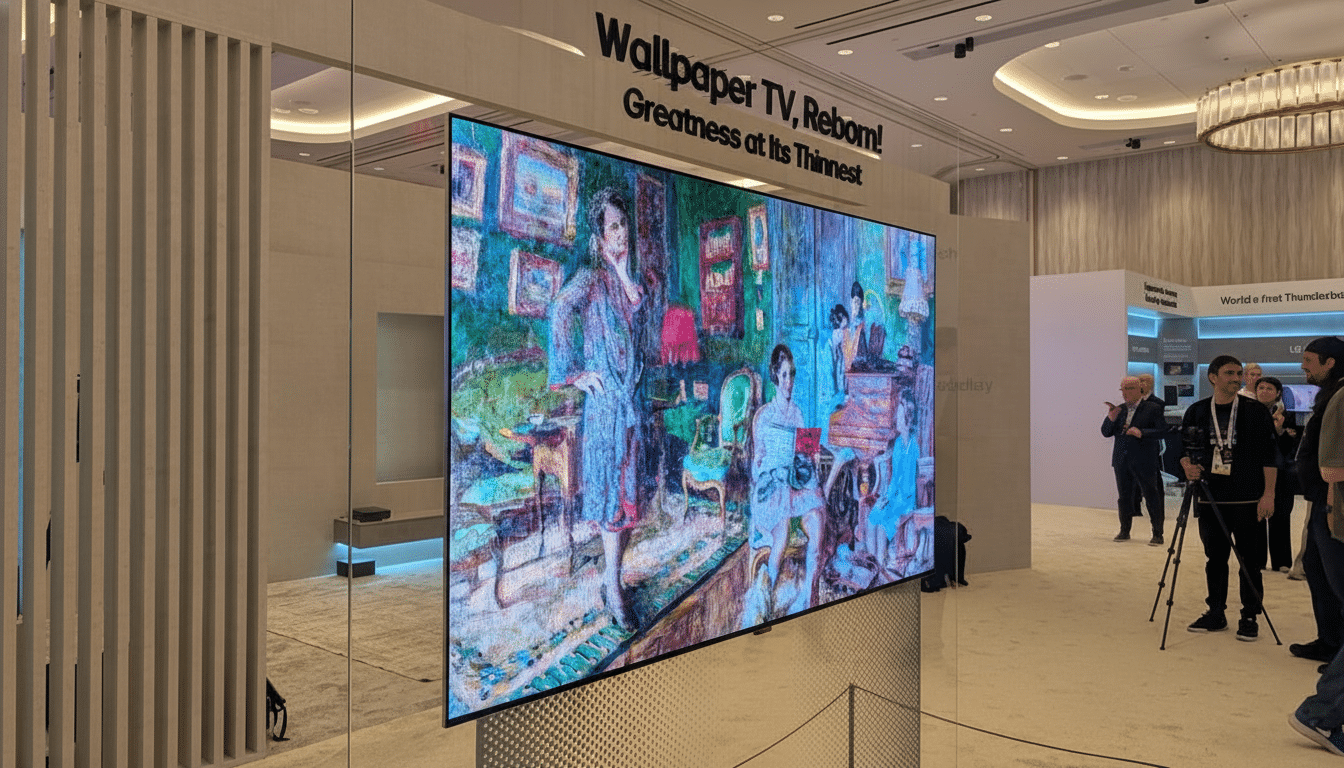
The W6 is just under 0.4 inches thick from front glass to backplate, meaning that it hangs like a piece of artwork rather than a traditional TV.
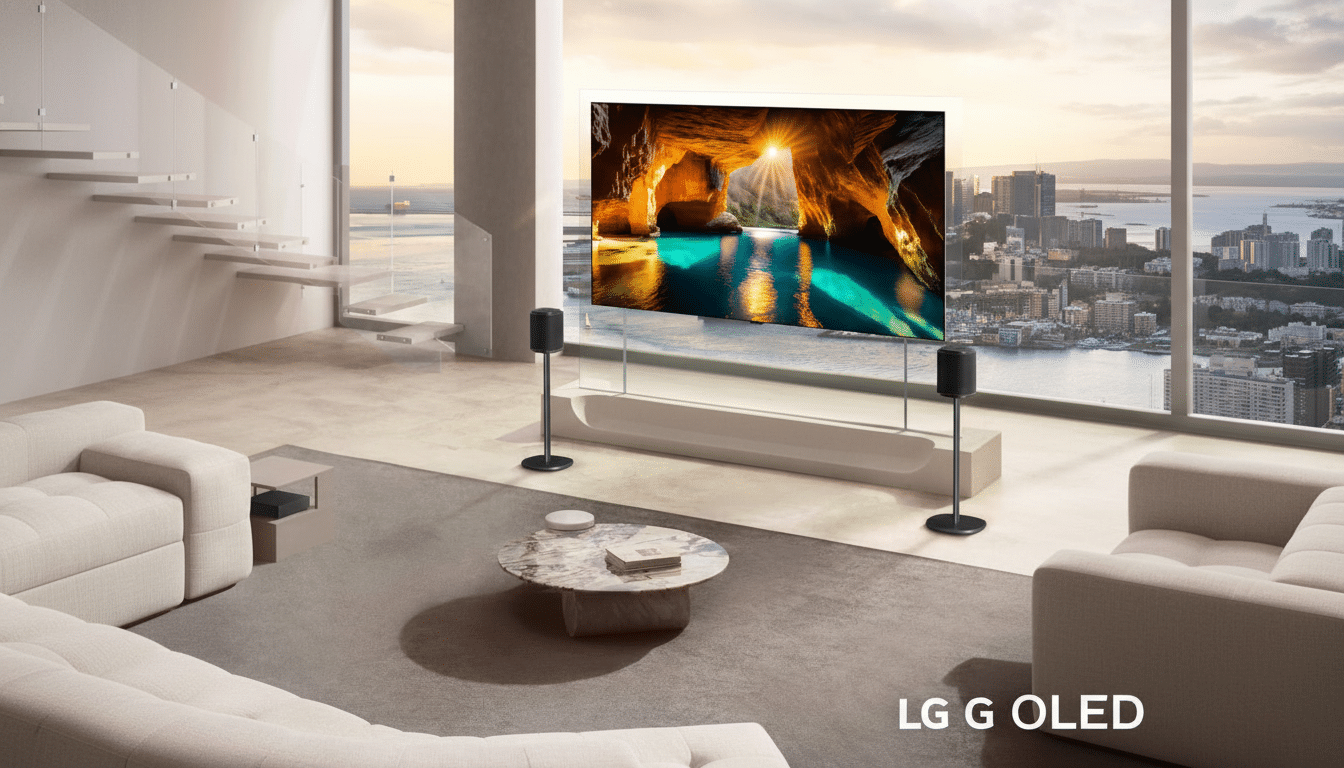
Mounting is a limited standoff from the wall and, once again, the trick is invisibility: just a single, easy-to-hide power cable. For anyone who has ever had to deal with conduit or in-wall runs of HDMI, this is quite the simplification.
LG has referred to the “wallpaper” name before, but the W6 takes it further. And because all of the bulky electronics and inputs have been cast off, the panel itself remains feather-thin while shadow lines are minimized, making the screen the star — particularly in light-filled rooms with lots of sunlight, where reflections and hardware clutter can be difficult to hide.
Zero Connect Wireless Video Keeps Cables Off Walls
Central to the W6 is a Zero Connect box that sends video and audio wirelessly to the panel from up to 30 feet away. Keep your consoles, streamers, and set-top boxes in a cabinet near the hub, which sends the signal over LG’s proprietary wireless link to the TV. For most living spaces, that spectrum pretty much includes the standard equipment rack without having to snake cables up the wall.
If you recall, LG previously showed a similar concept on the M-series, which was going to wirelessly handle 4K120 HDR content, no wires required — and it looks like the W6 is being positioned for that same “single-cable” magic for power users. This time around, LG isn’t using the HDMI cable, but the principle is the same: keep the experience uncluttered at screen level while doing something thudding with all that data you’re forcing through it — with reliability that holds up to whatever you’ve got Doc Hollywood playing in 1080p.
OLED Picture That’s Brighter, With Purer Contrast
Under the glass, the W6 is practically identical to LG’s G6; they’re panel brothers.
LG claims its new Brightness Booster Ultra processing squeezes more light from the panel for HDR without crushing highlights or bleaching out midtones, a balance OLEDs have consistently improved on since advances in micro-lens arrays popularized the recent crop of premium sets. The end result is a punchier HDR image that retains the per-pixel black control we love so much about OLED.
Color remains a strength. Assuming LG doesn’t go so far as to say BT.2020 for the W6, high-end OLEDs manage to go significantly beyond DCI-P3, the color gamut used by almost all HDR content. They don’t suffer from the haloing that still impacts many LED/LCD TVs. For mixed-light viewers, that two-fer (deep blacks plus higher peak brightness and wide color) means a clean, natural-seeming picture with both films and sports.
Sound That Adapts to Your Room With FlexConnect
Despite the super-thin profile, LG squeezes speakers into the panel and provides a straighter route to better sound with LG Sound Suite. With Dolby Atmos FlexConnect, the W6 can interface with all of LG’s wireless components (13.1.7-channel H7 soundbar, M5 and M7 surrounds, and W7 sub), identifying where each speaker lies and fine-tuning spatial audio on the fly.
Placement freedom is the canny bit. Speakers do not have to be exactly symmetrical, nor bolted into the old (“behind-the-couch”) scheme of things. FlexConnect autocalibrates around your room’s idiosyncrasies and seamlessly integrates with built-in drivers of the TV as well as an external driver. LG says Sound Suite also applies to several past LG TVs, not only the W6, which should allow early adopters to build systems that can be transported from model to model.
What Wireless Does for Gaming: Lag and Options
One variable that gamers will want to pay close attention to is latency. Wireless video links introduce complexity, and in previous tests of similar systems from other brands, the input lag at 4K60 has sometimes edged into the 20–40 ms range — okay for casual use, not ideal for competitive shooters. LG’s OLEDs have great low-latency processing in game modes, and direct HDMI VRR and ALLM on its most recent OLEDs; the open question is whether that wireless path will make those numbers.
If you’re serious about esports-level responsiveness, you may need to verify measured lag once reviews land. Well, you shouldn’t hang around, but chances are for most living rooms and cinephile gaming fans that a clean wall appearance and hiding the stack are more important than shaving off a few milliseconds here or there.
Flagship Price Expectations for LG’s W6 Wallpaper OLED
LG hasn’t announced pricing or timing, but considering the W6 is at the top of its OLED lineup, expectations should be adjusted accordingly. For context, the so-called wallpaper of an earlier model by LG, the W9, sold for $6,999 for 65 inches and $12,999 for 77 inches. LG says the W6 won’t attain those lofty peaks, and more importantly, jettisons the old-school tethered soundbar in favor of a sleeker modular system.
The takeaway is plain as day: the W6 isn’t just a thin OLED. It’s a showy thing that treats wires as optional, crams in brightness without sacrificing OLED’s contrast credentials, and throws us into an all-new take on room-friendly audio. For design-first TV shoppers with an eye on cutting-edge picture quality and fewer cables, it’s the most alluring wallpaper TV to date.
