


8K television just lost a heavyweight. Following a report from FlatpanelsHD that LG has halted 8K TV production, the market is effectively down to a single major player, leaving Samsung as the lone holdout. But with 8K conspicuously absent from recent product briefings, the writing on the wall looks less like a pause and more like a pivot. If more pixels aren’t the path forward, where does TV technology go next?
Why 8K TV adoption stalled despite years of promotion
Content scarcity was the first roadblock. A decade after the debut of the earliest 8K sets, there is still no mainstream broadcast standard or disc format carrying native 8K. Outside of Japan’s NHK demonstration channel and occasional showcase streams on platforms experimenting with AV1, true 8K programming never reached consumers at scale. Most “8K” viewing relied on upscaling 4K or HD, which blunted the case for paying a premium.
Bandwidth and compression were the second. Delivering 8K with acceptable quality demands bitrates many times higher than typical 4K streams, even with next-gen codecs like VVC or AV1. In markets where broadband speeds are uneven, the leap from a solid 4K HDR stream to 8K isn’t practical. Major services prioritized higher dynamic range, better color, and higher frame rates instead of quadrupling pixel count.
Price didn’t help. Industry trackers estimate 8K shipments represented well under 1% of global TV units in recent years, as prices often started around $2,500 and ran far higher for 75-inch and above. In the same aisles, premium 4K OLED and Mini-LED models delivered visibly superior contrast and brightness for far less.
There were also physiological and regulatory headwinds. SMPTE and ITU viewing-distance guidance suggests that at typical living-room distances, the benefit of 8K over 4K on a 65-inch screen is marginal at best. Meanwhile, tighter energy-efficiency rules in regions like the EU made it harder for 8K sets to pass without aggressive power caps that could impact brightness, a key selling point for HDR.
What survives of 8K as consumer TV adoption slows
Don’t expect 8K to vanish entirely. It remains valuable behind the scenes. Studios use 8K acquisition for reframing and cleaner VFX pipelines, even if delivery is 4K. In pro AV, medical imaging, simulation, and large-format signage, 8K’s pixel density still solves real problems. And in near-eye displays—VR and AR—where pixels sit inches from the retina, ultra-high resolution can dramatically improve clarity.
For living rooms, though, manufacturers have read the room. If Samsung persists with a halo 8K SKU, it will be for brand signaling, not volume. The center of gravity is moving elsewhere.
The next wave of TV advances beyond higher resolution
Picture quality is improving faster than resolution numbers. Three trends lead the pack: panel tech, backlight control, and processing.
OLED and QD-OLED are getting brighter and more efficient. Micro-lens array designs and refined quantum dot layers have pushed peak brightness and color volume meaningfully higher than early OLED generations, without sacrificing those inky blacks. Analysts at Display Supply Chain Consultants have chronicled steady yield improvements that drive costs down, opening the door to larger and more affordable premium 4K sets.
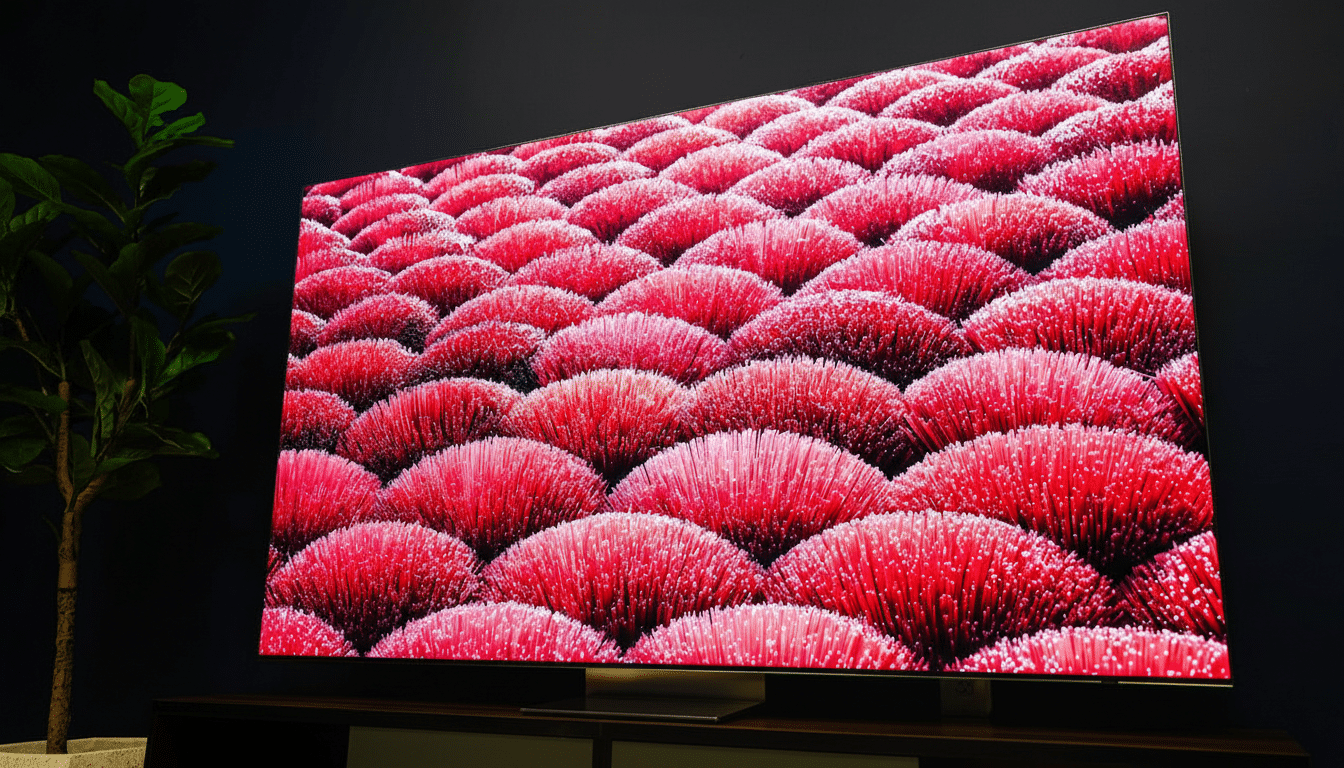
Mini-LED continues to close the contrast gap with thousands of dimming zones and smarter local dimming algorithms that reduce blooming. Flagship 4K Mini-LED models now combine 2,000-plus nits with fine-grained control, giving HDR content striking punch even in bright rooms—something early OLEDs struggled with.
AI-driven processing is the quiet revolution. Upscaling is no longer a blunt instrument; vendors are training neural networks to reconstruct texture, reduce compression noise, and stabilize edges in real time. Chipsets from the likes of MediaTek’s Pentonic series and custom silicon from Samsung, LG, and Sony now perform scene-by-scene tone mapping, object detection, and decontouring that make ordinary HD and 4K streams look cleaner and more dimensional.
Standards are maturing too. Dynamic HDR formats such as Dolby Vision and HDR10+ are more widely supported; 4K at 120 Hz with VRR and ALLM is table stakes for gaming; and improved anti-reflective coatings are making high-contrast images hold up in daylight. Together, these upgrades deliver a bigger visual step than jumping from 4K to 8K pixels alone.
Where innovation goes from here in consumer TV displays
Expect investment to flow into brighter, more efficient panels, better full-array dimming, and smarter processing rather than a new resolution war. MicroLED remains the long game: modular, emissive, and scalable, but still expensive. As manufacturing improves, MicroLED could become the ultimate premium tier while OLED and Mini-LED battle in the mainstream.
On the content side, the more interesting jumps will be in quality per bit. As AV1 spreads and next-gen codecs like VVC roll out, services can deliver higher-fidelity 4K HDR at lower bitrates, expanding reach without demanding new hardware. That aligns with the strategies of major streamers and broadcasters, which historically adopt compression gains faster than new resolutions.
What it means for TV buyers considering 4K versus 8K now
For most households, 4K remains the sweet spot. If you’re upgrading, prioritize panel type, peak brightness, dimming performance, and processor quality over pixel count. Look for robust HDR support, strong motion handling, and gaming features you’ll actually use. In short: you’ll see far more benefit from a better 4K TV than from chasing 8K.
LG’s retreat from 8K isn’t a death certificate so much as a market verdict. The next big leap in living-room picture quality won’t be measured in pixels—it will be measured in light control, color accuracy, dynamic range, and the intelligence that makes every frame look its best.
