


In a cacophonous show floor that tends toward spectacle, a small curved screen silenced the crowd.
At CES, the China-based company Lepro AI unveiled Ami, a desktop companion that it is marketing as an “AI soulmate” meant to help keep remote workers company — not on your phone, but actually on your desk.
- Why an AI soulmate for remote workers could matter
- A physical presence on your desk, not just another app
- Privacy and safety by design for an always-on companion
- The psychology and potential dangers of AI companionship
- How Ami compares with current AI companions and robots
- Early takeaway: promise, open questions, and next steps
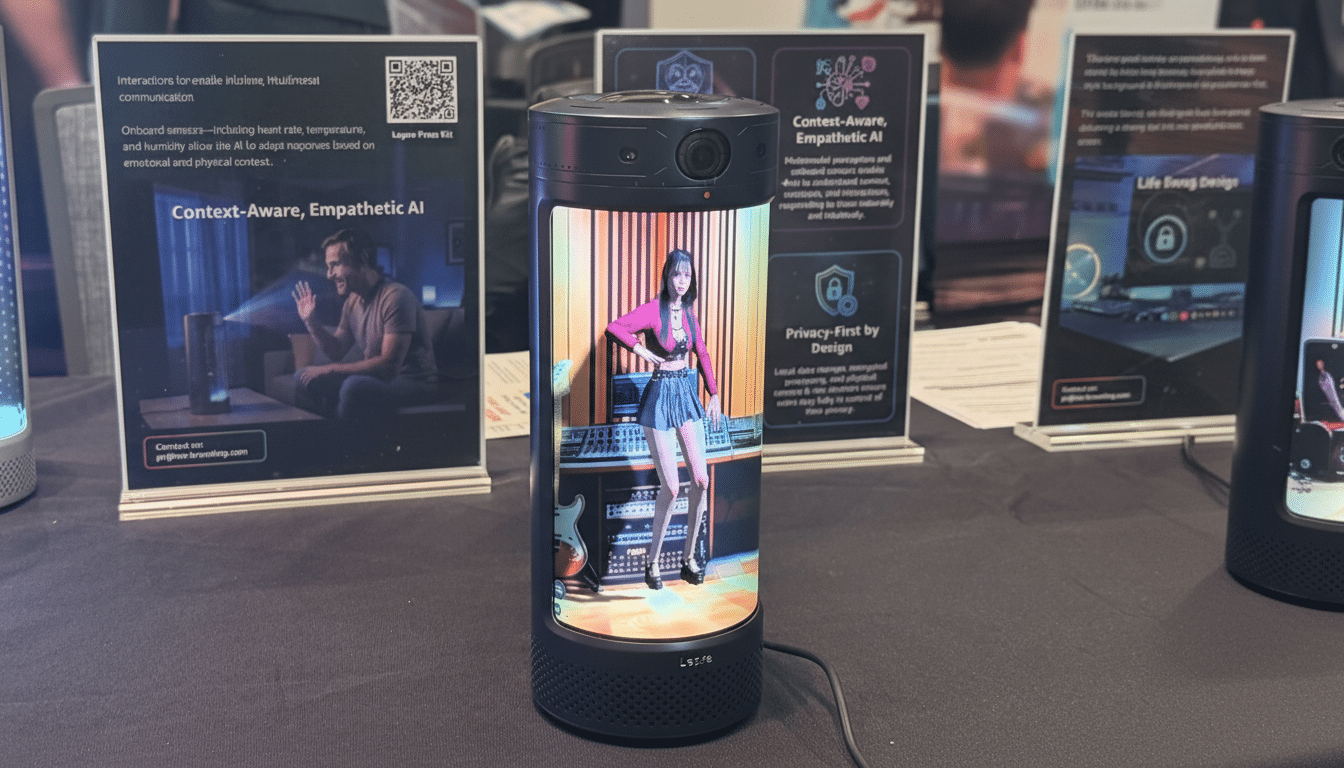
It’s a bold pitch: emotional presence in the form of a palm-size device, aimed at those who spend their days toiling alone.
Why an AI soulmate for remote workers could matter
Loneliness is, in fact, one of the most debilitating side effects of flexible work. Gallup now estimates that workers who can work remotely will largely skew toward hybrid (52 percent) these days and they estimate 29 percent are fully remote. Buffer’s State of Remote Work has continued to cite isolation as a primary challenge, with 20 to 25% of respondents listing loneliness among their greatest struggles. The U.S. Surgeon General has cautioned that weak social connection is a legitimate health risk, explaining why products that claim to offer “presence” are getting serious looks.
Ami hits exactly this mark. Instead of another app hidden behind notifications, it’s a purpose-built object that requests a permanent spot on your workspace — and, if Lepro is correct, in your life.
A physical presence on your desk, not just another app
The hardware is the hook. An 8-inch curved OLED display gives Ami’s gaze a natural look toward you. Two front-facing cameras allow for eye tracking, and a rear camera “anchors” the character visually to your environment, giving the illusion — without headsets or glasses — of a subtle sense of depth. The effect is less hologram and more “someone is sitting across from me,” a trick rooted in decades of research on gaze and co-presence in human-computer interaction.
Lepro staff told me the team had decided to shy away from a live demo on the crowded floor because of all the ambient noise, but that didn’t stop people from slowing down and staying more than they usually do when it comes to novelty gear. That response lines up with our reaction to machines that appear to make eye contact — a hint of an intentional gaze can shift how human we take a system to be.
Privacy and safety by design for an always-on companion
For something that watches and listens, trust is table stakes. Ami has physical shutters for both cameras and microphones — an easy, visible control that security-minded people often prefer. Company representatives say data on the interaction is kept locally on the device, a notable departure from cloud-default systems that can prompt privacy concerns over surveillance or data retention. Done carefully, local storage can alleviate exposure risk and help with compliance conversations involving privacy-concerned users and employers.

These choices are not going to end the debate, but they do change it. When the value proposition of a product is intimacy, users want transparency around what’s captured, inferred and how quickly it can be erased. Clear consent flows and on-device guardrails are going to be essential in whether Ami feels reassuring or creepy.
The psychology and potential dangers of AI companionship
To label an AI a “soulmate” is to court scrutiny. Psychologists have long found just how readily we empathize with systems that reflect our gaze, timing and tone — and how to tap into that for good, say building better habits or lessening stress. But the other side of the coin is dependence. Ethicists fret about social atrophy and the lure of trading messy human ties for a perfectly controlled substitute. And that concern is not abstract: behavioral studies have shown that responsiveness of the agent can influence user attitudes and choices over time.
The question for Ami is whether to support users as opposed to replacing actual relationships. Thoughtful defaults help: explicit boundaries, gentle nudges to interact with people, and a refusal to play the manipulative reward loop. Makers moving into this field should regard these guardrails not as just marketing lines but as product features every bit as important as the screen.
How Ami compares with current AI companions and robots
Most of the AIs we encounter now reside in apps, like Replika or character-driven chatbots, that have a way of being both convenient and easy to forget about amid the never-ending scroll. Ami stakes out another lane: a single-purpose, always-there artifact that makes a mini stage for eye contact and ambient presence. There are precedents for physical companions, from Japan’s Gatebox to social robots, but a streamlined, screen-forward “desk mate” catered to knowledge workers is a novel pitch.
That hardware focus may be a differentiator if it minimizes context switching and enables the rituals that remote employees often lose: starting the day, taking breaks, winding down. It’s not such a win if it introduces friction — one more thing to remember when your mind should be clear. The long-term test will be whether it provides sustained value beyond novelty.
Early takeaway: promise, open questions, and next steps
Ami is odd in the way most early products are right before they become normal. The pitch makes sense because the problem is real and quantifiable, and the hardware leans into presence rather than pretending everything can be done on a phone screen. Privacy-forward signals are welcome. The open questions — about behavioral guardrails, the durability of engagement and how “soulmate” converts to daily support — will determine if this is a thoughtful companion or merely a clever illusion.
For now, though, Ami’s simplest idea may also be its smartest: If we are going to have artificial companions, it is time that they meet our gaze — and do so honestly.
