


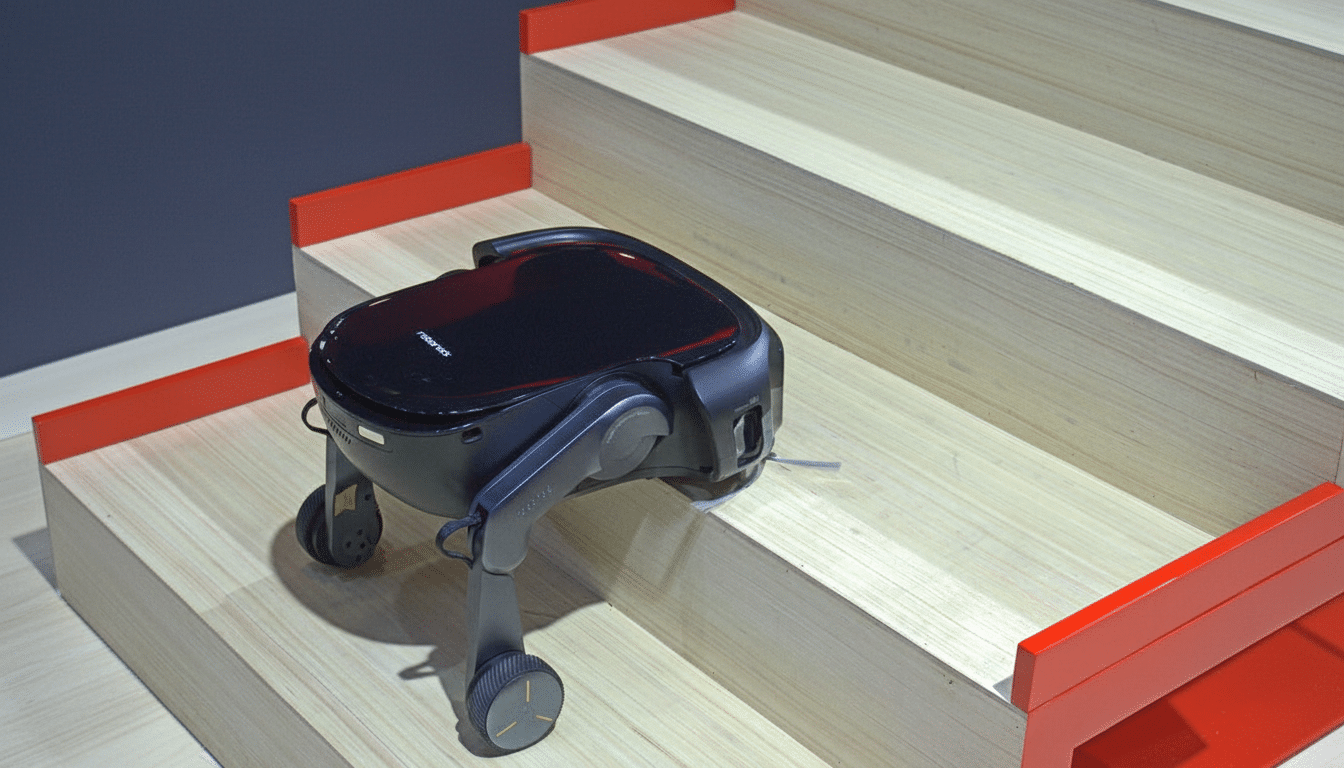
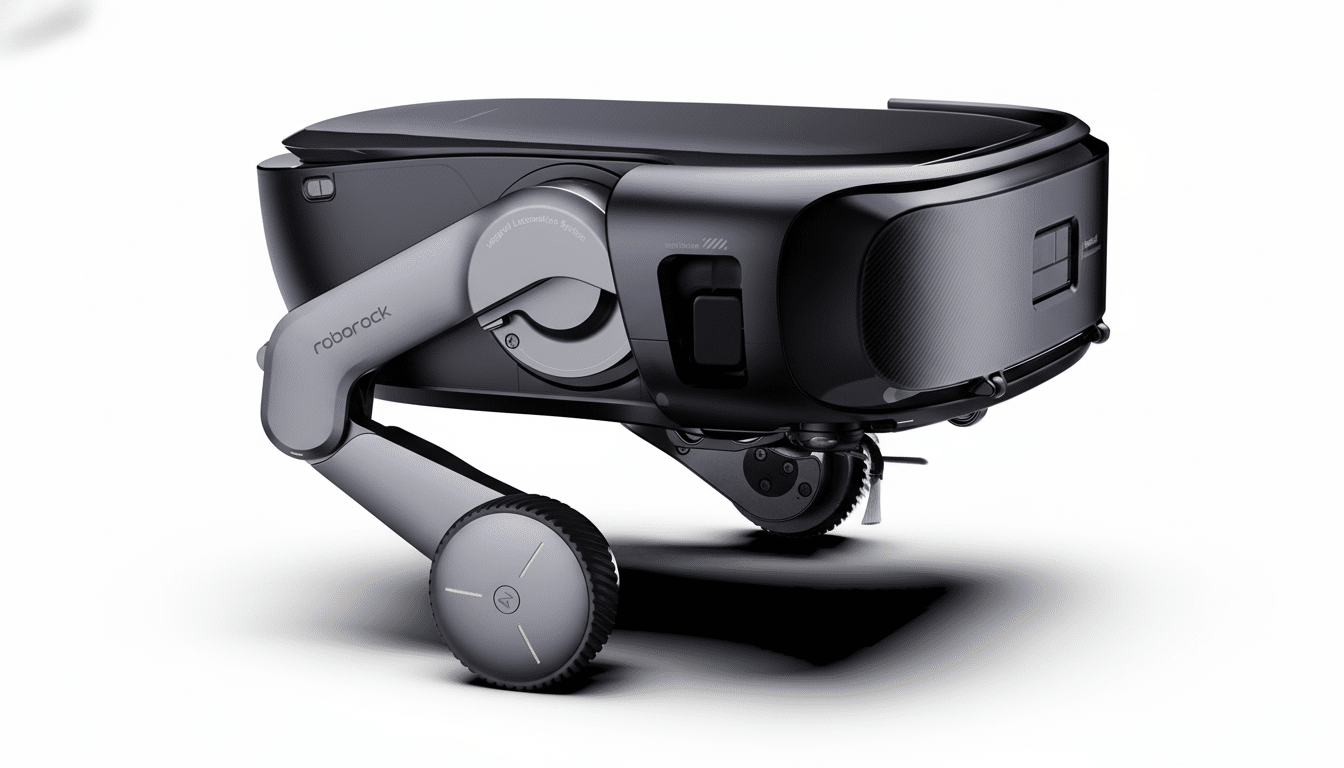
It felt like the first true step forward in years for that category. Roborock’s Saros Rover, demonstrated live at CES, employs a set of robotic leg-like wheel modules to prance over debris, pirouette in place, leap across small gaps and, most notably, ascend stairs while continuing to clean. The prototype seemed production-grade, with smooth, confident movements that suggest this isn’t mere concept art on wheels.
For a category of product that was previously defined by its inflexibility and tendency to get stuck on one floor, legs are game-changing. If Roborock can deliver those levels of reliability in the final product, then multi-story homes — long one of robot vacuums’ greatest weaknesses — finally have a native solution that doesn’t call for docks on every floor or constant babysitting from anxious owners.
Why Legs Alter the Game for Robot Vacuums
Each wheel-leg has independent lifting and flexing, so the Saros can do a kind of tentative, humanlike stride. In the demo, it ascended a step, bracing one leg on the lower stair, sliding the cleaning head along the tread above that spot and then repeating alternate steps to progress. It also approached a steep ramp without drama, slowed mid-descent to illustrate stability and capped it with a clean little hop over a threshold.
The Rover builds a 3D understanding of its environment using motion sensors and artificial intelligence. That’s important for a robot to successfully navigate stairs, where nosings, carpet lips and uneven rises can perplex standard cliff sensors. By thinking of each leg as an active stabilizer — not just passive wheels — the robot maintains suction and keeps the brush head planted even when the chassis is off-level.
The promise goes beyond stairs. Legs allow a vacuum the freedom to clean cable tangles, tall thresholds and rug edges that a floor-bound disc would choke on. It’s a rethink oriented around mobility — arguably the next frontier, given that docks already can wash mop pads, empty bins and refill tanks.
How It Compares With Other Stair-Climbing Robots
We’ve seen really good attempts at stair cleaning in the past, but most involved a secondary rover that carries the vacuum back and forth. For example, at IFA in Berlin, both Eufy’s Marswalker and a Dreame concept showed off that approach. Smart but not functional, it couldn’t clean while climbing — rendering staircases transit lanes rather than active cleaning surfaces. It’s a difference that may explain Roborock’s distinctive one-piece design, the first we’ve seen treating steps as just another room.
Of course, show-floor feats don’t equal real-world reliability. Spiral staircases, deep carpeting on treads, and pet hair piled up on the edges of things will challenge any system. Roborock says down-climbing is accomplished with a motion like that of a swimmer doing the backstroke, though I’m still eager to witness it navigate tight landings and inconsistent heights without human interference.
The Engineering Trade-Offs to Keep an Eye On
Legs add complexity. The more actuators, you see, the more wear potential, higher energy consumption and harder to repair. Battery life will be a factor: hoisting up a chassis over and over is its own power profile versus roller hockey on hardwood. So, too, will safety interlocks — no one needs a 10-pound robot misunderstanding the edge of a stair. Anticipate overly cautious sensing, conservative movement on ambiguous terrain and firmware that cares a whole lot about standing up and not nearly enough about doing so quickly.
Suction is another nuance. Vacuums work best when the cleaning head maintains constant suction. Head tilts or head lifts on inclines can cause suction to drop. In the demo from Roborock, it looks like the brush module is planted while the legs are doing the balancing — that makes a lot of sense for keeping pickup performance sorted.
Why Incremental Robot Vacuum Upgrades Still Matter
And along with the Rover, Roborock teased more conventional models that tell us where baseline is going. Both the Saros 20 and Saros 20 Sonic boast a claimed 35,000 Pa of suction — headline figures that quantitatively refer to sealed-motor pressure, but they’re supported by a brainier chassis. And the new AdaptiLift system now raises or lowers ride height to cross thresholds and avoid getting suctioned down onto high-pile carpet, while Starsight navigation and a retractable LDS tower (on the Sonic) aim for faster mapping and better obstacle recognition.
There is also a midrange Qrevo Curv 2 Flow with a spinning roller mop that self-refreshes while it works; this model is positioned to be more affordable than the Saros flagships. It’s a reminder of the fact that while robots may be learning new tricks every day, most buyers still care about reliable pickup, fewer tangles and less time spent cleaning up dirty docks.
A Broader Move Into Mobility Across Home Robots
Roborock is taking the mobility theme outdoors with a LiDAR-guided mower, the X1 LiDAR, designed to map tricky lawns and cut atop steeper slopes while cutting close to edges so there’s less post-mow touch-ups.
It follows a trend throughout home robotics: improved perception, more autonomy, and designs that can manage the messy, unstructured spaces where older bots stumbled.
Industry groups such as the International Federation of Robotics point out that home robots — led by floor-cleaning devices — make up the biggest chunk of global service robot unit sales. The next wave of growth will depend on solving the hard bits — stairs, thick carpet, tight gaps between furniture — rather than simply adding more suction or bigger docks.
Bottom Line on the Legged Future of Home Vacuums
And last CES, Roborock demonstrated a vacuum with a robot arm, able to pick up messes — a smart idea that still felt early in execution. Legs look more immediately transformative. If the Saros Rover can sweep stairs, navigate cords and return to its dock without theatrics — the value proposition is evident for anyone who lives in a two- or multi-level home.
Both price and timing remain unannounced, and hands-on once it’s being demonstrated in a controlled demo will tell the real story. But after its long, evolutionary path, a robot vacuum that climbs your stairs and keeps cleaning while it’s there finally feels like a revolution on legs.
