


Apple’s first foldable iPhone is coming into focus in the leaks, and it appears to be ready to compete head-on with Samsung’s Galaxy Z Fold by expanding horizontally, not vertically. Newly leaked schematics suggest a smaller outer screen and an almost tablet-sized inner display — an approach that could mean Apple’s first foldable will feel more like a pocket-sized iPad mini than a stretched phone.
What the iPhone Fold leaks reveal about design and screens
Images shared by iPhone-Ticker show a squarish, leaning design with a smallish cover display and a much larger interior display panel. The cover measures 5.49 inches at 2,088 x 1,422 with a punch-hole camera (as opposed to a full Face ID array). The inner screen can stretch up to 7.76 inches at 2,712 x 1,920 and includes an in-display camera.
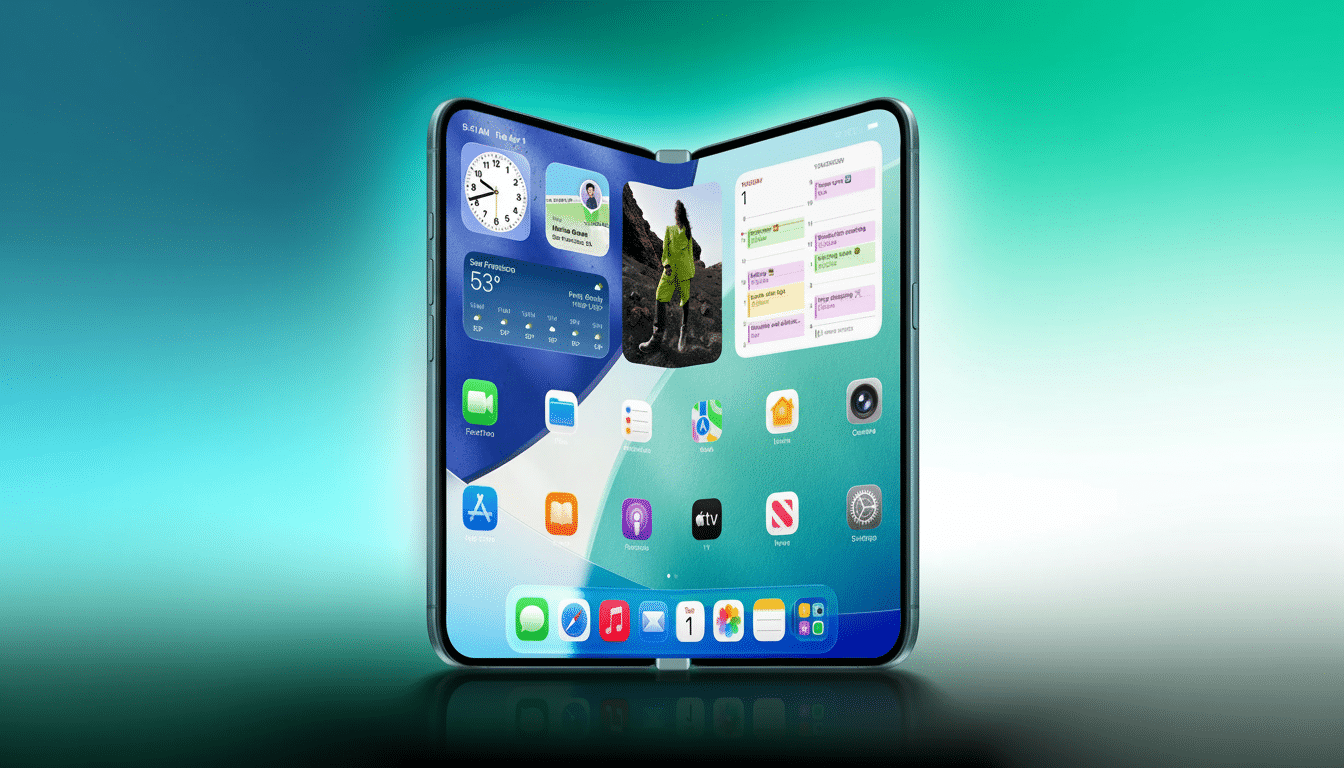
If true, the device would be wider than Google’s Pixel Fold when unfolded, but not as thin as Samsung’s latest Galaxy Z Fold models. A leaked 4.8mm thickness (outside the camera bump) hints at Apple seeking thinness in its own way, yet not letting the complexity of the ultra-thin race bring it down due to battery size and solidity.
Why a wider fold design could matter for apps and typing
Broader foldables alter the way apps inhale and exhale. This near square canvas makes two-pane layouts feel natural, while typing is more comfortable and the cramped feeling that’s frequent on tall, narrow cover screens doesn’t happen. Think Mail, Messages, or Notes with list-plus-detail views — use cases Apple already optimizes for on iPad and that developers can anticipate.
Apple’s HIG, Auto Layout, and Size Classes give developers a head start for flexible UIs that work across phone-to-tablet states. Split view and adaptive sidebars ought to translate cleanly on this nearly square inner display, with minimal letterboxing.
How it might stack up against Samsung’s Galaxy Z Fold models
Samsung goes tall-and-svelte on covers for candy-bar ergonomics, and Apple seems to be going the wider-interior-for-better-productivity-and-media route. That design philosophy might help distinguish daily use: front-screen typing would be more usable over a long period than one-handed reach, and two-column views also could be richer versus taller, scrollable views.
The hinge and the crease are going to be crucial. Display Supply Chain Consultants has tracked foldable display and panel stack-up in their Ultra-Thin Glass (UTG) for years, as well as hinge geometry that will help minimize the visibility of the crease over time while maximizing durability. Apple’s standards are high — look for tight tolerances, strong drop performance, and precise weight distribution, even if it means eschewing the industry’s thinnest-at-all-costs craze.
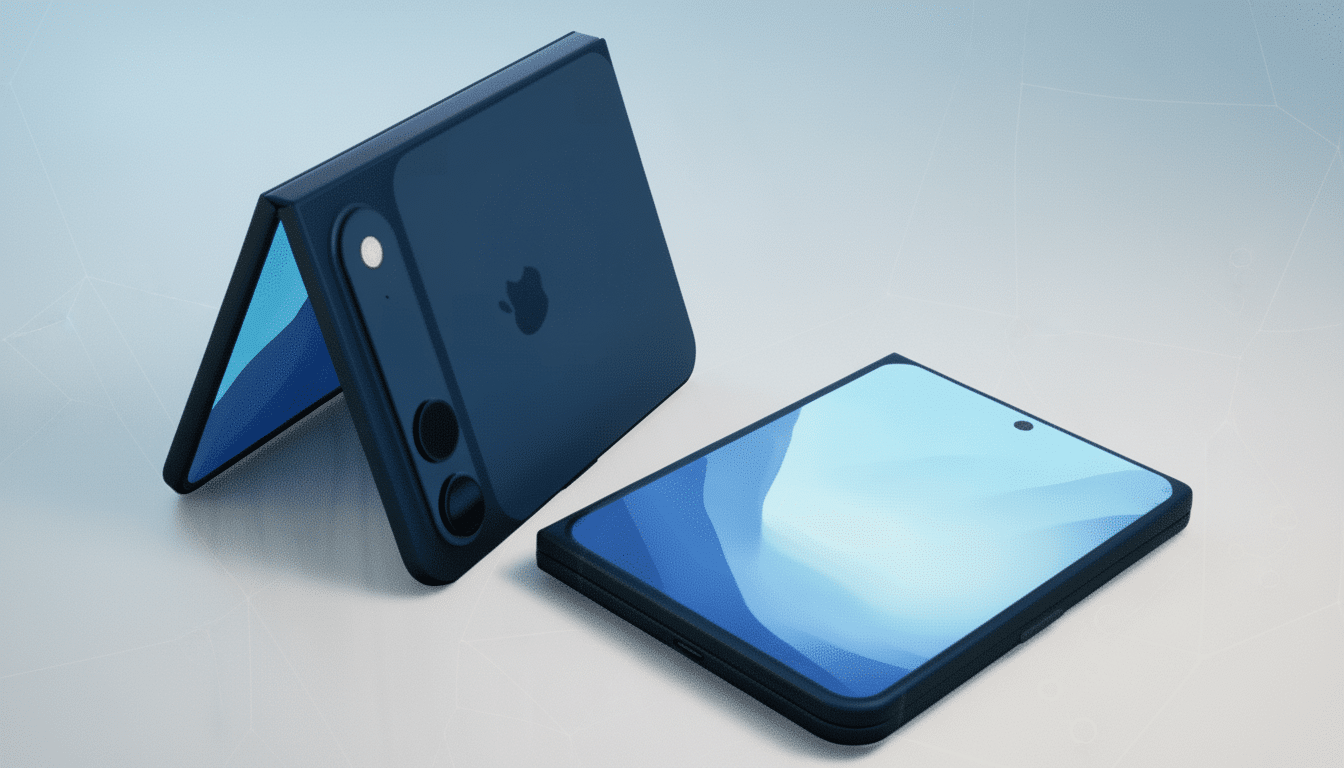
Camera placement also matters. The rear module design revealed in the leak suggests that weight savings might be a priority, with cameras laid bare after having made unobtrusive appearances on Apple’s lower-end models. A punch-hole on the cover and an under-display camera inside would keep the main canvas clean for reading and creative work, even if traditional selfie quality stayed superior on the cover.
Production and timing signals from analysts and suppliers
Analyst Ming-Chi Kuo suggested Apple is timing the release just so, with a window for announcement followed by a production ramp-up. Initial yields for new hinges, large foldable OLEDs, and under-panel cameras frequently drive how quickly volume scales, so earlier availability could be constrained before stabilizing later.
That cautiousness is in line with the rest of the market. Counterpoint Research and IDC have both cited steady growth for foldables amid increasing competition, with brands from Samsung and Google to Huawei and Motorola building out portfolios. A broader iPhone Fold would enter an aging product category in which software polish and ecosystem lock-in are as important as hardware tricks.
The strategic bet Apple may be making with a wider fold
Apple’s advantage is integration. If the foldable takes advantage of iCloud continuity, Universal Control, and peripherals like a low-latency stylus, it could erase the distinction between phone and small tablet in ways that are quintessentially Apple. Look for intense focus on multitasking, camera pipeline consistency across folded states, and battery management optimized for large-screen bursts.
Price and weight will be the friction points, but according to how people actually use large canvases — reading, editing, sketching, and split-screen messaging among them — a wide-screen play is undoubtedly aligned with user behavior.
If the leaked sizes are accurate, then instead of copying a Galaxy Z Fold, the iPhone Fold could reflect back to Samsung and show it how much more is left in that pocket-tablet sweet spot before pushing everyone wider.
