


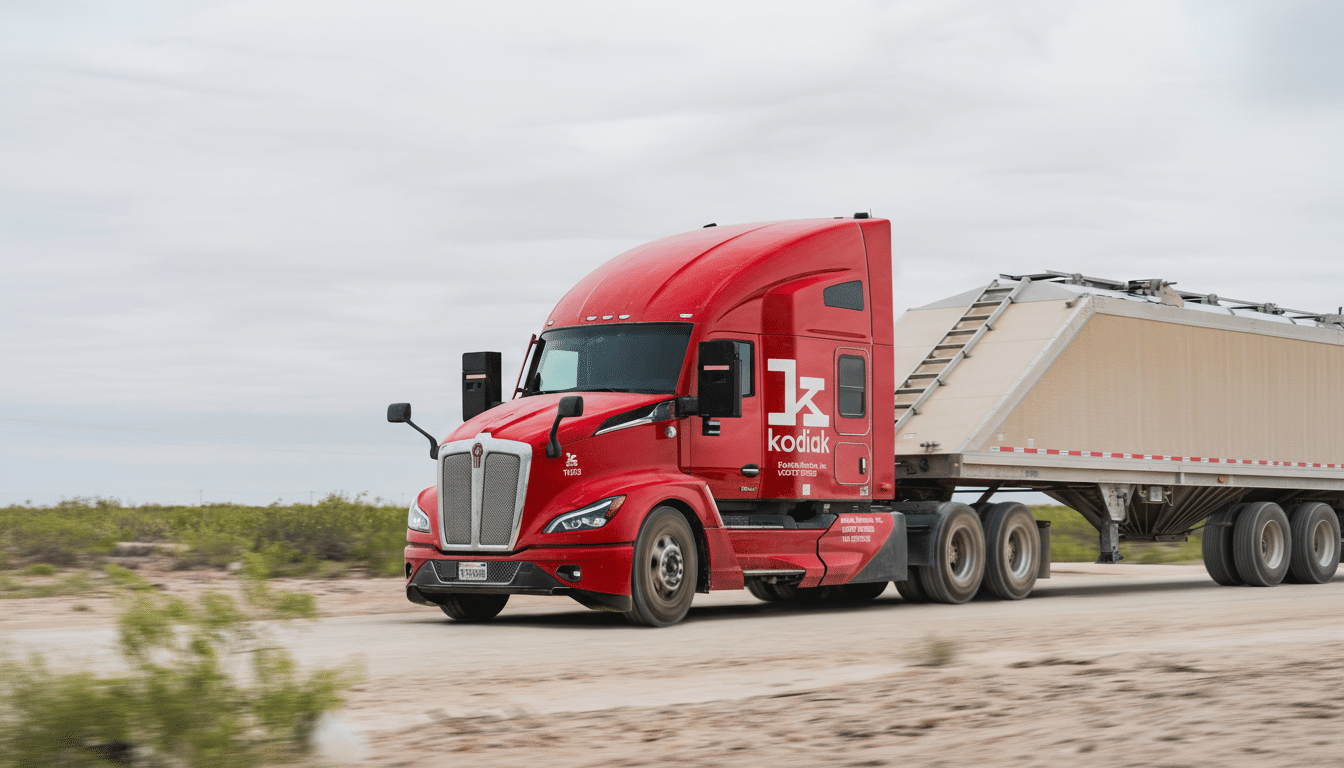
Kodiak is making the jump from occasional autonomous big-rig testing on private roads to a commercial service with its go-live, turning to Bosch to take their self-driving platform from custom test rigs and software to full production-grade systems. That pair-up, announced at the Consumer Electronics Show in Las Vegas, will see Kodiak’s driverless stack reach critical mass thanks to hardware help from one of the world’s largest automotive suppliers.
The deal revolves around a modular steel and aluminum redundant platform that can be used to add highway automation to regular Class 8 tractors, either by building it on the factory line or installing it with the help of upfitters. “The appeal to fleets is pretty simple: shorter paths to scale, wider OEM compatibility, and pathways for service and maintenance,” Pope said.
The Significance of Bosch in Scaling Kodiak’s Platform
Delivering self-determination to freight is about more than just software ingenuity. It necessitates fail-operational steering, braking, power, and compute tailor-made for the duty cycles of long-haul trucking. Bosch already provides fundamental actuation and sensor technology for the heavy-duty sector through its mobility division. It can speed up validation, certification, and field support in plugging that portfolio into Kodiak’s architecture.
Production-ready sensors, steering actuators, and control modules developed to achieve functional safety targets such as ASIL-D are essential to gaining OEM confidence. Just as vital, Bosch’s manufacturing scale and service network can assure fleets that parts are replaceable, traceable, and supported for the life of the vehicle — crucial considerations when uptime is counted in dollars per mile.
A Modular Route From Upfit To Factory Line
Kodiak claims it’s OEM-agnostic and can be installed at different points in a truck’s lifecycle. That dual-path approach matters. Factory integration means clean packaging, shared testing with truck builders, and a more direct path to homologation. Retrofit gets fleets automating portions of what they already own, or piloting on some lanes sooner than new builds.
The company had previously worked with Roush Industries as an upfitter, including on driverless trucks it delivered to Atlas Energy Solutions. Bringing in Bosch also hints at a wider palette of standardized parts, a more efficient assembly line, and general interfaces to make maintenance easier — things like hot-swappable sensors, redundant power distribution, and point-and-shoot calibration features that get you operational faster.
Proof Points From Driverless Operations in Freight
Kodiak has already been doing driverless deliveries for Atlas Energy in the Permian Basin, a testament to the gulf between concept and commercial use. The company has already delivered at least eight trucks under a first 100-truck contract, and with real freight, real weather, and the trials of everyday maintenance schedules to push through, it’s better than closed-course testing environments for effectively surfacing edge cases.
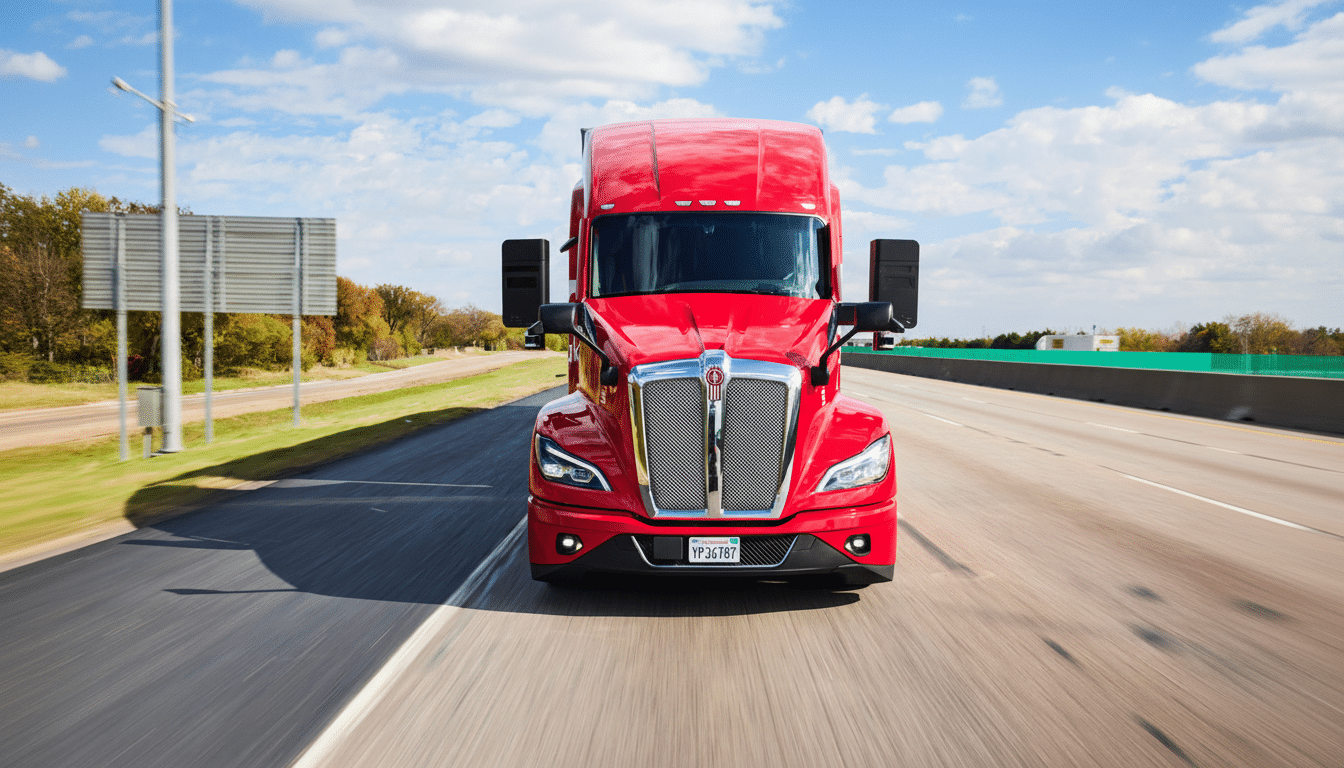
Those deployments rely on redundant stacks of braking, steering, sensors, and compute, as well as a multi-sensor approach that usually includes lidar, radar, and cameras. It focuses on hub-to-hub and industrial routes with predictable operations and solid mapping, allowing for high utilization. It’s where autonomy’s economics are most favorable: driver costs make up some 40% of long-haul operating expenses, according to benchmarking from the American Trucking Associations, and McKinsey has estimated that 20–45% per-mile cost reductions in scaled hub-to-hub scenarios are possible.
Market Context And Competitive Landscape
After all, freight demand remains sturdy as trucking cycles come and go, while the industry’s structural constraints — tight margins, chronic driver shortage that ATA projects could balloon to more than 100,000 in this decade, and increasing safety expectations — continue pulling interest toward automation. NHTSA crash data, which show fatal crashes involving large trucks have trended upward since 2010, have driven an increasing emphasis on redundant, monitored systems that can prevent human-error-related incidents on highways.
Kodiak’s path is part of a fast-growing playbook. Aurora is aligning factory pathways with Paccar and Volvo. Daimler Truck is in line with Torc Robotics. And Plus is addressing specific integrations with several different OEMs. The common element: transition from one-off prototypes to serial, process-validated builds done by Tier 1 suppliers and then serviceable through the dealers and service networks already in place. Bosch’s work here provides Kodiak with a plausible path to those same economies of scale.
What We Know And What We Don’t About This Partnership
Both companies are keeping mum on the production schedule or first customer for the new platform. They anticipate an early focus on states with established autonomous trucking frameworks and thriving freight corridors, like Texas and New Mexico, where Kodiak has already run without a human on board. Regulatory oversight will still be carried out through FMCSA waivers and state-level permissions, with data sharing and safety-case transparency serving as prerequisites before wider rollouts.
Kodiak’s public deal that values the company at $8.31 billion from its merger with Ares Acquisition Corporation II in 2025 brings another element to it: capital for engineering and safety validation, and a public-market demand to demonstrate progress on commercialization. Combine that with Bosch’s manufacturing muscle, and the company is poised to transition from pilots to programs — if it can make a case for reliability, serviceability, and total cost of ownership improvements across thousands of trucks rather than dozens.
The upshot: autonomy in freight will be seized by companies that treat trucks as industrial machinery, not science experiments. By pinning its stack to Bosch’s manufacturing hardware and integration know-how, Kodiak is signaling it means to compete on scale, uptime, and unit economics — not just demos.
