


Rockstar Lets Loose a Satirical Autonomous Vehicle Evil
Grand Theft Auto Online is introducing a knife-edged tech parody into its open world: autonomous “KnoWay” robotaxis that barrel down the road, hop curbs, and generally transform Los Santos into a demolition derby. The expansion, called A Safehouse in the Hills, recasts the vans as tools of an impending surveillance operation and encourages players to sabotage them by outfitting them with explosives — in one of nine High Stakes missions.
In the trailer below, the cuboid vans are kitted out with a recognizable sensor crown of their own – lidar domes and cameras – before crashing into each other bumper-on to plow through a billboard for their service. Whether these vehicles are hacked by criminals or have simply gone off-script is kept somewhat vague, but the message comes through: automated convenience can devolve into automated mayhem.
- Rockstar Lets Loose a Satirical Autonomous Vehicle Evil
- A not-so-subtle nod to real-world robotaxis
- What gamers can expect in Los Santos with robotaxis
- Why independent satire about robotaxis touches a nerve
- Design details beyond the gags in GTA’s robotaxis
- GTA and beyond takeaway on autonomy and surveillance

A not-so-subtle nod to real-world robotaxis
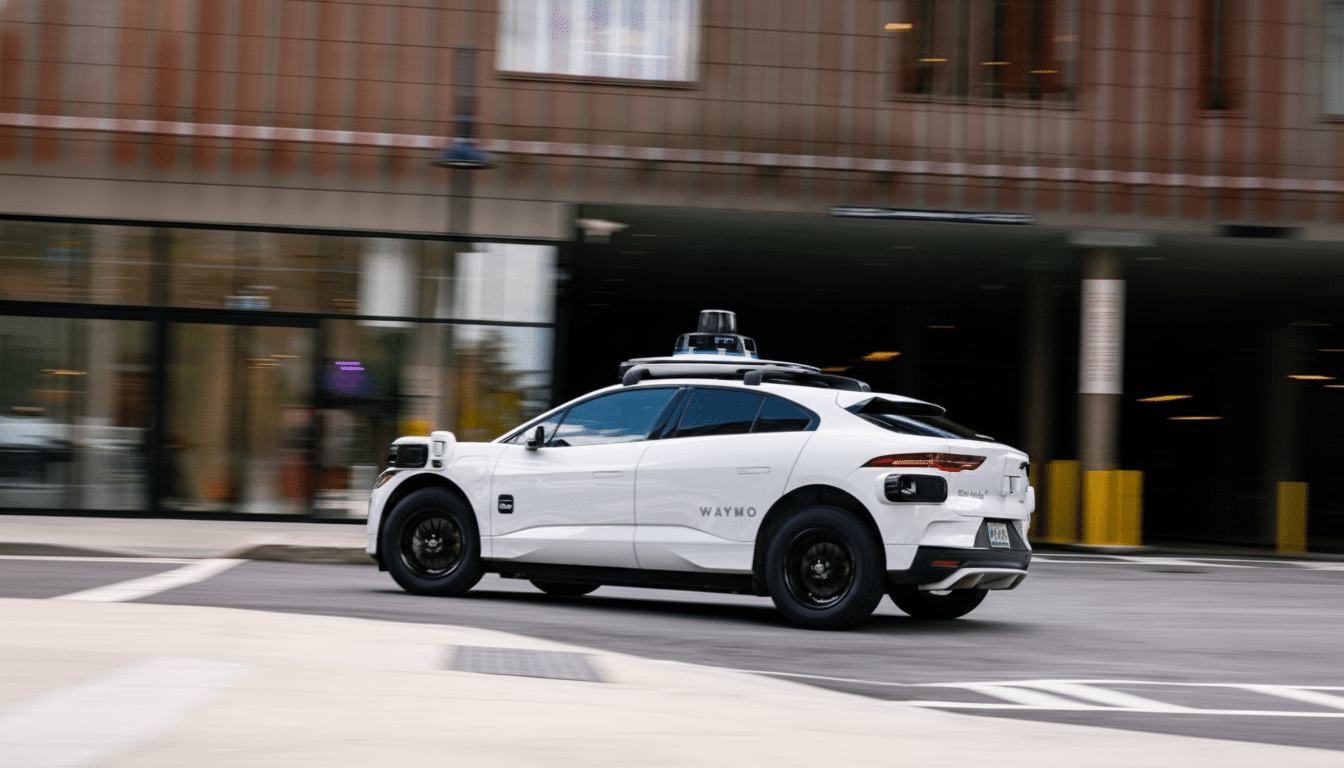
The KnoWay fleet looks like a sly nod to early-stage commercial robotaxis, with designer microvan aesthetics and sensor stacks in the wild on public roads.
The joke is surgical: the in-game tagline “We Kno where you’re going” slyly sends up the creepy cocktail of mobility and monitoring that trails autonomous services.
That unease isn’t fictional. Hundreds of incidents have been tallied by the National Highway Traffic Safety Administration, in its standing data collection on vehicles with automated driving systems, particularly minor low-speed scrapes and strikes of stationary objects. City agencies, including the San Francisco Fire Department, have reported occasions when driverless cars hindered emergency responders. The California DMV has even revoked testing or deployment permits if safety concerns escalated. Meanwhile, high-profile vandalism — torched hoods, smashed sensors — has underlined just how polarizing robotaxis still are.
In recent weeks, companies have tried to reassure nervous customers by highlighting strict data policies and limited sharing with the police. But the existence of multi-camera arrays and always-on logs keeps the surveillance debate alive. GTA somehow doubles down on that tension by pairing the robotaxis with an AI assistant character named Haviland and a plotline about dismantling a “mass surveillance network.”
What gamers can expect in Los Santos with robotaxis
Rockstar seldom simply puts tech toys in as set dressing. There will be world events — convoys of driverless vans backing up traffic at intersections, dynamic chases when cars “misbehave,” and mission beats that require tricks or hacking the control systems of an entire fleet. If past expansions are any indication, the update will probably come with new counter-surveillance gadgets, stealth objectives, and a robbery loop that connects the mayhem to player economies.
Perhaps the most notable wrinkle is how these vans engage with the already significant AI of traffic.
Replicating all of those fun sensor blind spots, fumbled emergency stops, and “cooperative” vehicle-to-vehicle behavior might engender emergent behavior: pile-ups on Vinewood hillsides, sudden street closures, or patterns of predictable patrolling open to sophisticated crews. In a nutshell, chaos with rules — and rules that you can break.
Why independent satire about robotaxis touches a nerve
Widespread opinion about self-driving is still divided. AAA’s regular polling consistently shows most drivers uncomfortable with fully autonomous rides, as fear levels have remained about 70%. Safety advocates cite long-tail edge cases and the complexity of mixed traffic; partisans say that machine drivers don’t break the speed limit or drink or text, and eventually take crashes down dramatically.
Games fill the space after policy debates. By squeezing the stakes — allowing a slick van to T-bone a sports car or an antenna mast to serve as a sniper perch — GTA transmutes abstract anxieties into playable satire. In keeping with Rockstar’s tradition of sending up Silicon Valley culture through its stand-ins like Lifeinvader and iFruit, the KnoWay subplot can also be read as social commentary about the quickly assimilating world of street robotics.
Design details beyond the gags in GTA’s robotaxis
And rather than being the subject of punchlines again, as Uber’s Prius fleet was circa 2015, the vehicle design sticks to real-world hardware: a low-profile lidar puck; perimeter cameras on the corner “light bars”; and a roof rack that suggests some kind of redundant compute or cooling but would obviously be unnecessary in practical operation.
That fidelity counts; when the small stuff feels real, satire sticks harder. Should the studio model sensor occlusion or spoofable GPS, players may come across game systems that parallel real security holes that researchers and regulators often talk about.
The AI character Haviland alludes to voice-driven mission guidance and contextual taunting — another reference to the advent of on-vehicle assistants in mobility devices.
It wouldn’t be a shock to have one of the mission steps be an analog to penetration testing; perhaps driving it around some heavily trafficked area and inducing nearby vehicles into a controlled gridlock for extraction.
GTA and beyond takeaway on autonomy and surveillance
KnoWay is more than just a new class of NPC vehicle; it’s a narrative device that funnels real-life conversations about autonomy, safety, and surveillance into GTA’s kinetic sandbox.
By allowing players to wreak havoc on, and ultimately dismantle, a ubiquitous robotaxi grid, Rockstar is betting the most convincing conversation about driverless futures may be the one you can blow up — and then play again.
