


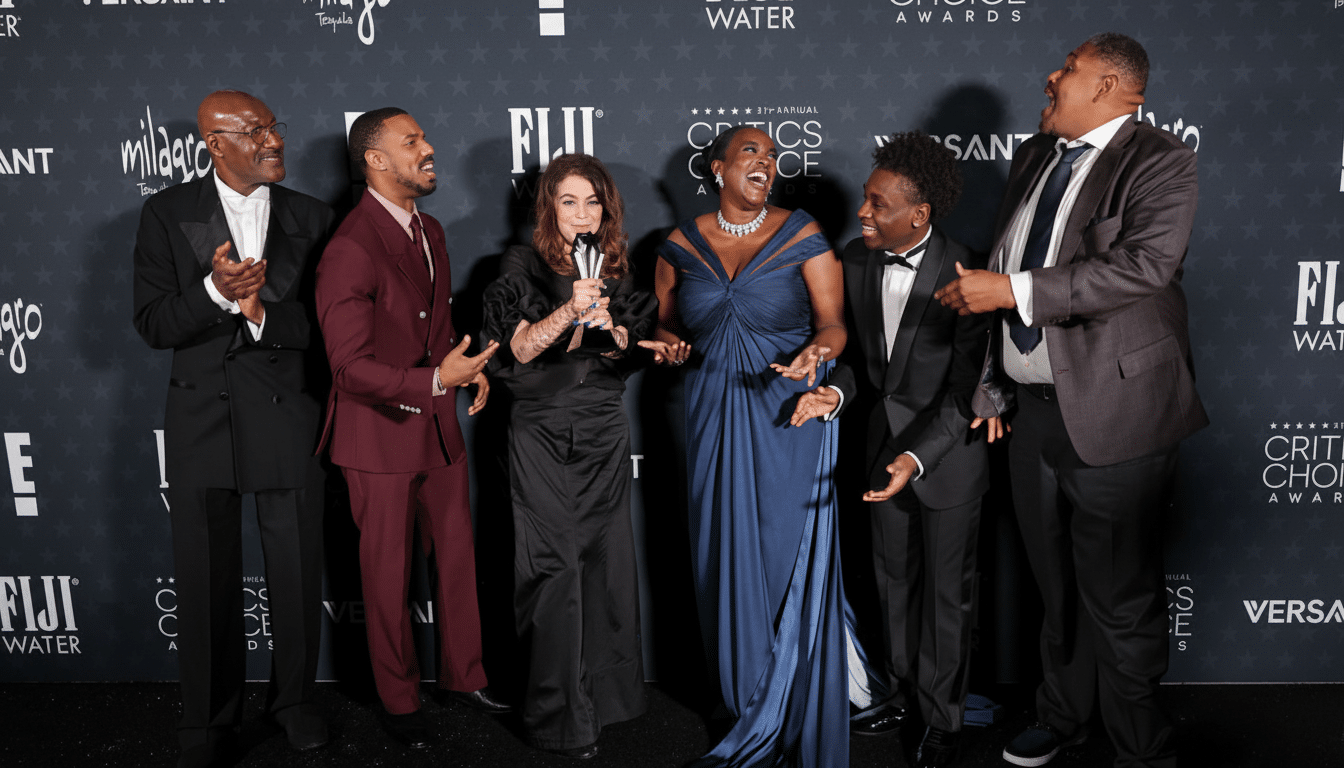
Jimmy Kimmel took his Critics Choice Award for Best Talk Show and turned an ordinary trophy speech into a barbed “thank you” to President Donald Trump, using the opportunity to make a wry statement about politics — but mostly free speech and the modern late-night game plan.
A Sardonic Nod to the Oval Office in His Acceptance
Stepping onto the stage, Kimmel thanked his creative team, union crews and the entertainment community at large before delivering his zinger. After riffing on a controversial FIFA accolade for the president, he thanked “Donald Jennifer Trump” for providing the nightly reservoir of material that keeps monologues humming and audiences engaged. It hit as both a roast and an acknowledgment that political theater is still late-night’s steadiest engine.
Advisers have been working to map out how the president could argue he won after contesting state for state in 2016. It was signature Kimmel: a smile, a dig and an implicit suggestion that the show’s rhythm is in rigorous lockstep with the nation’s news cycle.
Industry Backing and the Free Speech Subtext
The speech served as a thank-you to colleagues who had stood behind him during a difficult stretch last year. Kimmel’s program was temporarily yanked off the air by Disney, ABC’s parent company, amid pressure related to comments he made after the slaying of far-right commentator Charlie Kirk, and Federal Communications Commission chair Brendan Carr also jumped publicly into the fray. Industry reports indicated fellow late-nighters Stephen Colbert, Jon Stewart, Seth Meyers and John Oliver all expressed solidarity with the comedian in support of a free speech issue at a time when the media environment remains fragile.
The swift return of the show was a reminder that backlash can go both ways. Kimmel’s reappearance monologue also became the most-watched clip on his YouTube channel after that, a refresher that there is no such thing as bad press in the attention economy. For late-night, digital lift is as important now as linear ratings: Nielsen and other audience monitors have determined that monologues frequently outscore full episodes online, with shareable snippets extending a program’s cultural footprint overnight.
Late-Night’s Political Edge and Audience Reality
Politics-drenched humor went from an occasional spice to a nightly staple across the entire format. Research from groups like the Pew Research Center has found that younger audiences are increasingly running into public affairs through short-form video and comedy segments, making late-night monologues a funnel to the day’s news of record. Kimmel’s salute to Trump reflects that symbiosis: The presidency generates the spectacle; comedy channels it, often in under eight minutes.
It also makes sense for where Kimmel’s come over the past decade. Those moments that seemed to connect with fans most clearly — whether a call for healthcare, or partisan elbows spiked by satire. In that light, “thanking” a president he routinely excoriates was not out of character; in fact, it was as pure an essence of how he views his own commentary as one could ask for.
Awards Shows as Cultural Stages for Pointed Commentary
More and more, awards stages are doing double-duty as venues for pointed commentary, and the Critics Choice Awards — with votes cast by the Critics Choice Association — typically reflect industry concerns beyond what its members voted for.
In past seasons, recipients have used their minutes to draw attention to labor actions and creative freedom as well as safety issues facing journalists and performers. Kimmel’s twist on things — heaping praise on a political nemesis for his show’s momentum — was in that vein, but the tone remained undeniably playful.
Where does it leave late-night? With a full clip and good signal. As the news churns, Kimmel is trying to make his desk a de-stressor: a brief(ish) nightly debrief on politics and culture, pre-packaged for broadcast and written for the algorithm. If recent headlines are any indication, the “special thanks” he gave onstage will also double as a programming note: Look for sharper monologues (not to mention news), faster viral lift and a show newly convinced of its own voice.
