


Jackery’s new Solar Mars Bot was the center of attention on the show floor, and with good cause. It’s a solar-charging robot that follows users into the wild wherever in the world that is, then deploys its own panels to keep their gear powered far from any outlets. Optimal for power users who don’t think twice about waiting to charge via a camera bag, flight case, or field kit but demand the fastest recharge possible when not in use, and it packs very small, even fitting into your cargo so you can live out of your van on production trips without running out.
Why a Roaming Power Robot? Well, It Matters
Portable power can only be as strong as its sucking capabilities. That it remains fixed under trees or on canyon walls can transform a 1,000 Wh setup into an endless one. The old off-grid problem No. 1: shade and less than ideal angles is attacked by a robot that can shuffle itself around and make positional adjustments. Better orientation and tracking can boost solar harvest by double digits, researchers at the National Renewable Energy Laboratory have found, while partial shading — even with advanced bypass diodes used in modern panels — can be ruinous to output.
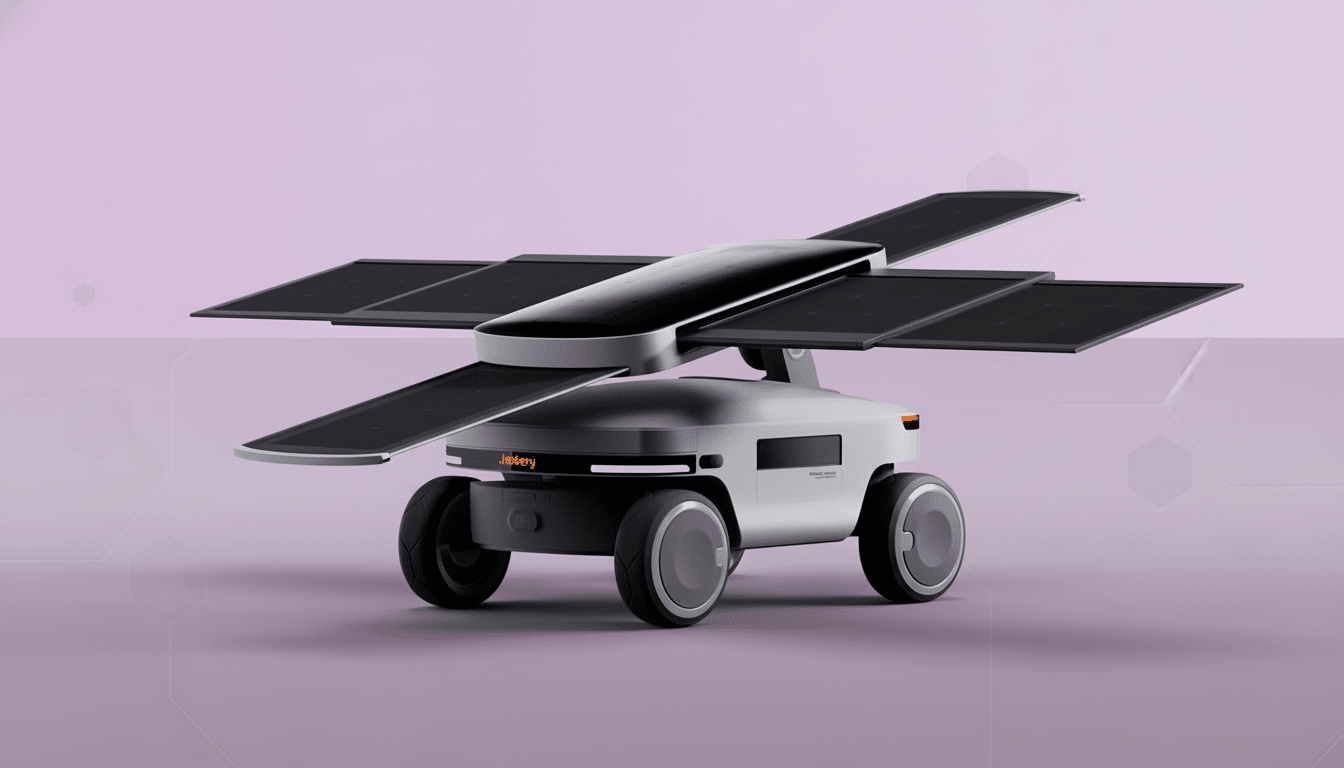
It also solves a concrete inconvenience in everyday life. Carrying a hefty power station to the best sun and then back to camp eats up time and energy. The value with the Solar Mars Bot is pretty well summed up by “just take it with you, then let it wander off where the sunlight really is.”
How the Solar Mars Bot Works and Operates Autonomously
Jackery says the bot is an AI-based autonomous system that’s outfitted with a power station and retractable 300W solar panels. It’s an elegant concept: you hike, drive or wheel your way to base; the bot joins. Once you’ve plopped it down, it unfurls its array and repositions itself to charge first thing in the morning, all day long, without you doing anything.
Although the company has not released a full sensor stack, “autonomous” and “follow” capabilities would likely be a combination of vision, ultrasonic or radar sensing, and GPS or range-ping. Look for geofenced behavior, obstacle avoidance, and adaptive routing to steer the robot away from dangerous areas. The even bigger win, though, is continuous micro-optimization — minor real-time nudges to avoid patchy shade and chase peak irradiance.
Real-World Power Math for Mobile Solar Charging
A 300W array isn’t going to power an RV air conditioner, but it can support a pro-level workflow. In most spots in the United States, you can rely on about 4 to 6 peak sun hours on clear days. That would map to roughly 1.2 to 1.8 kWh of solar from the bot per day, prior to conversion losses. But in practical terms, that’s plenty enough to recharge a 60-Wh laptop between 15 and 25 times, top off a mirrorless camera battery for dozens of cycles, or juice midsize drone packs over multiple flights.
Since the robot can move, it can do better than equally wattage-fixed panels that exist in partial shade. Studies by NREL and industry field tests through the years have found that there can be a disproportionate sapping of array strength when only small shadowing is involved. The bot’s independence dodges that issue without needing a human babysitter all the time.
Who This Is For: Power Users and Field Teams
Consider expeditionary filmmakers that charge cameras between takes, overlanders that run fridges and comms, researchers who log data for days or amateur radio operators at field stations. These quiet and exhaust-free portable power sources are also ideal for movie, live event and concert crews, volunteer responders, campsites or guides where generators are not allowed or practical. The American Radio Relay League’s Field Day and regional backcountry SAR teams are obvious examples of communities that value dependable, portable power.

Part of a Bigger Off-Grid Push from Jackery
The robot is leading a larger Jackery lineup that’s squarely aimed at robust, all-weather power. The new Explorer 1500 Ultra portable station is equipped with a rock-solid 1536Wh of lithium and can deliver up to 1800W continuous power / 3600-watt surge capacity in an IP65-rated enclosure that resists dust and heavy spray. The company promises improved shock resistance and operation between 5°F and 113°F, a wink at folks who work in actual extremes.
For those who want a more semi-permanent solution, the Solar Gazebo mixes an aluminum frame with a louvered roof and 2,000W of solar area (the company says it should output around 10 kWh on a good day).
To put that in context, the US Energy Information Administration cites the average US home as consuming some 29 to 30 kWh per day; that gazebo’s output is a significant portion of that for off-grid workspaces or backyard labs.
What We’re Watching Next for the Solar Mars Bot
The Solar Mars Bot was originally teased at another CES and is now making the transition from concept to product. Some things the more savvy buyers will want to know:
- Total weight
- Maximum slope and range
- Weatherproofing
- Charge curve under variable light
- Integration with Jackery’s ecosystem
If the final specs line up with what’s promised right now, the bot could turn out to be the go-to power mule for hardcore outdoor efforts.
Bottom line: A solar scootbot that follows you indoors and scavenges sun for itself is more than just a CES novelty trick. It’s a sensible answer to the number one limitation of portable energy — where the light is — and it could transform what power users carry when there’s no grid, and no second chances.
