


Five of Israel’s six major seawater desalination plants were affected by renewed shutdowns after unusually turbid Mediterranean water interfered with their operations, creating a rare simultaneous disruption of infrastructure central to the country’s water system. Authorities said household supply was being prioritized, while agricultural allocations and irrigation of public spaces were reduced.
The plants at Ashkelon, Ashdod, Palmachim, Sorek A and Sorek B were shut down or taken out of service as conditions worsened, while Hadera continued operating at least partly, according to Globes’ account of the shutdowns. Residents in several cities, including Jerusalem and Be’er Sheva, reported low pressure or localized outages, i24NEWS reported. The available reports do not establish a nationwide failure of household water service or a national drinking-water shortage.
Restart attempt was followed by another closure
The disruption began over the weekend before Aug. 31, when Ashkelon and Ashdod were initially taken offline, Globes reported. The problem subsequently extended to the other facilities. The Israel Water Authority issued its first public announcement on Aug. 31, after the incident was already under way.
Some plants were restarted overnight before the Sept. 1 reports, but most were shut again when turbidity increased. That sequence is important because it indicates that the immediate operational problem was not simply a single mechanical outage: the quality of incoming seawater was changing enough to make resumed production difficult.
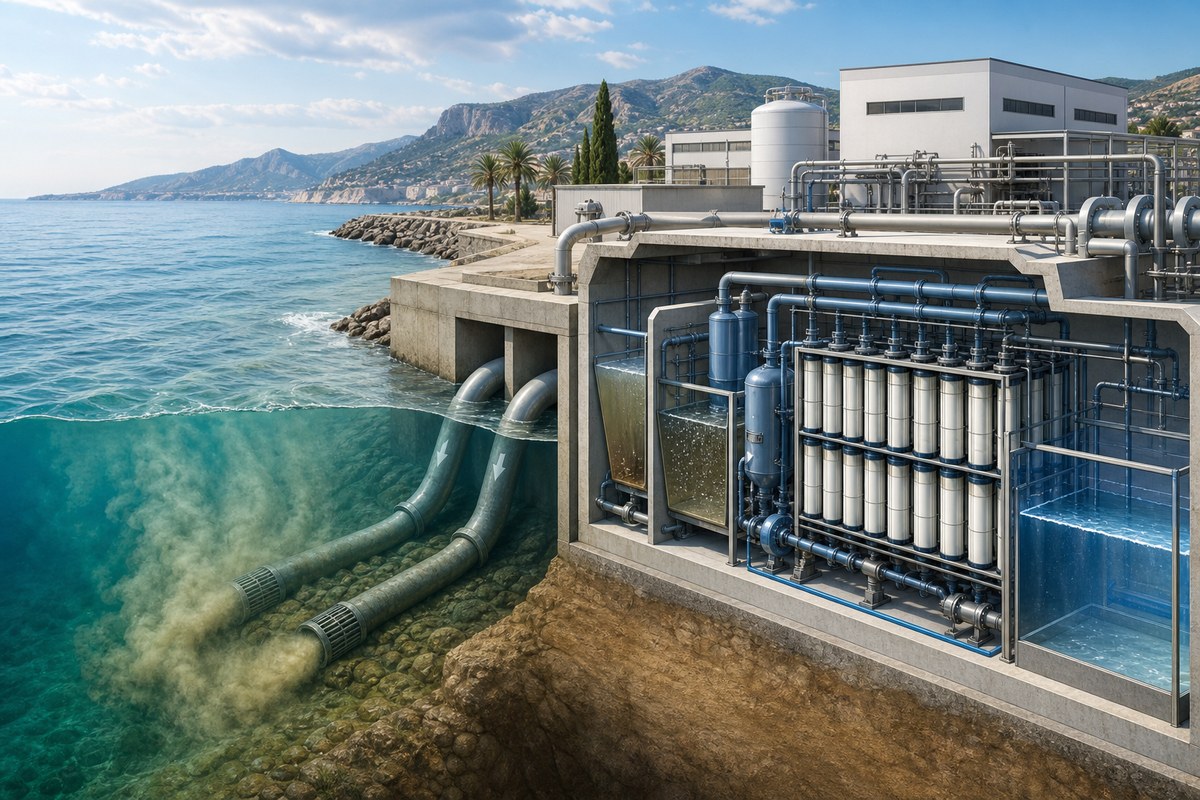
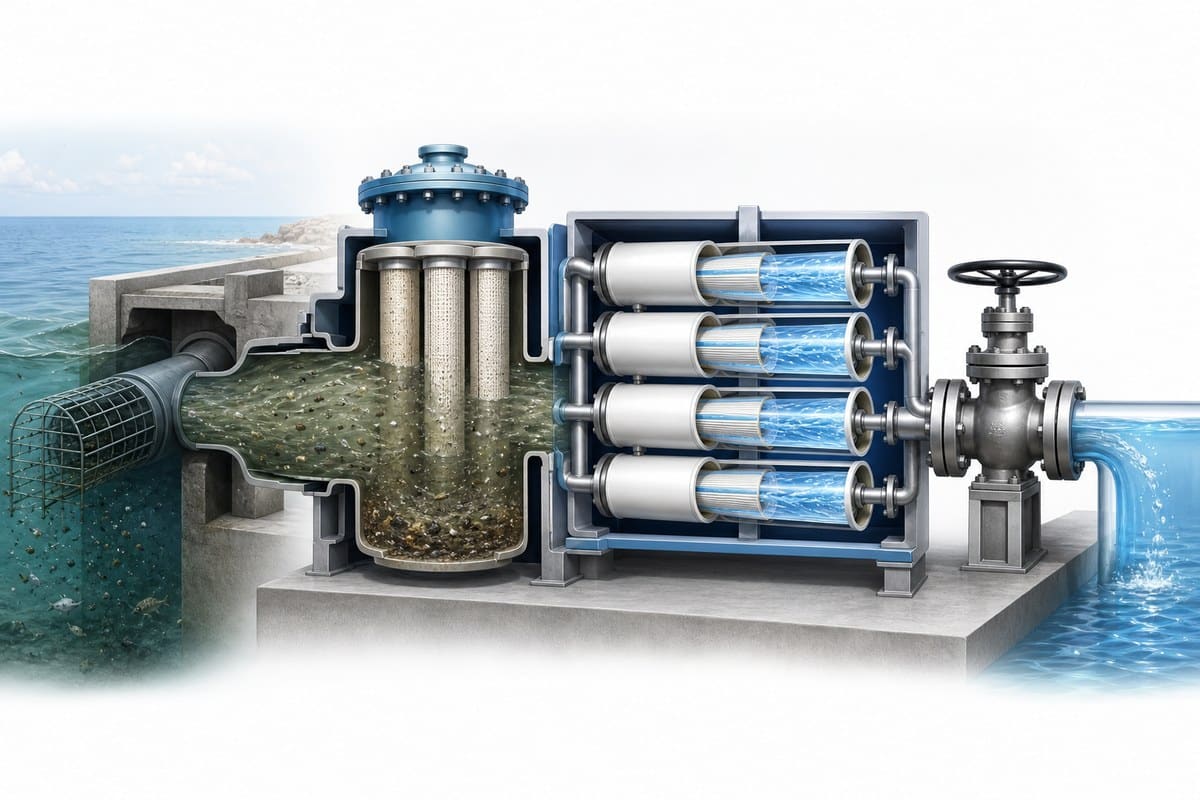
Turbidity is a measure of cloudiness caused by suspended particles or other material in water. At a seawater reverse-osmosis plant, incoming water undergoes pre-treatment before it reaches filtration membranes. A heavy particle load can clog filters or membranes, increase pressure inside the system and lower output. Temporarily reducing or stopping intake can protect equipment; it is not, by itself, evidence that finished tap water has become contaminated.
Globes reported no boil-water notice or instruction to avoid drinking tap water. The reported concern was the condition of raw seawater before desalination, not a declared deterioration in the quality of water already being delivered to homes. That status could change if officials issue later advisories, but none had been reported during the shutdowns covered here.
Environmental explanation remains incomplete
The Water Authority and the Ministry of Energy and Infrastructures characterized the event as environmental and linked it to unusual weather conditions, according to Globes. A possible contribution from microscopic algae drifting from the Nile Delta region was still being assessed. i24NEWS likewise reported that authorities believed Nile-region algae might be involved.
That possible algae explanation should not be treated as a confirmed cause. Neither report described a completed environmental investigation or provided laboratory findings identifying a particular organism or tracing its origin. Turbidity can result from several kinds of suspended material, and the public accounts did not quantify the particle concentrations at the plant intakes.
Officials also examined whether the cluster of shutdowns could have resulted from a cyber incident. Globes reported that the National Cyber Directorate, the Water Authority and industry professionals found no indication of one. The finding addresses the reported concern but does not substitute for detailed public technical documentation, which was not available in the reports.
Households were prioritized as farms faced cuts
Authorities turned to alternative supplies while seeking to preserve regular household service, the two news organizations reported. Energy and Infrastructure Minister Eli Cohen said domestic water would continue to be supplied, according to i24NEWS, while officials asked the public to conserve water and curtailed supplies for agriculture and public landscaping.
The competing descriptions of the impact require some care. Globes said there was no official national drinking-water-shortage scenario, while acknowledging reports of local pressure drops and disruption. i24NEWS described severe disruptions and cited complaints from multiple locations. Taken together, the reports support localized consumer impacts and emergency conservation measures, but not a quantified account of how many households lost service or for how long.
Agriculture may have less flexibility during a short-notice cutback. i24NEWS cited Agriculture and Food Security Ministry Director General Oren Lavie as warning that prolonged interruptions can rapidly damage some crops, particularly young plants and greenhouse produce. No official estimate of crop losses, affected acreage or the duration of agricultural reductions was reported.
A concentration risk shown in plant numbers
Israel’s six major seawater desalination facilities have combined annual production capacity of about 797 million cubic meters, according to the Water Authority figure reported by Globes. Five of those six plants were affected during this episode. That plant count conveys the unusual breadth of the event, although it should not be converted into a precise share of lost output: the plants do not necessarily have identical capacities, and Hadera was reported to be partly rather than fully operational.
The episode also illustrates why water-quality safeguards can interrupt production even when there is no drinking-water alert. Desalination systems depend on keeping pre-treatment and membrane equipment within operating limits. When the incoming water changes abruptly, operators may have to trade output for equipment protection while authorities reroute available supply and decide which uses receive priority.
Key operational questions remain unresolved in the public reporting, including how long high turbidity persisted, the measured effect on plant production and the number of customers affected by low pressure or outages. More definitive conclusions about the suspected algae source will depend on the environmental assessment rather than on the preliminary explanation offered during the shutdown.

