


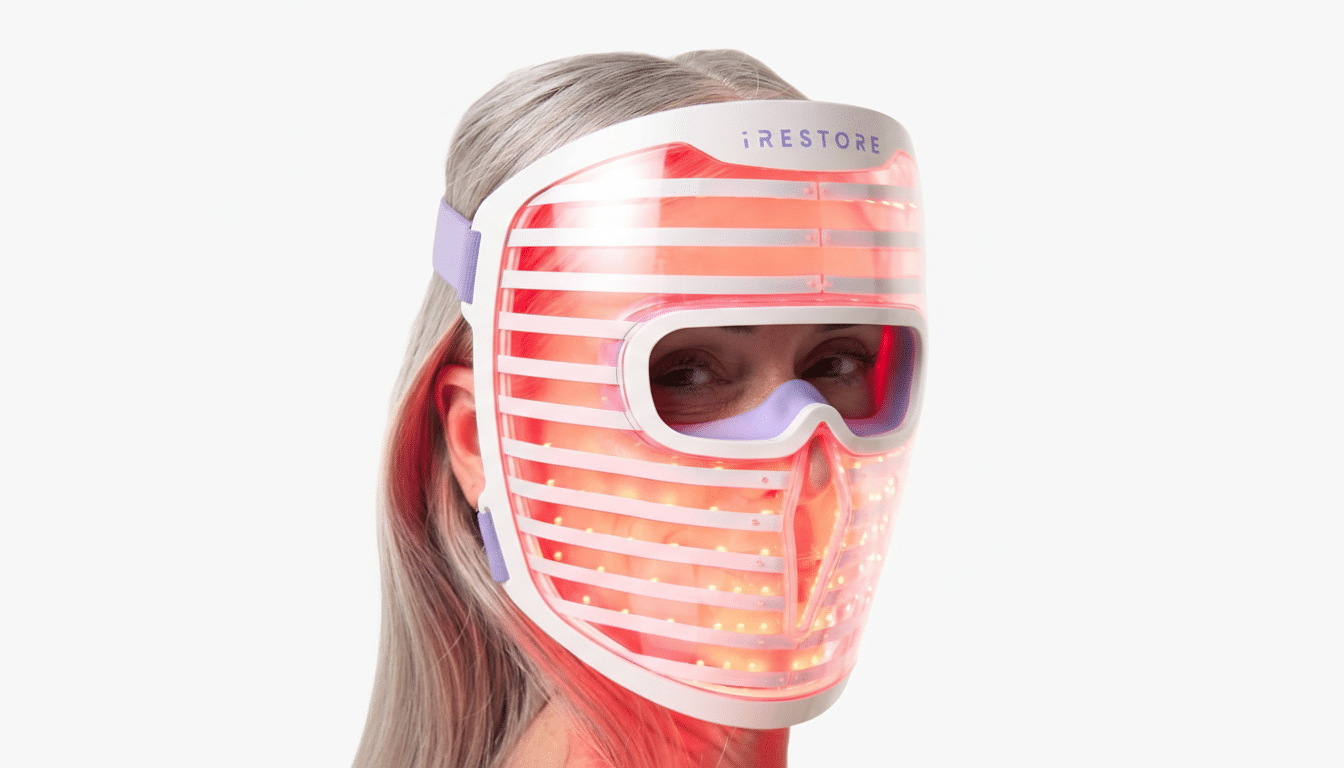
Shoppers looking to upgrade their skincare routine just got a rare win. The iRestore LED Face Mask has dropped to $398.99 at Amazon—50% off its usual $799 list—marking its lowest price to date. If you’ve been eyeing an at-home light therapy device to tackle dullness, uneven tone, or fine lines, this is the kind of pricing that typically only appears around major sales events.
Why This Amazon Price Drop Stands Out Right Now
High-quality LED masks from recognizable brands often sit in the $350 to $500 range with fewer diodes, while premium clinical-grade systems can cost several times more. Dermatology offices commonly charge $75 to $200 per in-office LED session. At 50% off, this mask undercuts repeated treatment visits over a few months while delivering full-face coverage at home.
- Why This Amazon Price Drop Stands Out Right Now
- What the iRestore LED Face Mask Includes and Offers
- What Science and Clinical Evidence Say About LED Therapy
- How to Use This LED Mask at Home for Best Results
- Who Should Consider This LED Mask and Who Should Not
- Bottom Line on This Limited-Time iRestore LED Mask Deal
Price aside, timing matters. Demand for at-home devices tends to spike during colder months when skin looks tired and dehydrated. Securing a top-tier LED mask at an all-time low means you can start consistent treatments now and be on track for visible results by spring.
What the iRestore LED Face Mask Includes and Offers
The iRestore LED Face Mask features 360 LEDs designed to blanket the face with uniform light. It supports multiple modes—red, blue, and near-infrared—to address different concerns. The brand’s regimen is straightforward: wear the lightweight mask for about 10 minutes per session, three to five times a week. That cadence aligns with protocols used in many dermatology practices for noninvasive light therapy.
More LEDs don’t automatically equal better results, but they can improve coverage and consistency, especially along contours like the jaw and cheeks. What matters most are the wavelengths used and the energy delivered to skin (often measured as irradiance and total dose). Multi-spectrum masks that combine red and near-infrared target firmness and tone, while blue light is typically added for blemish-prone skin.
What Science and Clinical Evidence Say About LED Therapy
Red and near-infrared light (commonly in the 630–660 nm and 800–850 nm ranges) have been shown to stimulate fibroblasts and support collagen synthesis. Reviews in journals such as Photomedicine and Laser Surgery and the Journal of Clinical and Aesthetic Dermatology report improvements in wrinkle severity and skin roughness after 8 to 12 weeks of consistent use, with some studies noting measurable gains in elasticity. Results vary, but the trend line is favorable for texture and fine lines when users stick to a routine.
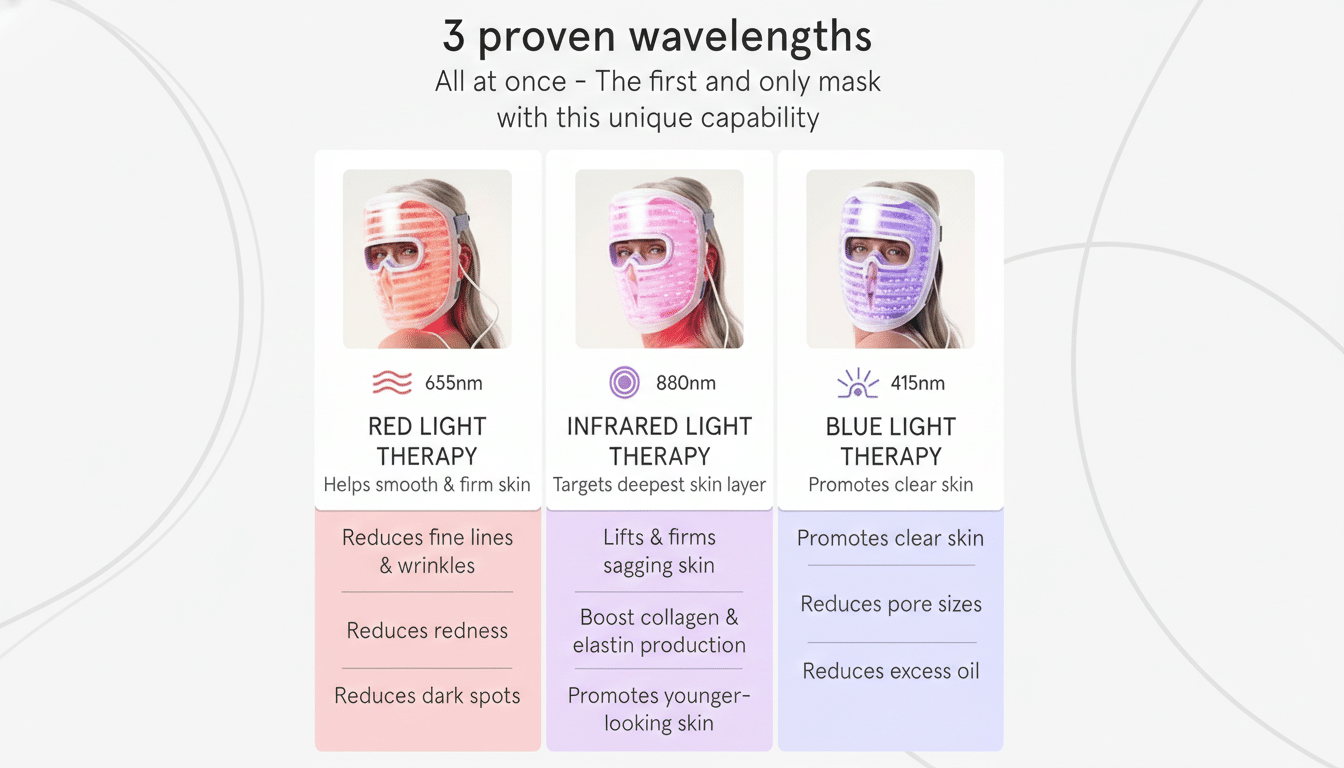
Blue light around 415 nm targets Cutibacterium acnes, the bacteria linked to inflammatory breakouts. The American Academy of Dermatology notes blue light can be helpful for mild to moderate acne, and clinical research in the British Journal of Dermatology has documented notable reductions in inflammatory lesions over 8–12 weeks with regular use. That said, evidence quality and protocols differ across studies, and a cautious read from systematic reviews is that consistency and the right dose are key.
How to Use This LED Mask at Home for Best Results
Start with clean, dry skin. Skip photosensitizing actives (like strong exfoliating acids or retinoids) immediately before a session if your skin is easily irritated; apply them at a different time of day. After treatment, use a simple moisturizer and, in the daytime, sunscreen—UV protection is nonnegotiable if you’re investing in any rejuvenation routine.
Many clinical protocols aim for a cumulative energy dose of roughly 3–10 J/cm² per session for red and near-infrared rejuvenation. You won’t need to calculate this at home, but it’s why manufacturers standardize session length. Expect brightness and glow to improve in 2–4 weeks, with firmer-looking skin and fine-line changes typically appearing after 8–12 weeks of steady use.
Who Should Consider This LED Mask and Who Should Not
This mask is a fit if you want a noninvasive boost for tone, texture, and early fine lines, or if you’re managing mild breakouts and post-blemish redness. If you’re on photosensitizing medications (such as isotretinoin), have a history of light-triggered conditions, migraines triggered by bright light, or are being treated for melasma or active skin disease, consult a board-certified dermatologist first. The FDA regulates many light therapy devices as Class II; look for clear labeling and safety features, and use as directed.
Bottom Line on This Limited-Time iRestore LED Mask Deal
At $398.99—50% off the $799 list—the iRestore LED Face Mask has reached its lowest price yet, putting a full-coverage, multi-wavelength device within reach for far less than a series of spa visits. If you’ve been waiting for the right moment to add LED therapy to your skincare routine, this is the kind of all-time-low pricing that’s hard to ignore. As always, availability and pricing can change quickly, so act while the discount holds.
