


Instagram is testing a control that would let you quietly remove yourself from someone else’s Close Friends list, according to an internal prototype spotted by reverse-engineer Alessandro Paluzzi. The option targets a longstanding pain point in the app’s audience tools: since Close Friends debuted in 2018, you could curate who sees your own intimate Stories and Reels, but you couldn’t opt out if another person put you on their inner circle.
What the New Control Would Do and What You Lose
Screenshots of the prototype suggest Instagram will present a confirmation warning that if you leave someone’s Close Friends list, you’ll lose access to any content shared to that audience unless they add you back. That’s a straightforward trade-off: you regain agency over how you’re included, but you won’t see the green-ring Stories and Close Friends-only posts from that account.
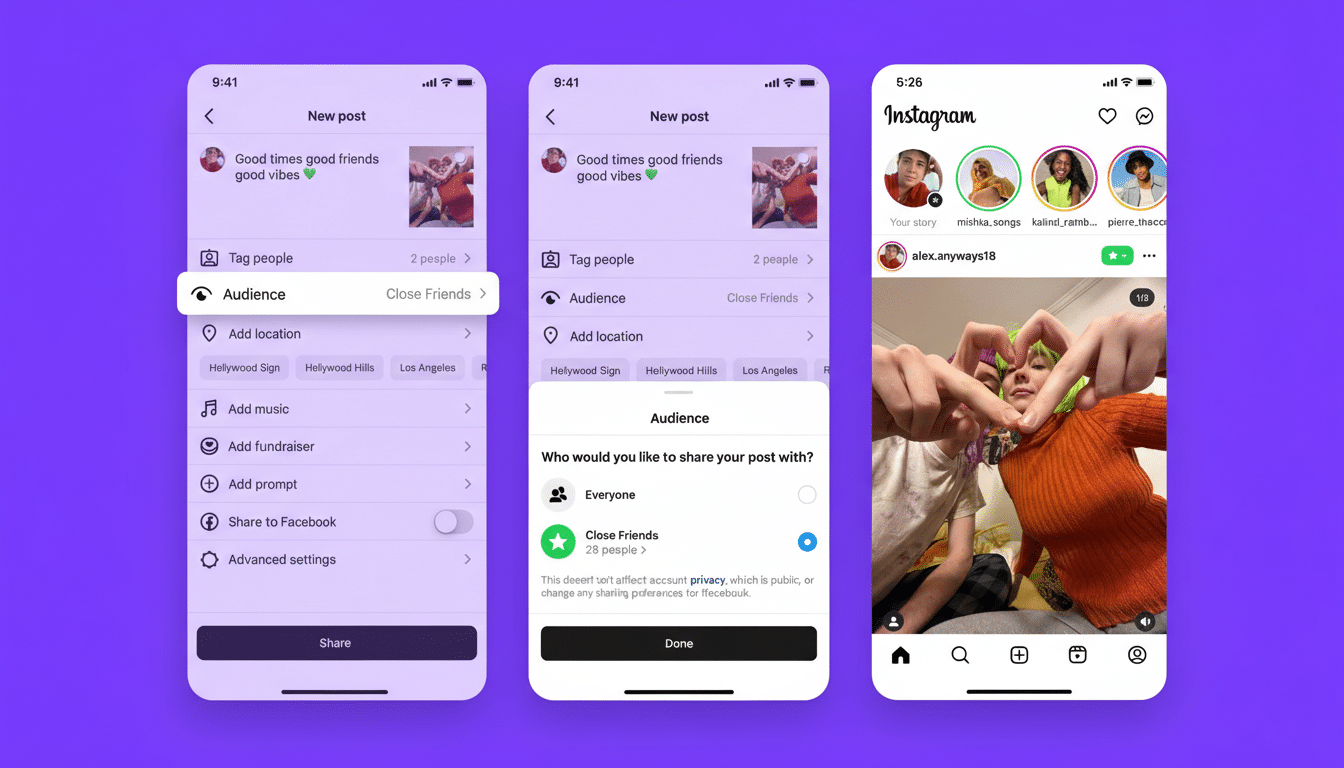
It’s not yet clear whether the person who created the list would be notified if you depart, or whether Instagram would keep the action invisible. Those design choices matter. A silent leave reduces social friction; a visible exit could trigger awkward conversations. Instagram has not announced a rollout or timeline, and, as with any internal test, the feature could change or never ship.
Why It Matters For Privacy And Social Dynamics
Close Friends was built to shrink the audience and lower the stakes of sharing, but it also introduced a subtle pressure: you might be added to a coworker’s or distant acquaintance’s list and feel obliged to watch or engage. An opt-out flips the model to mutual consent—useful for people who want to set boundaries between professional and personal spheres or avoid sensitive content without unfollowing.
Privacy advocates have long argued that controls should be reversible and user-centric. Groups like the Electronic Frontier Foundation have pushed platforms to make inclusion in targeted audiences transparent and easy to decline. A one-tap “leave” aligns with that guidance and mirrors broader industry shifts toward finer-grained audience management across social apps.
The stakes are not small. Industry estimates suggest Instagram serves well over 2 billion monthly users, and audience lists like Close Friends have become home to everything from everyday life updates to semi-private promotions. For creators, the presence of an explicit opt-out could yield smaller but more intentional Close Friends audiences—potentially higher engagement, but less reach.
How Rivals Handle Similar Features Across Social Apps
Snapchat already lets users remove themselves from someone else’s Private Story, a close cousin to Close Friends. That precedent shows there’s demand for a quiet exit. Elsewhere, WhatsApp introduced the ability to leave group chats with minimal disruption, reducing public notifications. By contrast, X sunsetted its Circles feature, underscoring how fragile “semi-private” spaces can be without clear rules and controls.

If Instagram’s approach mirrors Snapchat’s, expect the emphasis to be on discretion. A design that avoids notifying the list owner would reduce social risk and make the feature widely used. If the app chooses to alert the creator, adoption could skew to situations where users are willing to trade potential awkwardness for peace of mind.
Key Questions Before Launch and What Users Should Know
Several details will determine how impactful this becomes:
- Will leaving be completely silent?
- Can you rejoin if re-invited without friction?
- Will Instagram offer a central dashboard to manage where you’ve been added across accounts?
- How will this interact with other audience tools, such as Close Friends-only posts and Reels beyond Stories?
There’s also a moderation angle. If users can opt out, harmful or spammy Close Friends additions may have less reach. That could reduce unwanted exposure to sensitive content and limit gray-area marketing tactics that rely on adding large numbers of people to intimate lists without explicit consent.
What It Means If You Rely On Close Friends
For everyday users, the feature simplifies boundary-setting: you can stay connected to someone publicly while declining their inner circle. For creators and brands who use Close Friends for exclusives or membership perks, it may prompt a rethink of value—more emphasis on clearly communicated benefits and less on passive inclusion to pad numbers.
Bottom line: giving people a veto over intimate audience lists is a small but meaningful rebalancing of control on Instagram. If and when it arrives, expect Close Friends to become a little closer—and a lot more consensual.
