


Immigration and Customs Enforcement has leaned hard on a growing toolset of surveillance and analytics technology to supercharge deportations, which advocacy groups and legal experts say are happening at a historic scale. Government contracting records and investigative reporting point to a rapidly expanding stack that blends phone-tracking gear, facial recognition, data-broker feeds, and case-management systems designed to identify, locate, and apprehend people faster than traditional policing ever could.
Cell-Site Simulators In The Field And Their Use By ICE
ICE investigators run cell-site simulators—often called stingrays or IMSI catchers—that impersonate cell towers to force nearby phones to connect. Once devices latch on, agents can pinpoint a handset, identify its IMSI, and, depending on configuration and court approvals, capture certain communications.
- Cell-Site Simulators In The Field And Their Use By ICE
- Face Search At Scale With Clearview And Mobile Tools
- Spyware And Device Forensics In ICE Investigations
- Buying Location Trails And Social Graphs
- License Plate Networks That Never Sleep Or Slow
- Palantir As The Case Backbone For ICE Operations
- Data Brokers And Backgrounding In ICE Case Work
- The Oversight Question For Expanding Digital Deportation
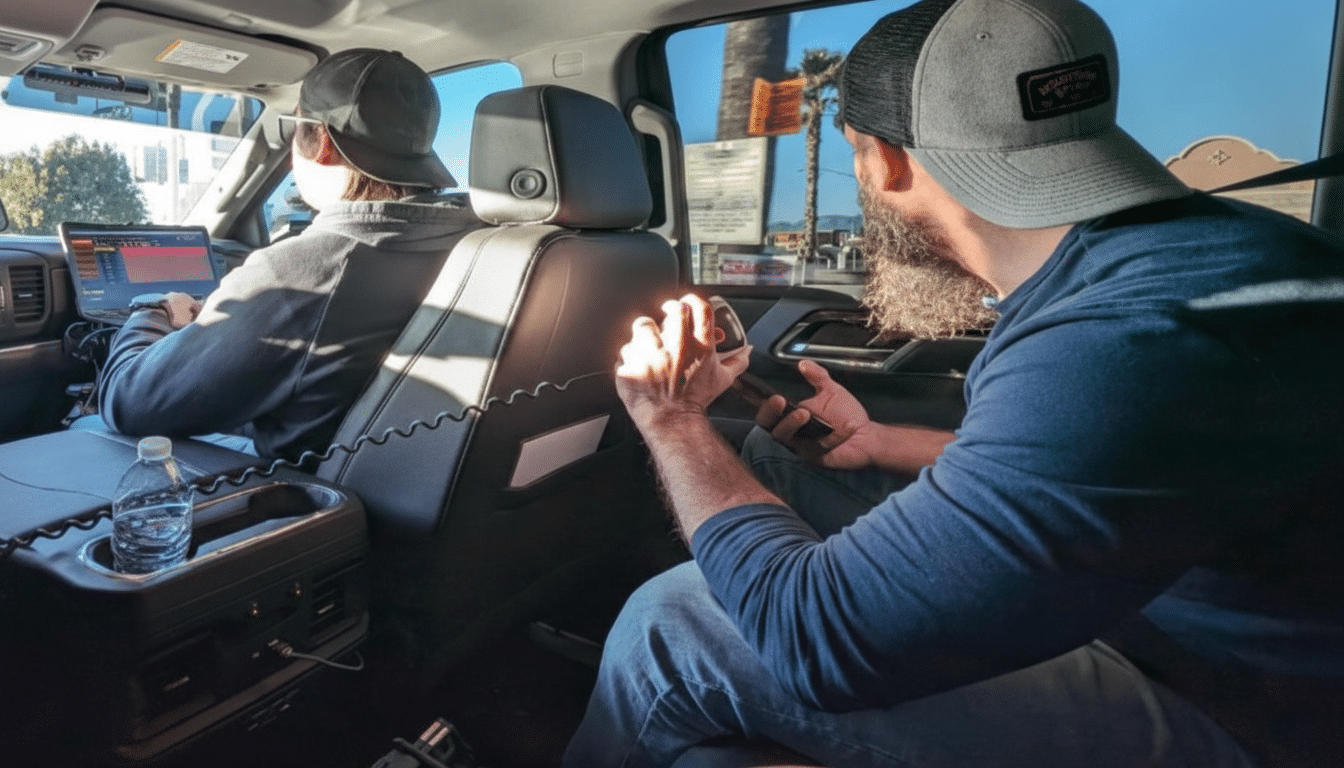
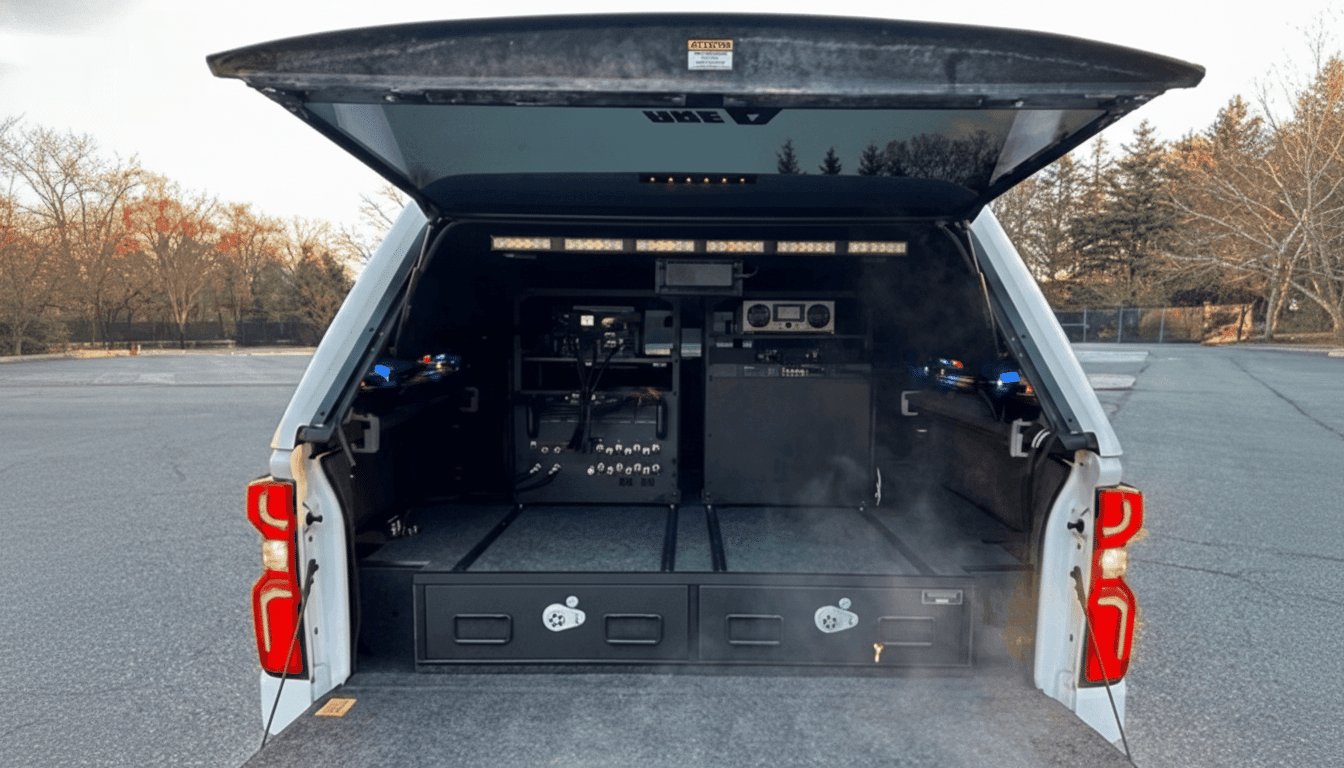
Procurement filings show ICE spending more than $1.5 million with TechOps Specialty Vehicles for specialized vans outfitted to host these systems, including an $800,000 order for “Cell Site Simulator Vehicles” supporting Homeland Security Technical Operations. The technology is controversial because it sweeps in bystander data and has been deployed in the past without warrants; in a 2019 Baltimore case, prosecutors even dropped charges rather than detail stingray use under restrictive non-disclosure terms.
Face Search At Scale With Clearview And Mobile Tools
ICE’s Homeland Security Investigations recently inked a $3.75 million deal with Clearview AI, according to records reported by 404 Media, adding to earlier contracts for “forensic software” and enterprise licenses. Clearview’s product matches probe images against a massive corpus scraped from the open web, enabling one-to-many searches that can rapidly surface identities.
Agents also use a mobile facial recognition app known as Mobile Fortify that queries driver’s license photos and other datasets—reportedly over 200 million images—expanding field identification beyond traditional ID checks. While the National Institute of Standards and Technology has documented improving accuracy in facial recognition, civil liberties groups note persistent demographic error disparities and warn against real-time face scans in street stops.
Spyware And Device Forensics In ICE Investigations
An ICE contract with Israeli vendor Paragon Solutions, initially paused for policy review under a federal executive order on commercial spyware, was recently reactivated. The agreement covers licenses, hardware, and training, though it remains unclear how broadly the tools will be deployed or whether they sit with immigration enforcement or HSI’s broader criminal portfolio.
On the endpoint side, ICE signed a $3 million software deal with Magnet Forensics, the company behind GrayKey, which is used to unlock and extract data from iPhones and other devices. These platforms let agents ingest multiple phones, recover deleted files, and generate forensic reports—capabilities that can make or break a case when paired with geolocation and social media evidence.
Buying Location Trails And Social Graphs
ICE purchased an “all-in-one” surveillance bundle reported by Forbes and 404 Media to include Penlink’s Webloc and Tangles, worth about $5 million. Webloc aggregates billions of daily location signals harvested from mobile apps and advertising exchanges, enabling both forensic lookbacks and predictive patterning around addresses, worksites, or parks.
This data often bypasses warrant requirements because it is bought from brokers rather than obtained directly from carriers—despite the Supreme Court’s Carpenter decision requiring warrants for historical cell-site records. Tangles layers open-source intelligence automation over the open, deep, and dark web, stitching posts, handles, and connections into leads that can guide field operations.
License Plate Networks That Never Sleep Or Slow
Automated license plate readers give ICE another durable tracking channel. The agency leverages relationships with local police and private vendors like Flock Safety—whose network exceeds 40,000 cameras—and can request plate hits and travel histories to map routines or identify vehicles associated with target addresses. The Associated Press has reported that Border Patrol operates its own extensive ALPR network along the border and beyond.
Some municipalities have moved to wall off immigration enforcement from their ALPR feeds after residents and lawmakers raised concerns about mission creep. But as camera networks expand and integrate with consumer video platforms, reversing data flows has proven difficult.
Palantir As The Case Backbone For ICE Operations
Palantir’s Investigative Case Management system underpins much of ICE’s modern workflow. A recent $18.5 million award builds on a $95.9 million deal signed earlier, giving agents a unified database to filter individuals by immigration status, travel history, biometrics, associations, and more, according to internal details described by 404 Media.
Separate reporting by Business Insider and Wired describes a Palantir-built platform dubbed ImmigrationOS that aims to streamline “selection and apprehension” and monitor self-deportations and visa overstays in near real time. The result is a dashboarded pipeline that converts disparate feeds into ranked targets and operational tasking.
Data Brokers And Backgrounding In ICE Case Work
ICE’s long-running ties to LexisNexis provide access to vast public records and commercial datasets through tools like the Law Enforcement Investigative Database Subscription and Accurint Virtual Crime Center. FOIA records obtained by two nonprofits in 2022 showed more than 1.2 million searches over seven months, often used to build dossiers before an arrest.
This year, ICE budgeted about $4.7 million for these subscriptions. The company says it supports lawful, ethical use; critics argue the products enable dragnet checks that resemble pre-crime screening, especially when fused with geolocation and social media analytics.
The Oversight Question For Expanding Digital Deportation
What binds this architecture is procurement speed and data liquidity. By buying from vendors—location brokers, analytics firms, and device forensics shops—ICE can sidestep some of the friction that traditionally forces judicial review, raising Fourth Amendment concerns flagged by civil liberties advocates and echoed in congressional proposals like the Fourth Amendment Is Not For Sale Act.
For now, the deportation machine is unmistakably digital: cell-tower mimicry to find the phone, ALPR to find the car, face search to find the person, data brokers to fill in the life, and Palantir to stitch it all together. How courts, cities, and Congress respond will determine whether the system expands further—or hits legal limits that force it back into daylight.
