


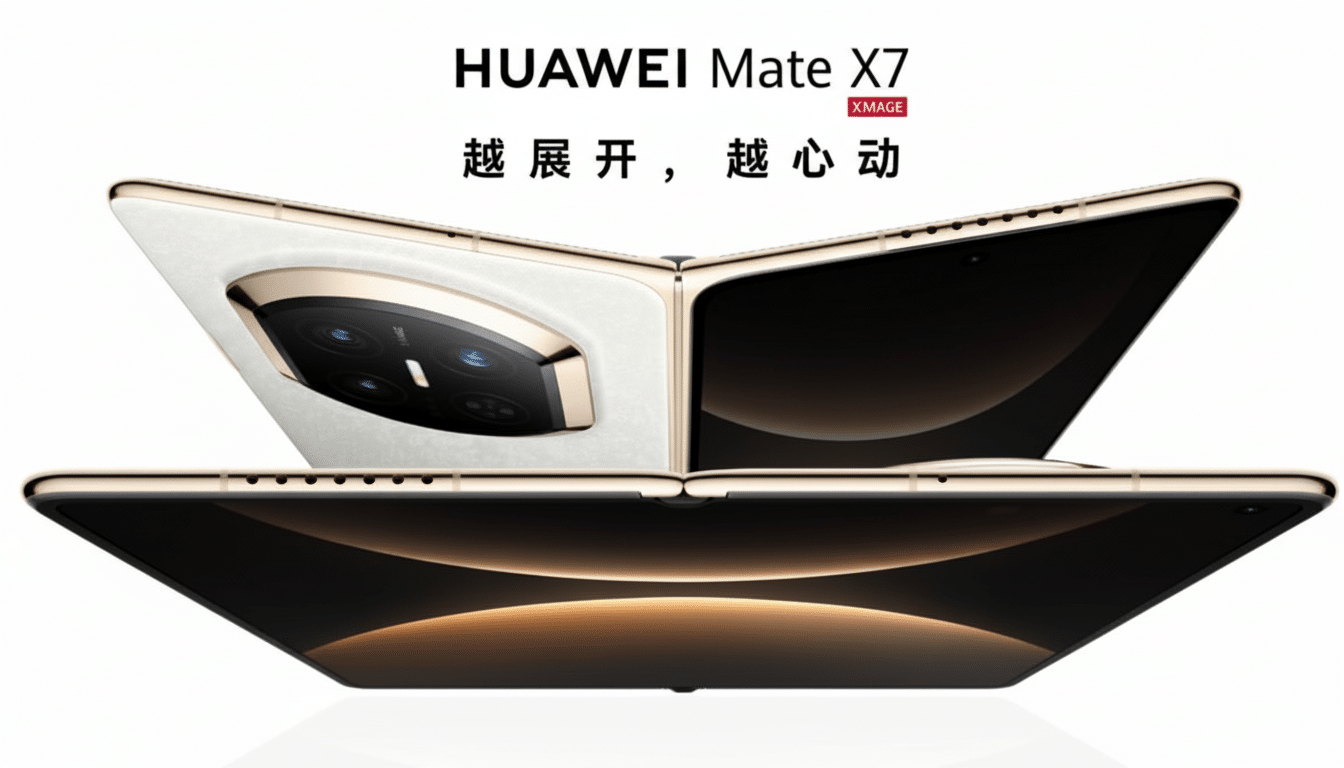
Huawei is moving aggressively to challenge Samsung’s lead in foldables with the worldwide launch of the Mate X7, a high-end book-style device emphasizing durability, bright displays and cameras. The company is framing the X7 as a viable alternative for serious users looking for something snappier, aggressive water protection and cameras that go beyond the usual triple camera setup on many foldables.
A flagship foldable designed to rival Samsung
The Mate X7 comes as Huawei’s most globally aspirational foldable yet. It’s 236g — lighter, yet heavier on the spec front, with a standout claim for protection: the phone offers IP58 and IP59 resistance ratings (submersion as well as a defense against high-pressure water jets). That’s a significant jump beyond what most book-style foldables advertise. Samsung’s newest Fold has an IP48 rating, which also adds dust protection, but doesn’t exactly line up with the X7’s water jet claims.
It’s a growing category. According to IDC, just under 16 million foldable smartphones were shipped in 2023, a more than 30% increase from the previous year, with shipments expected to exceed 20 million units in the coming year. Counterpoint Research also cites the momentum Huawei has in China, where it has dominated recent quarters. Pushing out the Mate X7 to broader markets telegraphs that Huawei wants to turn that regional strength into a position of global share — terrain where Samsung has long set the standard.
Tuned for everyday use with brighter, smoother screens
Huawei’s philosophy for its outer screen is practical: a 6.49-inch cover display at 2,444 × 1,080 that clocks up to 3,000 nits; using the phone closed is a hassle-free experience with no cramping. It’s an 8-inch panel that runs at 2,416 × 2,210 and has a peak of 2,500 nits. Both screens are LTPO, support a 1–120Hz adaptive refresh rate and 1,440Hz PWM dimming for less eye strain. In everyday use, that’s more seamless scrolling, less sensitivity to flicker and outdoor readability than most early-gen foldables.
The hinge and chassis are both fortified. According to Huawei, the X7 is more resistant to drops, impacts and bending compared with its predecessor. Paired with the lighter weight, it seems the company is looking to wipe away not one but two common complaints about foldables — that they feel fragile and that they can be fatiguing to use — without shrinking the screen size.
Real zoom and variable aperture cameras
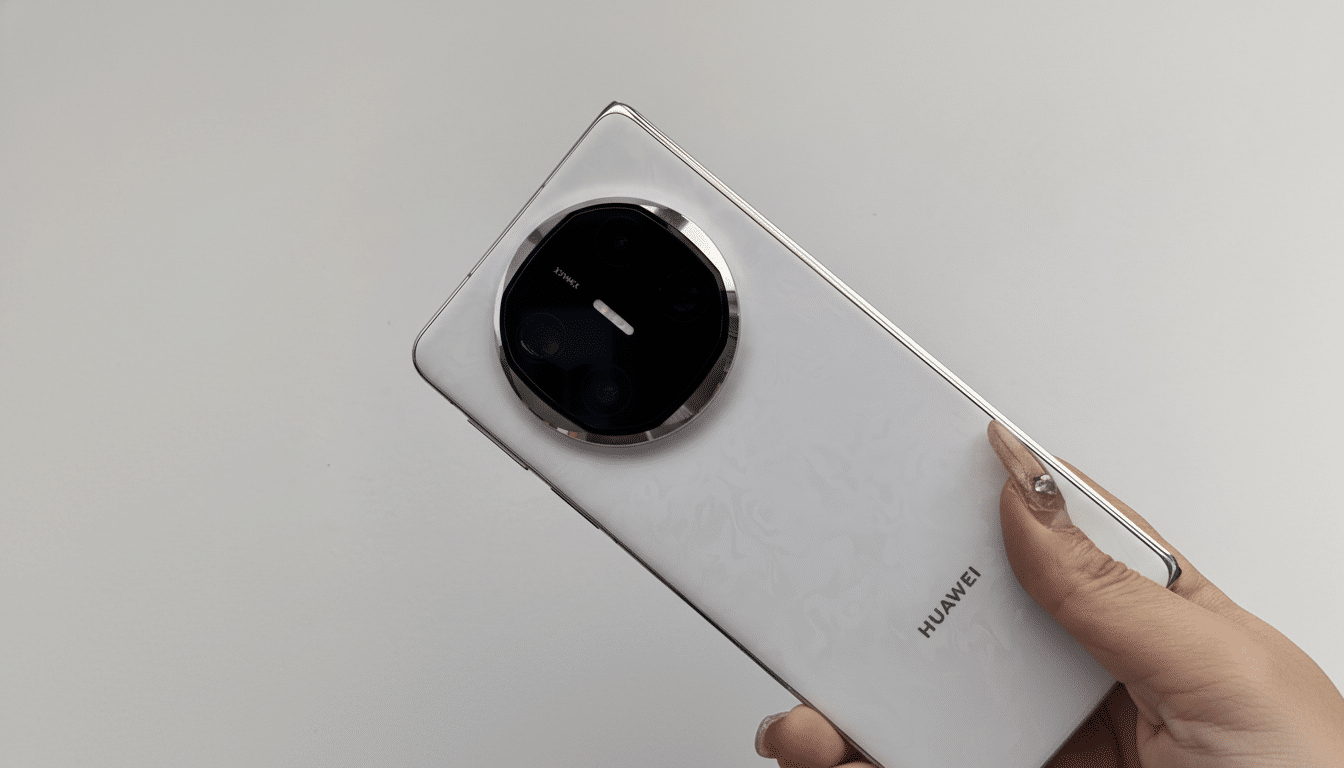
While most foldables go for familiar camera setups, the Mate X7 takes a crack at dedicated camera phones. The telephoto module jumps to a 50MP RYYB sensor with OIS and 3.5x optical zoom at f/2.2, a brighter aperture that’s bound to help lift low-light detail against narrower zoom lenses. The 50MP RYYB primary camera features a variable aperture from f/1.49 to f/4 and optical stabilization, while a 40MP ultrawide completes the trio. Video calls and rapid selfies can be snapped through 8MP cameras placed on both the cover and inner displays.
The RYYB color filter array in Huawei phones usually leads to better light capture than the old RGGB design. With a second-generation color sensor on board, the X7 hopes to offer more accurate tones and steadier exposure transitions — two areas where foldables regularly trail behind traditional slab flagships.
Power, charging and global trade-offs explained
The Mate X7 for international markets packs a 5,300mAh battery, which is smaller than the 5,600mAh cell of the Chinese phone. Charging is still speedy up to 66W wired and 50W wireless if you’re using a Huawei charger. Heavy users ought to still see solid endurance due to LTPO efficiency, and it can also stay on the outer screen for quick tasks — something that often saves power on foldables.
Like recent Huawei flagships, the device is powered by the company’s own software stack — which will be HarmonyOS or EMUI depending on the market — with AppGallery and Huawei Mobile Services as the base. There is no native Google Mobile Services support in many countries, while Huawei weaves a combination of its Petal-branded replacements and third-party solutions to try filling the gaps. This is still a consideration for buyers tied to Google’s services, but the value of the hardware might make that trade-off worthwhile.
Price, colors and market impact across regions
Available globally, the Mate X7 comes in Brocade White, Nebula Red and Black, with prices beginning at €2,099.
That price range puts it directly up against Samsung’s top Fold editions, which are typically released at around the €2,000 level in Europe. Pitch: clearer water resistance, lighter body and a more capable zoom system than many rivals at roughly its “level” — if there is such a thing with cameras.
If Huawei can combine this hardware with reliable software updates and better app convenience, the X7 might be able to push the foldable market beyond Samsung’s longstanding defaults. Analysts from DSCC and IDC have cited ongoing improvements in hinge reliability, panel efficiency and price normalization as catalysts for uptake. The Mate X7 fits into that trajectory: it isn’t going to make foldables cheap, but it goes a long way toward addressing the concerns about durability and usability that have kept some consumers sitting on the fence.
The bottom line: The global Mate X7 is Huawei’s confident shot across the bow. It raises the bar on protection and optics, and gets more nuanced about day-to-day ergonomics, leaving Samsung with actual competition where it counts most.
