


Removing an epoxy coating is rarely the hard part. Removing it without damaging what sits beneath is where most projects go wrong, and the damage often appears only after the surface has been prepared for recoating. Choosing an epoxy paint stripper therefore involves two questions held together, one about breaking the coating down and one about leaving the substrate intact. Aluminum, composite, and older painted layers each respond differently, and a product that performs well on structural steel can cause visible harm elsewhere.
What Makes Epoxy Coatings Difficult to Remove
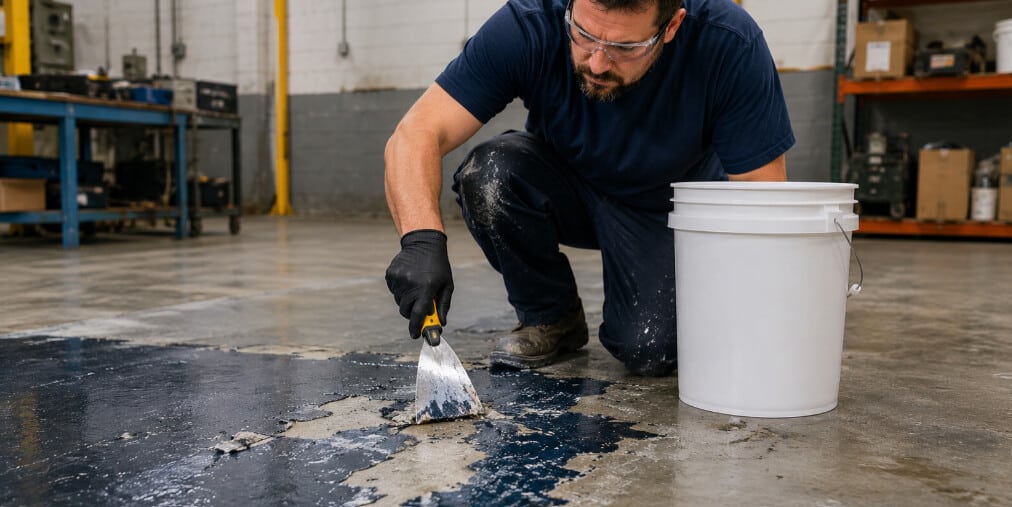
Epoxy cures into a densely cross-linked network, which is precisely why it is specified for corrosion protection and chemical resistance in the first place. That same structure resists the chemistries that lift softer coatings without effort. Effective removal generally depends on penetrating the film, breaking the bond at the interface, and lifting the coating as it swells. Film thickness, cure age, and the number of layers all slow that process, so a coating applied years earlier often needs longer contact time than a recent one. Multiple coats applied over decades of maintenance can behave almost like a single thick film.
Substrate Sensitivity Across Common Materials
The material underneath narrows the options quickly. Aluminum and its alloys can etch or pit under strongly alkaline chemistry, magnesium reacts more aggressively still, and composite laminates risk resin attack or delamination that may not be visible from the surface. Selecting a paint stripper for industrial operations that can apply across mixed substrates usually means accepting slower action in exchange for a wider safety margin. Where an assembly combines metals, sealants, and composites, separate approaches for separate areas often prove more practical than one product everywhere, even though masking and staged work add time to the schedule.
Reading Formulation Type Against the Job
Formulations differ in mechanism, not just in strength. Benzyl alcohol based products, dibasic ester blends, and other alternative formulations each balance removal speed, odor, evaporation rate, and substrate aggressiveness differently. Thickened or gel products cling to vertical surfaces and overhead work where a thin liquid would run off before it could act. Evaporation rate deserves particular attention on large outdoor surfaces, since a stripper that dries before its dwell period ends will deliver disappointing results regardless of how the formulation performs in a laboratory.
Testing Dwell Time on a Small Area
A small trial patch answers questions that no specification sheet can. Applying the product to an inconspicuous area at the intended thickness, then checking at intervals, establishes the realistic dwell time for that specific coating in that specific ambient temperature. Cold conditions slow most chemistries noticeably, and a dwell period that works in summer may need extending in winter. Inspecting the exposed substrate after the trial reveals etching, discoloration, or softening while the affected area is still small enough to be inconsequential and easily blended during finishing.
Ventilation, Protection, and Waste Handling
Stripping generates both vapor and a wet residue that carries the removed coating with it. Mechanical ventilation or open air working reduces vapor accumulation, and chemical resistant gloves, splash rated eye protection, and appropriate coveralls remain the baseline throughout. The removed material frequently requires evaluation as hazardous waste, particularly where older coatings may contain lead or chromate. Waste classification rules vary by state and by coating history, so confirming the disposal path with a licensed contractor before starting keeps the project from stalling at the end.
Conclusion
Coating removal succeeds or fails on the substrate, not on how quickly the paint comes off. Understanding why the epoxy resists removal, respecting the sensitivity of the material underneath, matching formulation type to surface orientation and working conditions, and validating dwell time on a small area together produce a controlled outcome instead of an expensive surprise. Planning the waste path in advance completes the picture, turning what is often treated as a rough preparatory task into a predictable and repeatable maintenance operation with a known cost.

