


When the lights go out, the real countdown starts in your kitchen. Food safety isn’t only about comfort; it’s about temperature, time, and a few smart choices you make early. With a plan and a couple of tools, you can keep cold air where it belongs, protect essentials, and avoid guesswork later, even when the outage runs long.
A blackout feels random, but your response doesn’t have to be. This guide focuses on practical steps, basic science, and a calm decision process you can follow even when it’s dark and stressful.
- Why spoiled food happens so fast
- The first 30 minutes are about air, not gadgets
- Estimating your time window without guessing
- Using backup power for the fridge in a smart way
- A decision framework you can follow at 2 a.m.
- Ice, coolers, and thermal mass are underrated
- When power returns, don’t rush the cleanup
- A low-drama kitchen blackout kit
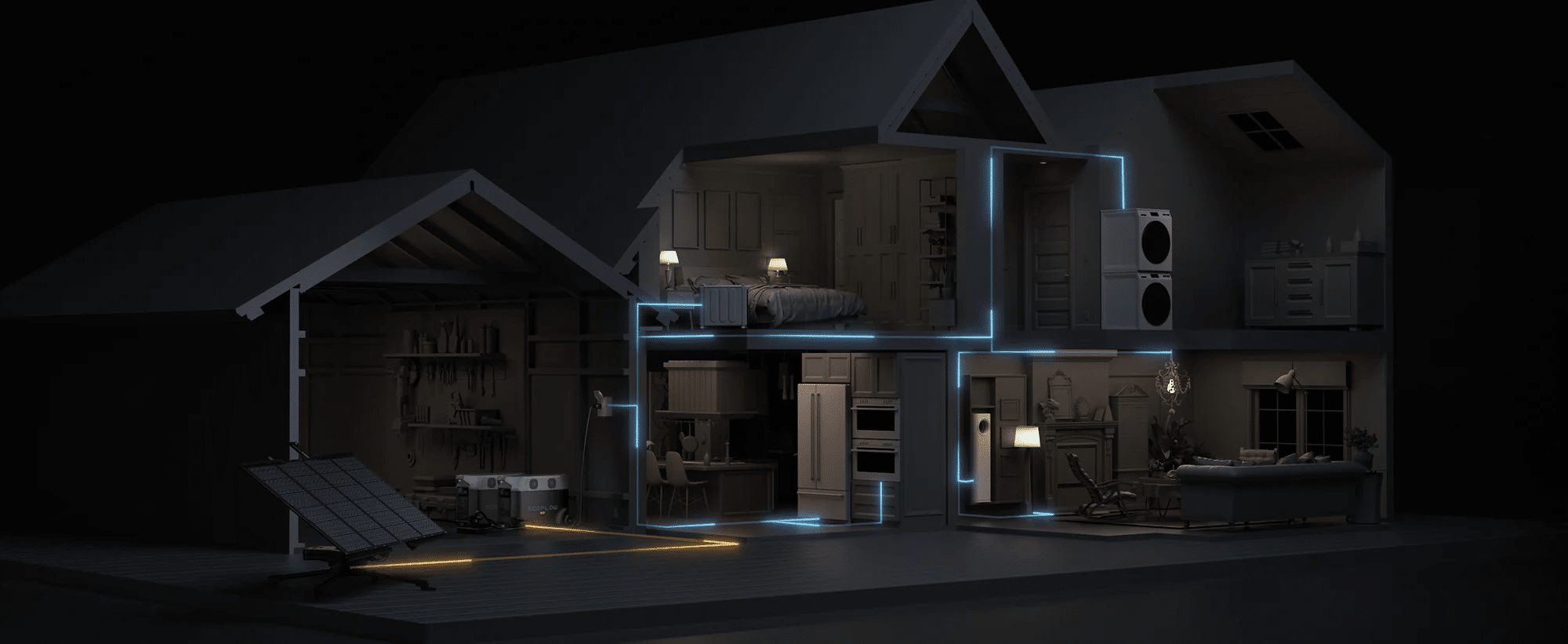
Why spoiled food happens so fast
Cold temperatures slow microbial growth, but they don’t stop it forever. Once a fridge warms up, bacteria can multiply faster than most people expect, especially on meat, dairy, and cooked leftovers.
A useful rule: many foods become riskier when they sit above about 40°F / 4°C for too long. You don’t need to memorize numbers, but you do need a way to track temperature.
That’s where planning matters. A power station can help, but only if you use it to prevent temperatures from drifting into the risky zone.
Think like a systems engineer. Keep doors closed, measure honestly, and use a power station only when it actually changes the temperature curve.
The first 30 minutes are about air, not gadgets
Every time you open the fridge, cold air spills out and warm air replaces it. That exchange is what shortens your safe window.
Start by deciding what must be protected. High-value items include insulin, breast milk, and raw proteins. Move those to the coldest zones first, without hunting around.
If you have a power station, don’t rush to plug in everything. A power station is most useful when you use it deliberately, not continuously.
Close the doors, tape a note on the handle, and treat openings like “transactions” that cost you minutes.
If you expect a long outage, locate your fridge plug and clear the area now. That way, when you do use a power station, you won’t waste time moving furniture or untangling cords.
Estimating your time window without guessing
A full freezer stays cold longer than a half-full one because frozen mass is stored cold. Many households can keep a full freezer safely cold for roughly a day or two if it stays closed.
A refrigerator warms faster because it has less thermal mass and more empty air. If you can, place a fridge thermometer inside now, so you stop relying on touch.
If you’re weighing a power station, focus on timing. A power station helps most before temperatures cross into “maybe unsafe,” not after.
Also consider room temperature. In a warm kitchen, a power station can buy far more time than it would in a cool basement.
A quick measurement loop
Check temperature, write it down, and check again later. If the curve is rising fast, act sooner. If it’s stable, conserve energy.
This loop matters because a power station is finite. Treat a power station like a battery budget for food safety, not a replacement grid.
Using backup power for the fridge in a smart way
Most fridges don’t need nonstop power during a short outage. What they need is periodic cooling to keep the internal temperature from drifting upward.
If you have a power station, consider running the fridge for a short cycle, then letting it rest. The cadence depends on your fridge, room temperature, and how full it is.
Keep it simple: run, cool, stop, measure. A power station paired with a thermometer turns your plan into evidence, not optimism.
One technical note: compressors draw more power when they start. A power station that can handle brief startup peaks will behave more predictably.
If the outage is long, reserve your power station for the hours that matter most, like the warmest part of the day or the final stretch before food crosses a threshold.
What to power first
If your budget is tight, prioritize the fridge over convenience loads. Charging phones is useful, but it doesn’t protect perishable food.
A power station can also support a small fan to reduce ambient heat near the fridge, especially in a closed room.
A decision framework you can follow at 2 a.m.
The hardest part of a blackout is not the lack of electricity. It’s the uncertainty about what’s safe to eat afterward.
Use a thermometer and a simple rule set, then commit. If you have a power station, use it to keep temperatures lower and decisions clearer.
Here’s a practical sequence:
- Log fridge and freezer temps.
- Keep doors closed.
- Move critical items to ice.
- Run measured fridge cycles with a power station.
- Discard food that stayed warm too long.
The list works because it combines behavior, measurement, and energy use. A power station is just one tool inside a larger process.
Ice, coolers, and thermal mass are underrated
If you can get ice early, it becomes a quiet multiplier. Ice buys you time without consuming any watts.
Fill empty freezer space with frozen water bottles in advance. During an outage, those bottles act as cold “bricks” that stabilize temperature.
If you’re using a power station, pair it with thermal mass. A power station can re-chill that mass during short runs, so each watt-hour goes further.
In hot weather, move the cooler to the shadiest indoor spot. Sunlight through a window can raise temperatures faster than you’d think.
If you have a small chest freezer, a power station can sometimes keep it cold with fewer cycles than a full-size fridge. That can be a smarter use of a power station when you’re triaging limited energy.
When power returns, don’t rush the cleanup
When the grid comes back, the temptation is to keep everything “just in case.” That’s where foodborne illness often starts.
Check temperatures first. If items stayed cold enough, you can keep them. If not, discard them. Smell is not a safety test.
If you used a power station, note how often you ran the fridge and what temperatures you observed. That data improves your next plan.
Also check the freezer’s texture clues. If ice crystals remain and food is still hard, it likely stayed colder than you feared.
Clean shelves with a mild sanitizing solution, then dry them. Moisture can feed mold, especially after warm periods.
A low-drama kitchen blackout kit
You don’t need a prepper closet. You need a small kit that reduces decisions when stress is high.
Consider keeping these items in one labeled bin:
- Thermometers and spare batteries.
- A cooler with a good seal.
- Frozen water bottles, rotated.
- Labels and a marker.
- A simple time log.
If your area has frequent outages, add a power station and learn your fridge’s behavior. A power station is most effective when you already know your temperatures and timing.
Store the power station where you can reach it in the dark, and keep its cables together. Practice one “dry run” once a season, so the power station supports your routine instead of becoming a puzzle.
Finally, review your kit twice a year. The best blackout plan is the one that works without a big speech.
